Iconic Tower Tank Waterproofing, New Administrative Capital
This Iconic Tower tank waterproofing project protects the water tanks of Africa’s tallest building, the landmark of the New Administrative Capital in Egypt. The concrete tanks were lined inside with hot-sprayed pure polyurea and a two-component polyurethane.
01 · Project overview
Why do the Iconic Tower’s water tanks matter?
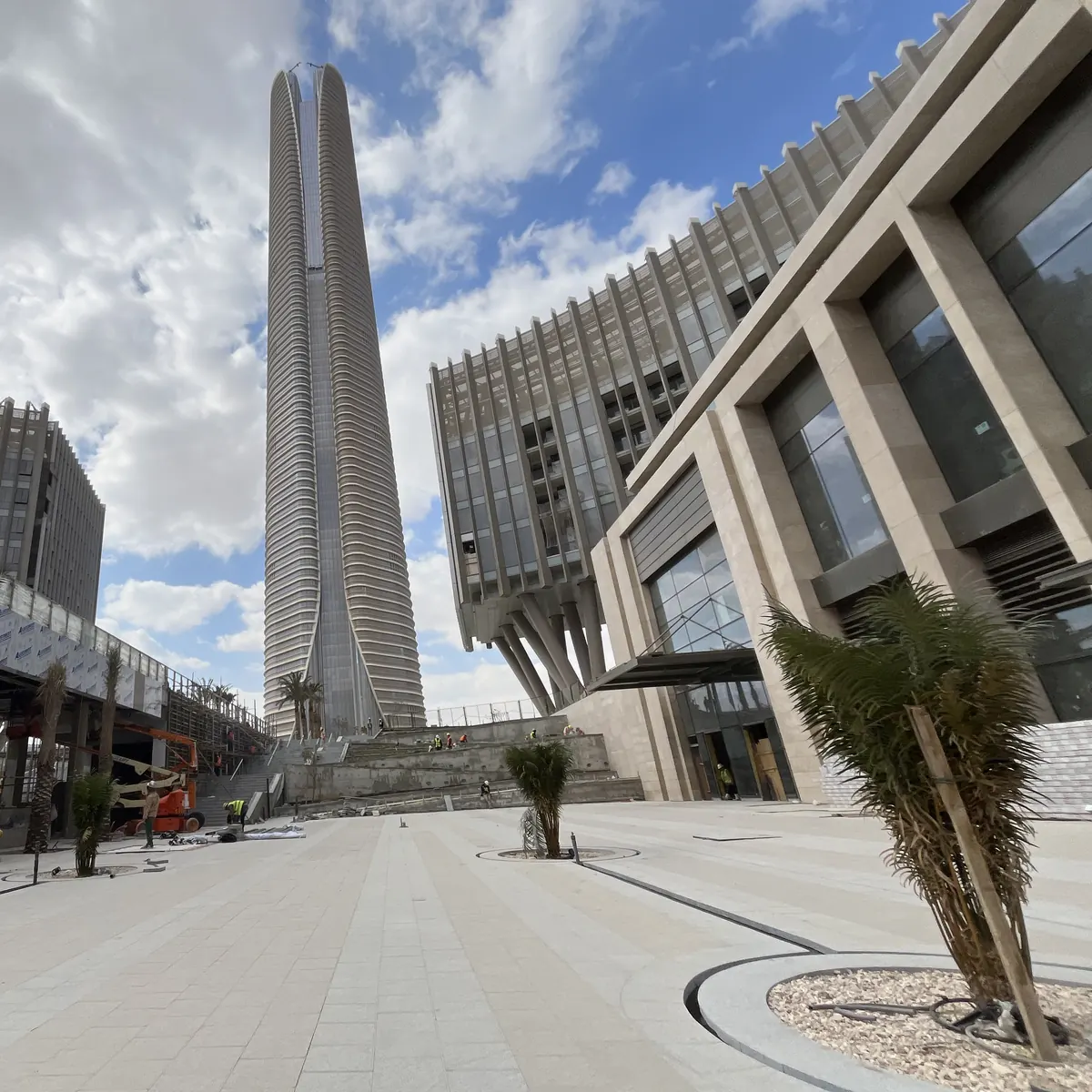
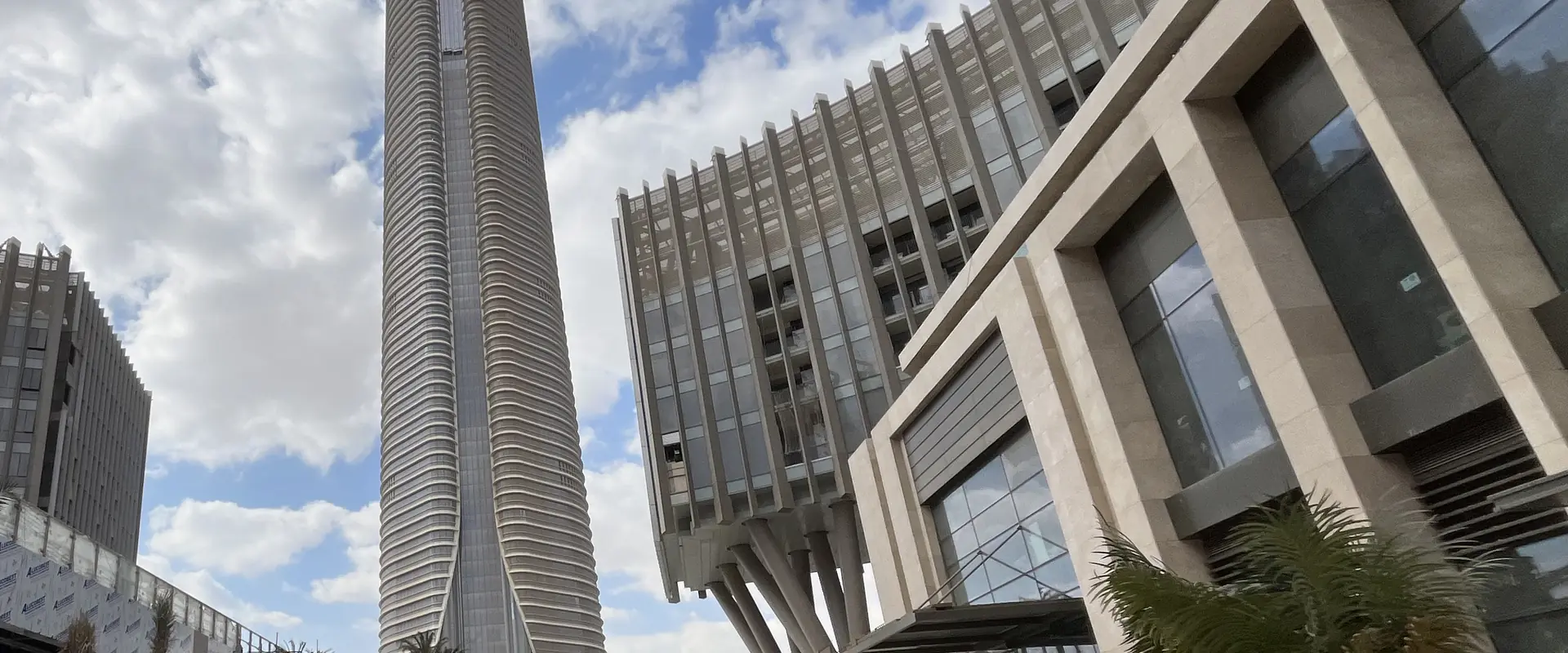
The Iconic Tower is the centrepiece of the Central Business District in Egypt’s New Administrative Capital, the country’s flagship national project. At about 394 m, it is the tallest building in Africa. Dar Al-Handasah designed it with Perkins&Will, and CSCEC built it.
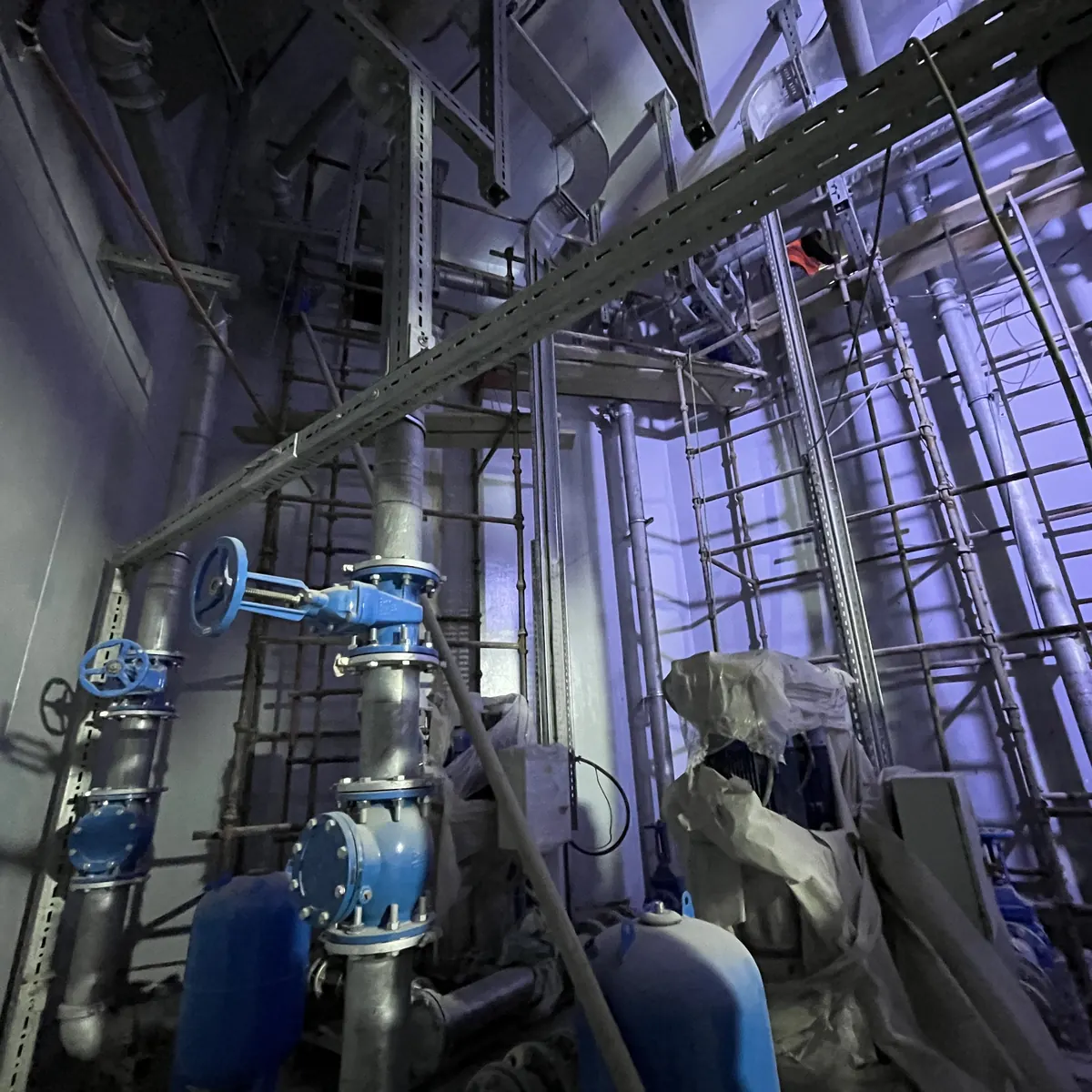
A supertall tower lives on its water. Domestic supply, cooling and fire protection all depend on concrete tanks hidden deep inside the building. If a tank leaks, water reaches plant rooms, shafts and finishes, and repairs mean draining tanks that the whole tower relies on. So the lining inside those tanks is critical infrastructure, even if visitors never see it.
Krypton Chemical is proud that its waterproofing technology was chosen for the internal tank lining of Egypt’s most famous new landmark. Target Engineering Specialized Works applied the system for CSCEC, under the supervision of Dar Al-Handasah.
| Project | Internal waterproofing of concrete water tanks |
|---|---|
| Building | Iconic Tower, Central Business District |
| Location | New Administrative Capital, Egypt |
| Main contractor | CSCEC |
| Consultant | Dar Al-Handasah |
| Applicator | Target Engineering Specialized Works |
| System | Hot-sprayed pure polyurea + two-component polyurethane |
02 · Challenge
What makes a concrete water tank hard to line?
A tank lining never gets a day off. It sits in permanent immersion, under the full hydrostatic head of the water above it. Any pinhole, lap or weak bond becomes a leak path, and water will find it.
Then there is hygiene. Water in a tower may end up in taps, so the lining must not release anything into it. It also has to withstand chlorinated water for years without softening or blistering.
In addition, concrete tanks crack. Shrinkage, temperature changes and the movement of a tall structure open hairline cracks in walls and floors. The membrane must stretch across them and stay bonded.
Finally, the work happens indoors, in confined rooms full of pipes, valves and corners. Solvents and long cure times are a problem there, and so is every day a tank stays empty.
03 · Solution
Why pure polyurea and a two-component polyurethane for the tanks?
The main lining is Krypton’s hot-sprayed pure polyurea. It gels in about 4 seconds and it builds a continuous 1.5–2 mm membrane in a single pass. As a result, walls and floors become one continuous skin with no joints. It is also watertight at 5 bar, the pressure of a 50 m water column, far beyond the depth of any tank.
Pure polyurea is approved for drinking water, too. It holds WRAS material approval in the UK and an Applus drinking-water migration certificate.
The two-component polyurethane completes the system. In Krypton’s range, Impermax Aqua 2K is the two-component polyurethane certified for drinking-water contact and designed for water tanks. It is poured and spread by hand, so it reaches pipe sleeves, corners and tight spots where a spray gun cannot work well.
04 · Application
How is a concrete water tank lined, step by step?
The method below follows Krypton’s technical data sheets. The figures are typical product data.
- Let the concrete dry. First, new concrete needs at least 21 days before lining, and its moisture must be below 4%. A tank wall that still holds water would push against the membrane and weaken the bond.
- Prepare the surface. Next, applicators blast or grind the concrete to remove laitance and open the pores. The substrate must reach at least 1.5 MPa in a pull-off test, and any crack is repaired first. In a tank, the bond is the real barrier: water must not travel behind the lining.
- Prime. Then an epoxy primer seals the porosity. Where moisture is suspected, the polyurea TDS calls for two coats of Rayston Epoxy primer, the second with quartz sand. On a primed substrate, the polyurea typically reaches 4.0 MPa adhesion to concrete.
- Treat the details. Around pipe sleeves, corners and tight spots, Impermax Aqua 2K is spread by squeegee at up to 1.5 kg/m² per coat, about 1 mm thick. A spiked roller removes trapped air. A second coat can follow 24 hours after the first is walkable.
- Control the climate. The tank room needs air at 10–30 °C and relative humidity below 60% for Impermax Aqua 2K. In Egypt’s heat, ventilation and timing matter, because warm, humid air causes bubbles.
- Spray the lining. After that, the pure polyurea is sprayed with hot two-component equipment: component A at 65 °C, component B at 75 °C, hose at 65 °C and at least 140 bar. It goes on at 1.5–2.0 kg/m² for a 1.5–2 mm membrane, ideally in one application.
- Cure, wash and fill. Finally, the polyurea reaches about 80 Shore A in 24 hours. Impermax Aqua 2K reaches a cure suitable for most uses in 3 to 4 days. The tank is then washed thoroughly before drinking-water service.
05 · Results
What does the Iconic Tower tank waterproofing deliver?
As a result, the concrete tanks of the Iconic Tower carry a continuous, fully bonded lining from floor to wall. Here is what that lining brings, in typical TDS values, and why each one counts in a tank:
- Watertightness: pure polyurea is watertight at 5 bar (EN 12390-8), with liquid water permeability of only 0.002 kg/m²·h0.5. Permanent immersion is its normal state.
- Crack bridging: class A5 at −10 °C (static) and B4.2 at 23 and −20 °C (dynamic). Shrinkage cracks in the tank wall do not break the lining.
- Toughness: 324% elongation, 16.2 MPa tensile strength, 69 N/mm tear strength and 24.5 N·m impact strength. So maintenance visits and cleaning will not damage it.
- Water quality: WRAS approval for the polyurea and 98/83/EC drinking-water certification for Impermax Aqua 2K.
- Treated water: Impermax Aqua 2K scores 5 of 5 with chlorinated water at 20 ppm, and pure polyurea scores 5 in water immersion.
In short, the tower’s water storage sits inside a lining built for decades of service. For more on the method, read our guide to lining drinking-water tanks with polyurea. In the same city, see our Ministries District landscape waterproofing.
06 · Products
Which Krypton products line the tanks?
Krypton hot-sprayed pure polyurea
Role here: main continuous lining on tank walls and floors. Typical data from the Polyurea Rayston TDS, Krypton’s pure spray polyurea.
- Gel time about 4 s at 25 °C
- 1.5–2.0 kg/m² for 1.5–2 mm
- Elongation 324%; tensile strength 16.2 MPa
- WRAS approval 2208579
Technical data sheet (PDF) · Product page on kryptonchemical.com
Two-component polyurethane (Impermax Aqua 2K)
Role here: hand-applied lining for details, penetrations and tight spots. Typical data from the Impermax Aqua 2K TDS.
- Two components
- Up to 1.5 kg/m² per coat (about 1 mm)
- Drinking-water contact certified (98/83/EC)
- Stable from −15 to 80 °C
Technical data sheet (PDF) · Impermax Aqua 2K in a water channel
Certifications
- Pure spray polyurea (Polyurea Rayston): CE marking to EN 1504-2 (0370-CPR-2247), ETA 16/0148, BBA 18/5582, WRAS approval 2208579, Applus drinking-water migration certificate 928/09/8505, EPD-IES-0020897.
- Impermax Aqua 2K: drinking-water contact certificate Applus 928/08/6545 (98/83/EC), CE marking to EN 1504-2.
07 · FAQ
Frequently asked questions
Is spray polyurea safe for drinking-water tanks?
Krypton’s pure spray polyurea holds WRAS material approval (UK, nº 2208579) and an Applus drinking-water migration certificate. Impermax Aqua 2K is certified for contact with drinking water under European regulation 98/83/EC. As the TDS advises, the tank is washed thoroughly before it goes into drinking-water service.
Why combine pure polyurea with a two-component polyurethane?
Each product does what it does best. The hot-sprayed polyurea builds a thick, continuous lining on walls and floors in minutes. The two-component polyurethane is spread by hand, so it reaches pipe penetrations, corners and tight spots where a spray gun cannot work well.
How long is a tank out of service?
Pure polyurea is rain-resistant after about 10 minutes and reaches about 80 Shore A in 24 hours at 25 °C (typical TDS data). Impermax Aqua 2K takes light traffic after about 24 hours and reaches a cure suitable for most uses in 3 to 4 days. The slower product sets the timetable.
Can the lining follow cracks in the concrete?
Yes. Krypton’s pure polyurea bridges cracks to class A5 at −10 °C and B4.2 dynamically, with 324% elongation in the TDS. Shrinkage cracks in a concrete tank wall therefore do not break the waterproof layer.
Does chlorinated water attack the lining?
Impermax Aqua 2K scores 5 out of 5 (best) in permanent contact with water and with chlorinated water at 20 ppm. Pure polyurea also scores 5 in water and saturated salt water immersion. Both are suitable for treated water at normal dosing levels.
What does the substrate need before lining?
The concrete must be sound, at least 1.5 MPa in a pull-off test, with moisture below 4%. On new slabs, the Impermax Aqua 2K TDS asks for at least 21 days of drying. The surface is blasted or ground, then primed with an epoxy primer.
08 · Photos
The Iconic Tower and its tank rooms