
Home / Knowledge / ProLine CH55 pipe lining for buried rainwater
ProLine CH55 pipe lining for buried rainwater
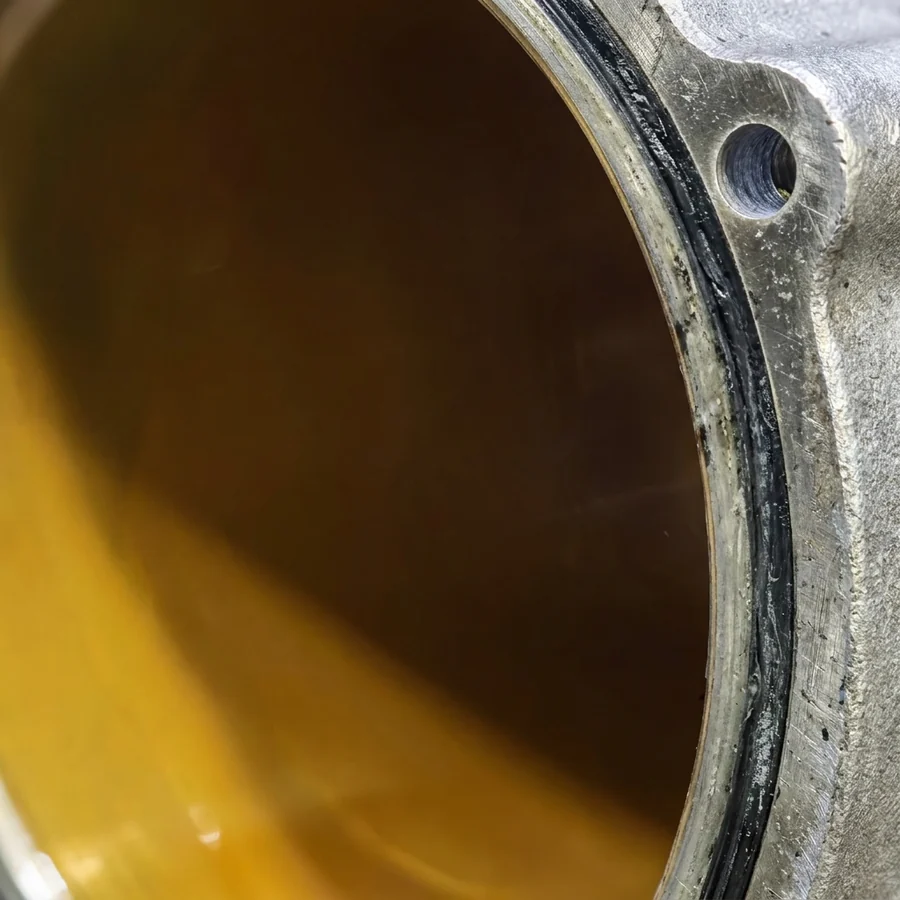
ProLine CH55 pipe lining is a chemical-resistant interior. It is not a C5H atmospheric steel system.
Specify ProLine CH55 pipe lining when the pipe is buried and wet. Krypton magazine NUM.5 (October 2025) names underground rainwater pipes in Colombia under Krypton ProLine CH55.
What ProLine CH55 pipe lining actually claims
NUM.5 cites chemical and moisture resistance in immersion, high impact and abrasion resistance, and protection of underground and overhead pipes. It also cites minimal permeability to radon, methane and CO2. Catalogue 2026 lists Krypton ProLine CH55 in the chemical-resistance group. Keep those sentences on CH55. Do not move them onto PU 1000 TC.
This is not Krypton ProLine AB85H (hybrid polyurea for abrasion and impact on steel). This is not Impermax EP (thixotropic epoxy for manholes). Use the commercial name on the job. Foundations and radon-gas barriers on this site are a different application page when the structure is a slab, not a pipe.
However, a yellow interior is not a thickness. Read build from the current TDS.
See Krypton ProLine CH55, pipe linings, channels and irrigation ditches, foundations and radon-gas barriers, and documents. Area: calculator.
Outbound reference: CEN-CENELEC.
A flange photograph is not a roof. Keep ProLine CH55 pipe lining on the protective chapter.
Therefore mix ratio stays on the sheet. Also keep C5H off this clause.
These notes do not replace the current TDS, SDS or a written specification. For pack sizes, mix ratio and kg/m², read the current sheet, then the calculator.