How to Waterproof Tiled Roofs with Spray Polyurea
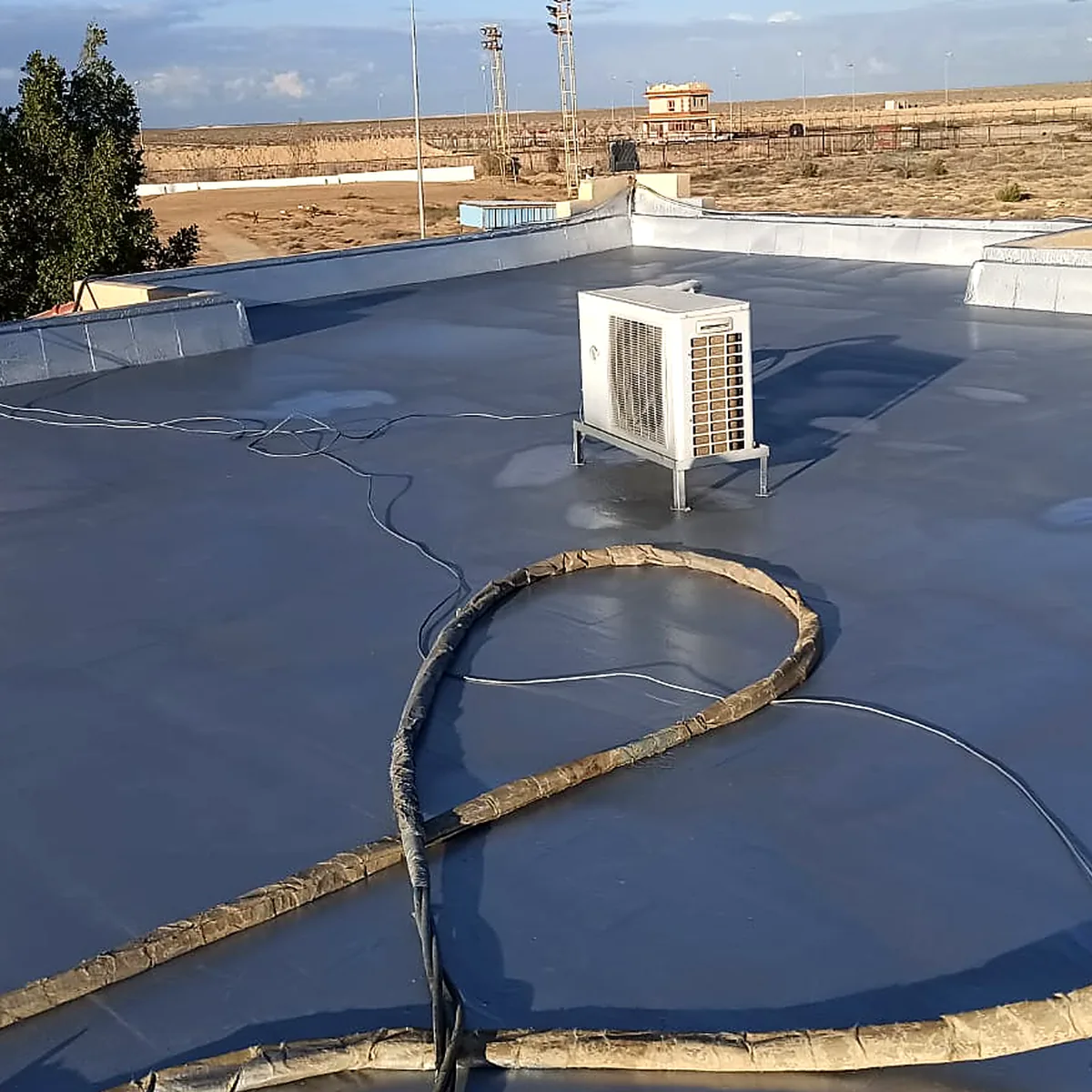
The reliable way to waterproof tiled roofs with spray polyurea is to turn a thousand joints into one film, so water can no longer travel the tile bed. In 2021, Khalda Petroleum sealed tiled plant roofs in the Abu Gharadig concession with hot-spray polyurea, on the order of 10,000 square metres, as recorded on the Khalda Petroleum waterproofing project.
01 ·
What is this work?
A tiled plant roof in the Western Desert is a busy deck. Equipment sits on it. People walk it. The tiles look finished, but every joint is a path for water, and once water is in the bed it travels farther than you think before it shows up below.
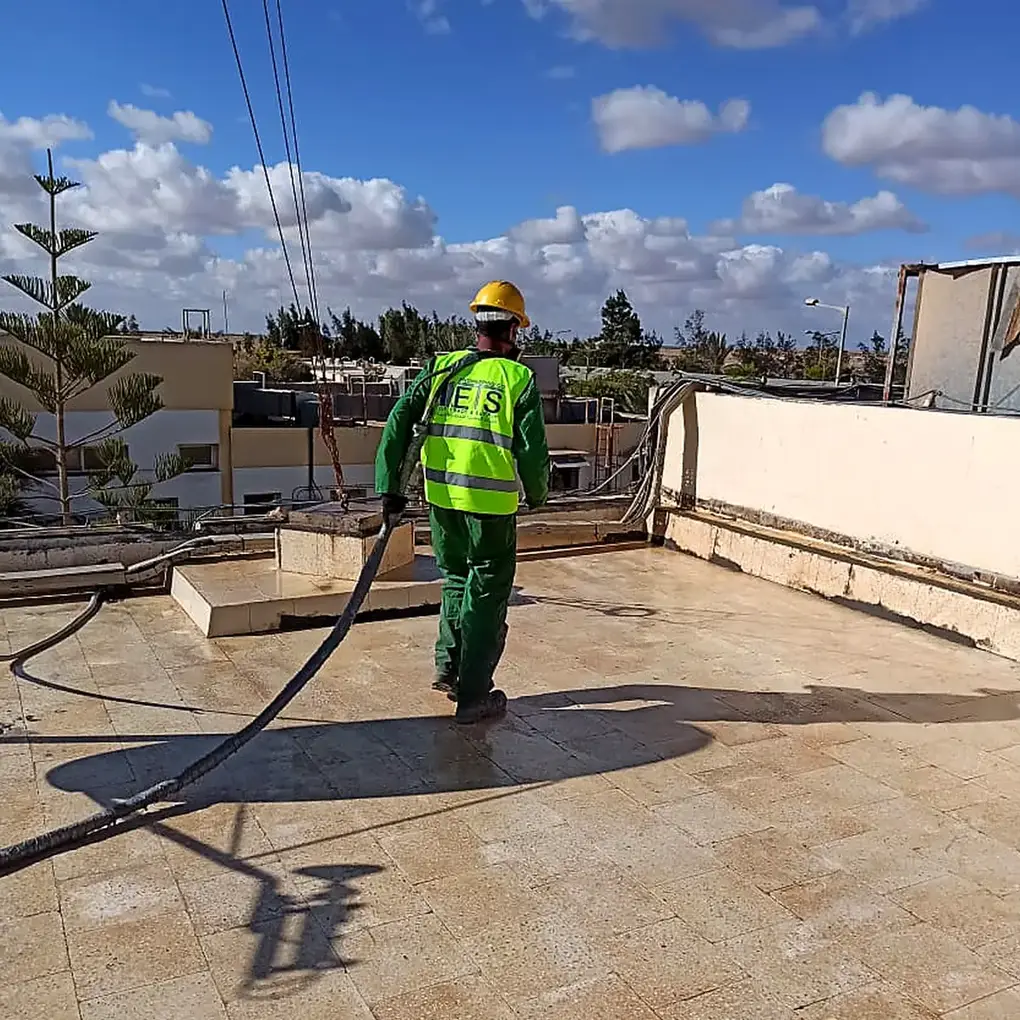
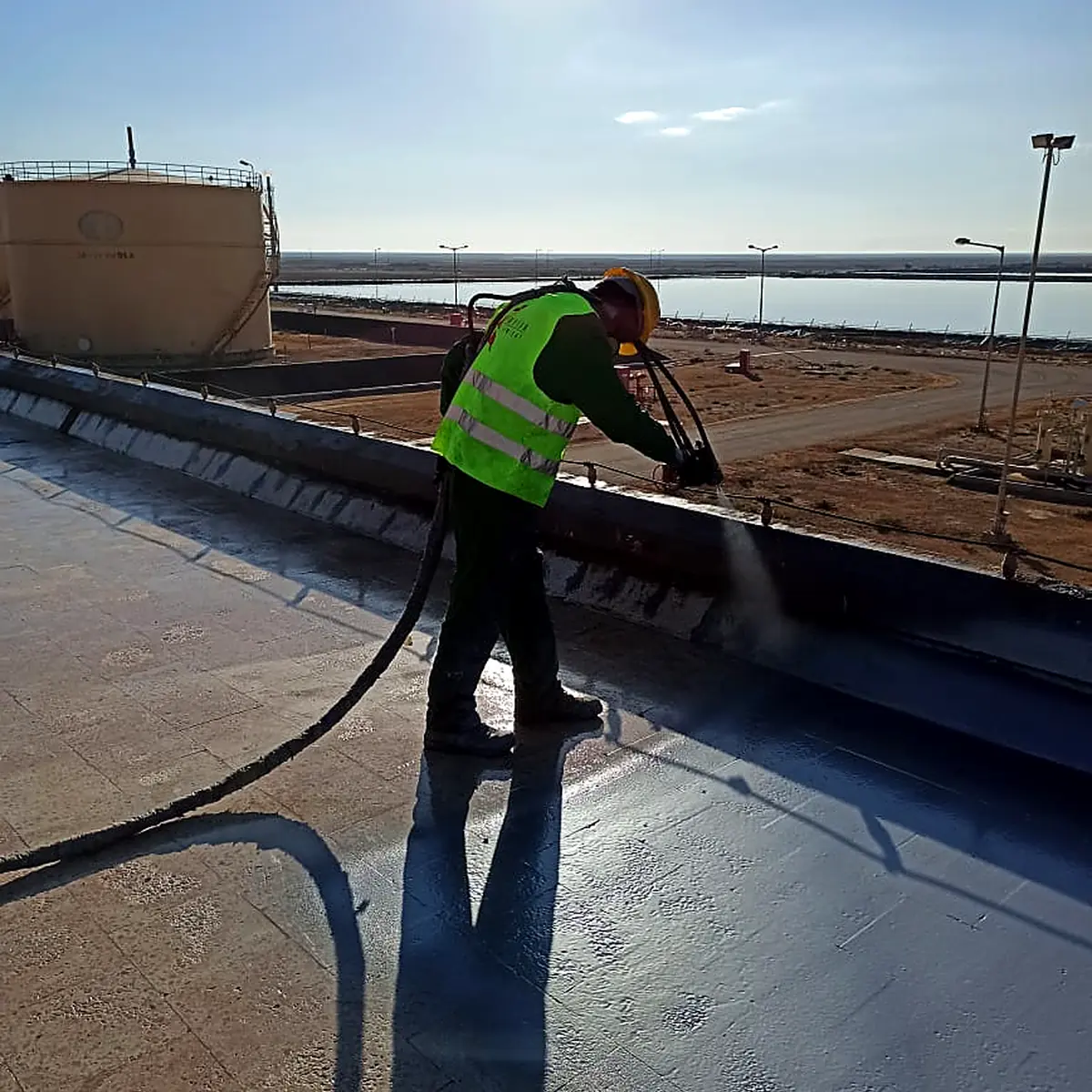
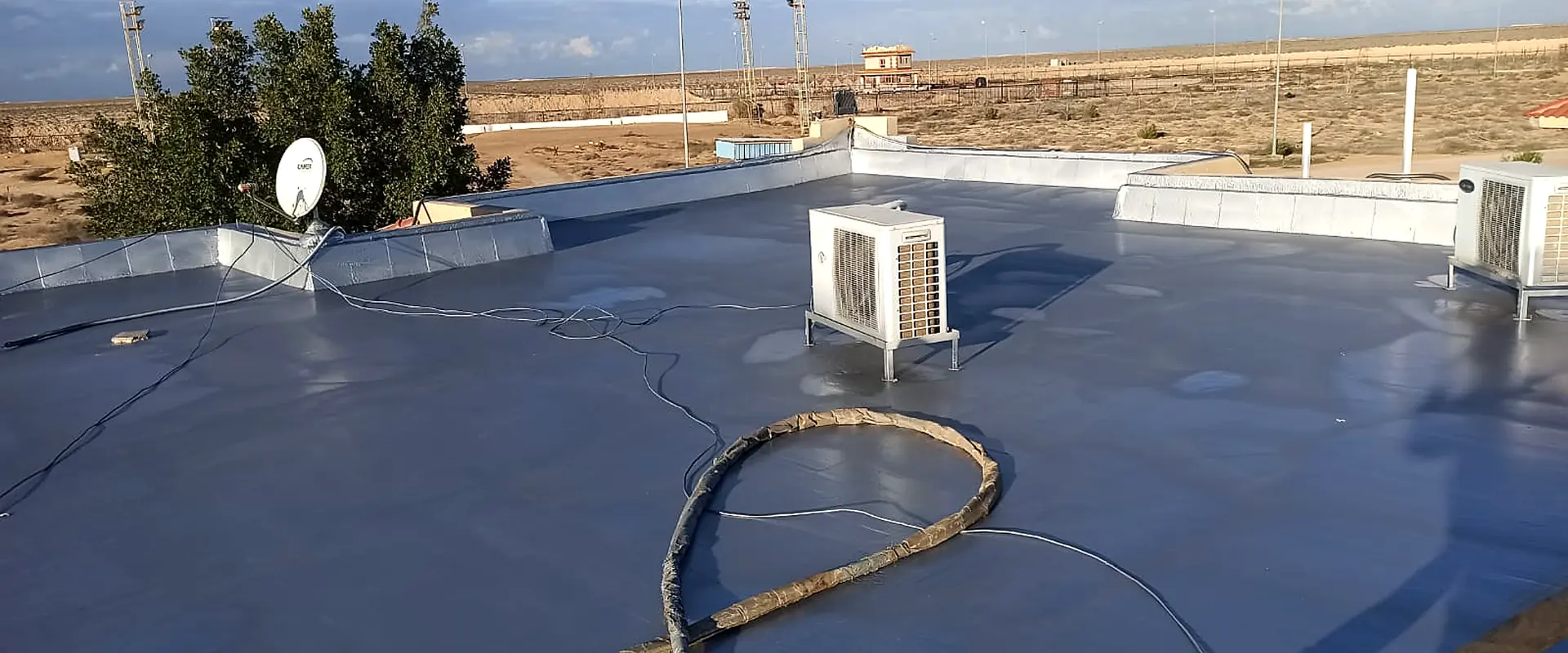
In 2021, Khalda Petroleum had tiled roofs in the Abu Gharadig concession sealed with hot-spray polyurea, on the order of 10,000 square metres. The work is part of the Khalda Petroleum waterproofing programme, which also includes an 8,000 square metre evaporation pond lined with prefabricated polyurea sheets and 15,000 square metres of villa and building roofs finished with polyurethane foam and an acrylic coat. The application was carried out by ETS, the engineering contractor on those Khalda sites, using Krypton Chemical systems from Spain.
Spray polyurea belongs on this kind of roof because it does not try to chase each joint. It covers the tiles, the upstands and the penetrations as one film, and it sets fast enough for a live plant.
| Place | Khalda concession, including Abu Gharadig and Tariq Gas Field, Western Desert, Egypt |
|---|---|
| Client | Khalda Petroleum |
| Year | 2021 |
| Tiled roofs | 10,000 m² |
| System | Hot-spray Polyurea Rayston over tiled plant roofs |
| Applicator | ETS |
02 ·
What does a tiled plant roof need?
Tiles hide a jointed bed. Water that enters at one open joint can travel under many tiles before it appears at an outlet or a room below. Plant roofs add pipe boots, cable trays, equipment plinths and upstands. Each one is a place where a sheet lining would have to be cut and sealed.
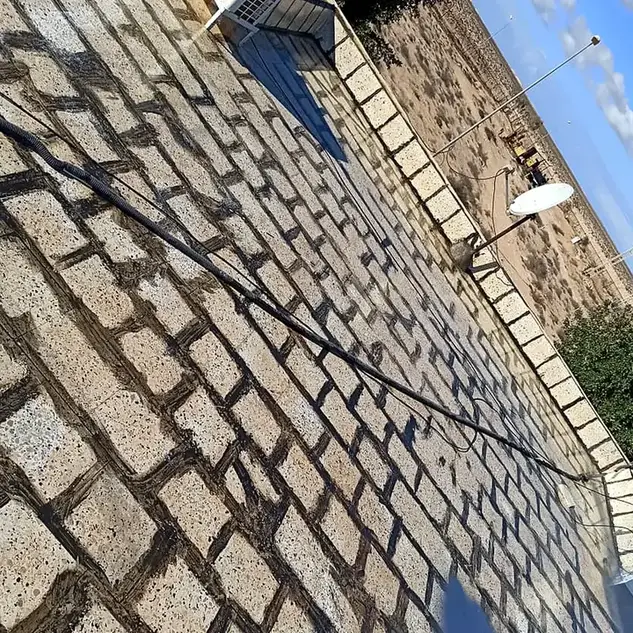
The climate is no help. Day-to-night movement in the desert is large. A brittle coating over tiles will crack at the joints it was meant to hide. The membrane has to stay elastic, bond through a primer, and turn up every detail as part of the same film. And it has to do that at a pace a working plant can live with.
03 ·
Which system seals a tiled roof?
Polyurea Rayston is Krypton’s hot-spray pure polyurea. It is a two-component, 100 percent solids, extra-fast membrane applied with heated equipment. Once it cures it is a continuous elastomeric film, with no joints of its own to maintain.
That continuity is why the system belongs over tiles. The spray locks the tile bed, the upstands and the penetrations into one skin. Typical elongation is 324 percent, with a tensile strength of 16.2 MPa and tear strength around 69 N/mm. Dynamic crack bridging is Class B4.2 at 23 degrees C and at -20 degrees C. Shore hardness is typically 87A / 35D. Those figures let the film follow the deck when the temperature swings, instead of opening at a tile joint.
The product carries CE marking to EN 1504-2 and European Technical Assessment 16/0148, with a BBA certificate for roofing. It is aromatic: colour can shift in the sun, while strength remains. An aliphatic polyurethane such as Impertrans or Colodur is the usual finish where the roof stays exposed and appearance matters.
04 ·
How do you waterproof tiled roofs with spray polyurea?
The tiles and the deck have to be sound, clean and dry before any resin goes down. Loose tiles are reset or removed. Dirt, oils and laitance come off. For Polyurea Rayston the technical data sheet asks for a cohesive support, a pull-off strength of at least 1.4 N/mm², moisture under 4 percent, and a temperature between 10 and 40 degrees C, with relative humidity under 85 percent. A primer is part of the system. If damp is suspected behind the deck, two coats of epoxy primer are the usual recommendation, the second blinded with quartz sand. Metal upstands are cleaned and primed with a polyurethane primer.
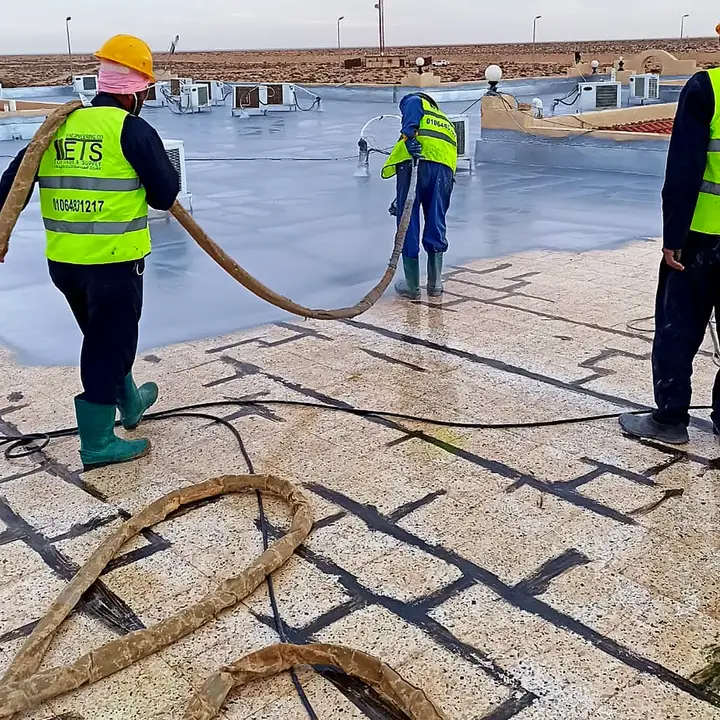
Both components are preconditioned at about 25 to 30 degrees C. In the machine they run hotter: about 65 degrees C on component A, 75 degrees C on component B, and 65 degrees C in the hose. Pressure at the gun is at least 140 bar. Polyurea Rayston is typically sprayed at 1.5 to 2.0 kg/m², which leaves a film about 1.5 to 2 mm thick. Gel time is about four seconds at 25 degrees C. One pass should make the thickness. Upstands, outlets and equipment plinths are sprayed into the same film, not left for a ring of mastic later.
The surface is tack-free in seconds. Light traffic can follow in hours; full hardness still takes days. An exposed aromatic film wants its aliphatic coat before the first hard summer. That is ordinary roof discipline, and it is what lets a fast membrane still be tight after many desert summers.
05 ·
What does the finished roof deliver?
The plant keeps working, and the tiled deck becomes a single waterproof skin. Joints that used to be paths for water sit under a continuous polyurea film. Equipment bases and upstands belong to the same lining.
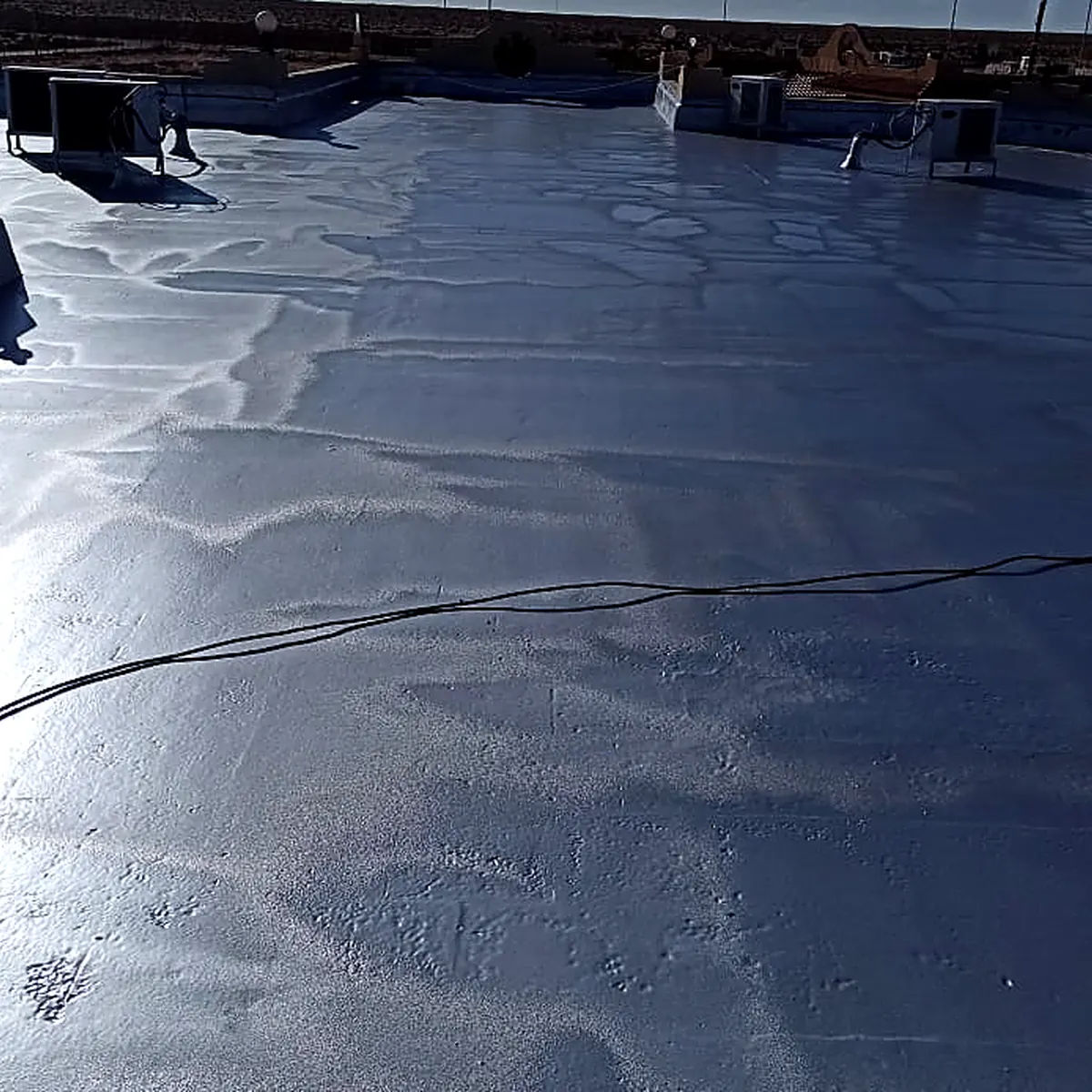
This tiled-roof work sits alongside the evaporation-pond lining and the foam-and-acrylic villa roofs described on the Khalda Petroleum project page. Together they show how one concession used Krypton systems for very different exposures, each with the build-up that exposure needs.
06 ·
Which products are used?
Polyurea Rayston
Hot-spray pure polyurea for waterproofing tiled and concrete roofs. Typical build 1.5 to 2 mm. Elongation 324 percent. ETA 16/0148. Aromatic: use an aliphatic topcoat where colour in the sun matters.
07 · FAQ
Frequently asked questions
How fast does the spray set?
Polyurea Rayston gels in about four seconds at 25 degrees C and is tack-free in seconds. Light contact is a matter of hours; typical hardness is about 88 Shore A after four days. Those are data-sheet figures, not readings from this roof.
Will it bridge the tile joints?
Typical elongation is 324 percent and tensile strength is 16.2 MPa, with dynamic crack bridging Class B4.2 at 23 degrees C and at -20 degrees C. The film is meant to stretch over the tile bed instead of opening at a joint.
How thick is a normal coat?
The usual application rate is 1.5 to 2.0 kg per square metre, about 1.5 to 2 mm, in a single pass where possible.
Does sunlight change the colour?
The resin is aromatic, so colour can shift in the sun. Strength stays. An aliphatic finish such as Impertrans or Colodur is the usual way to hold the appearance on an exposed roof.
What moisture can the support have?
Support moisture should be under 4 percent, with the deck between 10 and 40 degrees C and relative humidity under 85 percent. Wetter concrete is typically primed with two coats of epoxy, the second blinded with quartz sand.
Who sprayed the Khalda tiled roofs?
The application was carried out by ETS, the Engineering Co. for Trade and Supplies.
08 ·
Where is the field case?
The field case is Khalda Petroleum in Egypt’s Western Desert. Tiled-roof spray work was carried out in the concession, including plant roofs in the Abu Gharadig area and at Tariq Gas Field. The map marks the Abu Gharadig pin used on the project article.
Abu Gharadig, Western Desert, Egypt
Photos
Photos from the Khalda tiled roofs