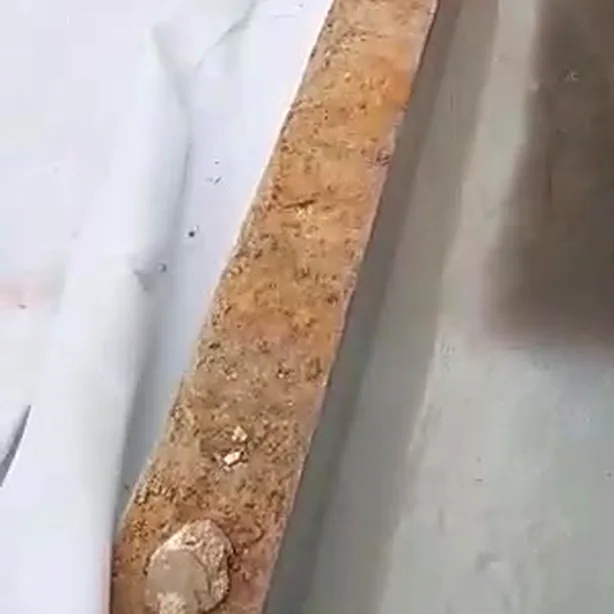
Polyurea Waterproofing, New Administrative Capital
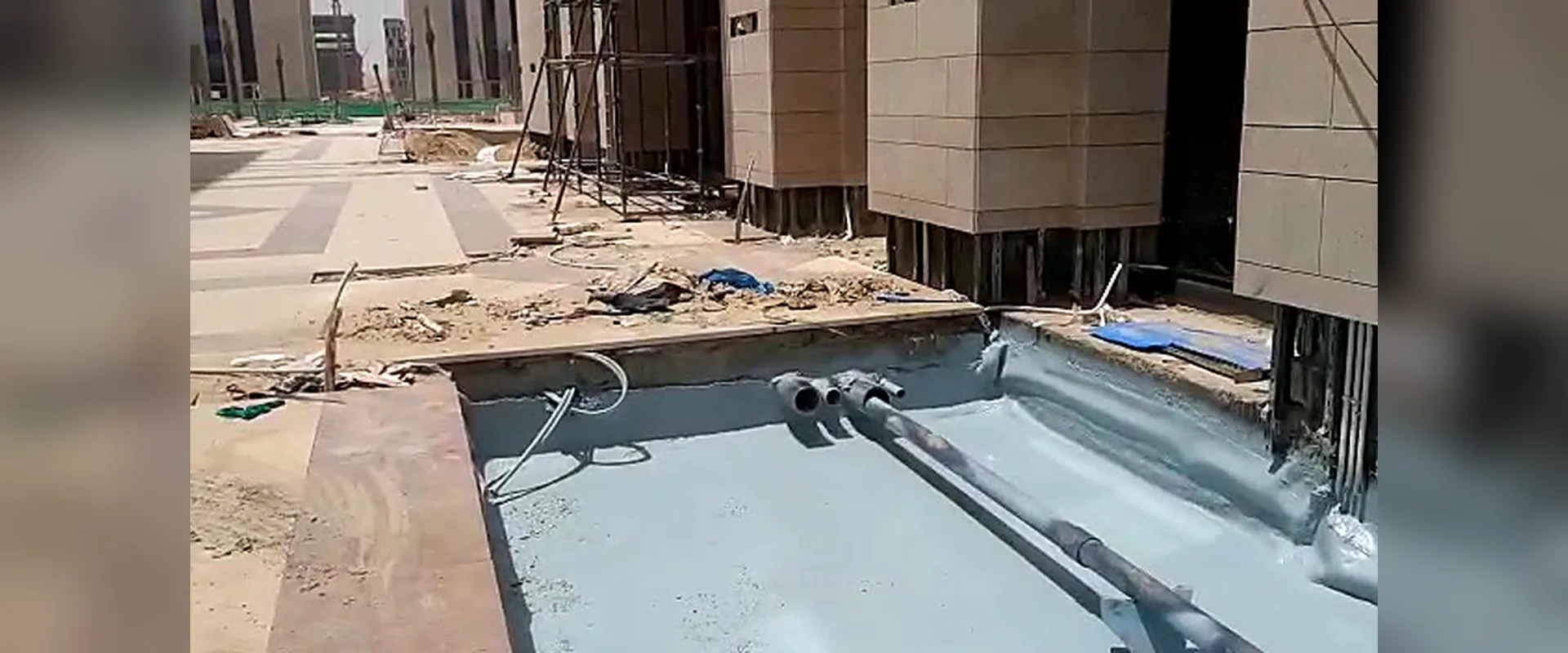
Polyurea waterproofing in the New Administrative Capital: 20,000 square metres of planters, landscape and water features in the Ministries District, lined with Impermax Polyurea H in 2020 and 2021.
01 · Project overview
What is this project?
Egypt’s New Administrative Capital is the country’s flagship national project, the new seat of government east of Cairo, and the Ministries District is its heart. Waterproofing there is infrastructure that has to last for decades.
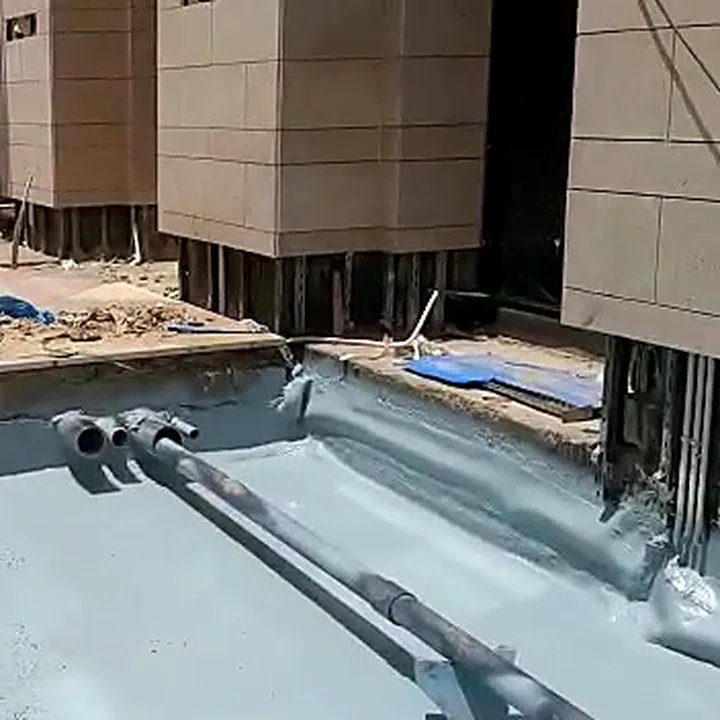
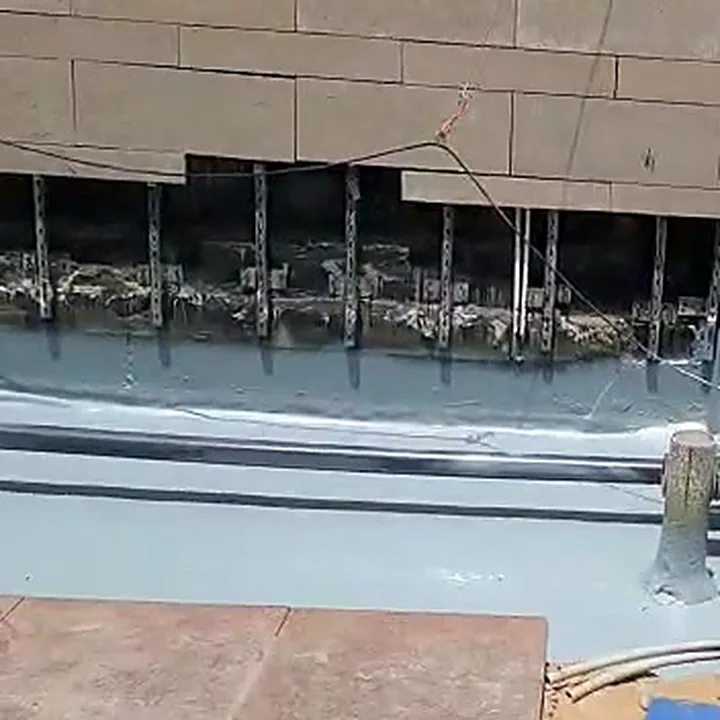
This is polyurea waterproofing in the New Administrative Capital at the scale the project deserves. Between 2020 and 2021 the landscape, the planters and the water features around those ministry buildings were lined with a hot-spray polyurea. The work covers 20,000 square metres. The application was carried out by ETS, the Engineering Co. for Trade and Supplies, using Impermax Polyurea H from Krypton Chemical in Spain.
A planted basin or a reflecting pool at a ministry is not a place for a membrane that opens at the laps. The lining had to turn up every wall, wrap every outlet and still move with the concrete in desert heat.
| Place | Ministries District, New Administrative Capital, Egypt |
|---|---|
| Area | 20,000 m² |
| Year | 2020–2021 |
| System | Impermax Polyurea H, hot-spray pure polyurea |
| Scope | Landscape, planters and water features |
| Applicator | ETS |
02 · The challenge
What did the structure need from the membrane?
A planter is a hard test. The soil stays wet. Fertilisers sit against the lining, and roots will follow any joint you leave for them. The geometry is all upstands, corners, pipe penetrations and tight channels, not a clean open roof. In the New Administrative Capital the heat swings hard between day and night, so the concrete moves.
A water feature is no kinder. It holds water the year round. The lining has to climb the walls, wrap the outlets and stay tight under a permanent head of water. A system of sheets and seams is a weak idea in that work. One open lap and the planting bed, or the basin, starts to wet the structure below.
The Ministries District is the face of the new capital. Those details had to be sealed as one film, and they had to be sealed at a pace a live government site can live with, not in a long cure that holds the works still.
03 · The solution
Which Krypton system was used?
Impermax Polyurea H is Krypton’s hot-spray pure polyurea for this kind of work. It is a two-component resin, free of solvents and mineral fillers, applied with a heated spray machine. Once it cures it forms a fully continuous elastomeric membrane, with no joints and no overlaps.
That continuity is why the system belongs on planters and water features. The film turns up a wall, around a pipe and across a basin floor as a single skin. The European Technical Assessment for Impermax Polyurea H, ETA 11/062, includes a certificate of resistance to root penetration based on EN 13948, which is the test that planted landscape asks for. The membrane also resists continuous contact with stagnant, neutral water, which is what a basin or a water feature demands.
The chemistry is fast. A small mixed sample gels in eight to nine seconds at 25 degrees C, and in four to six seconds at 60 degrees C. The lining can take rain in about 15 minutes and light foot traffic in an hour. On a government site that is still being built, that speed keeps the work moving.
Typical elongation at break is 400 percent, with a tensile strength of 15 MPa, measured to EN-ISO 527-3. Static crack bridging is Class A5 at -10 degrees C. Those are the figures that let the film follow the concrete when the desert temperature swings, instead of tearing at a corner. Shore hardness is typically 90A / 40D on the finished membrane.
04 · Application
How is this system built?
For polyurea waterproofing in the New Administrative Capital, the support has to be right before any resin goes down. Concrete is prepared mechanically, by high-pressure sand or abrasion, until the surface is open-pored, regular and sound. Dust and loose particles are vacuumed off. Cracks are repaired first. The air should sit between 10 and 40 degrees C, with relative humidity under 85 percent.
A suitable primer is part of the system on every support. On concrete, a typical adhesion of 5.6 MPa is the figure given for Impermax Polyurea H over Krypton’s EP 100 epoxy primer. That bond is what stops a blister when the structure heats up and the planter stays wet behind the film.
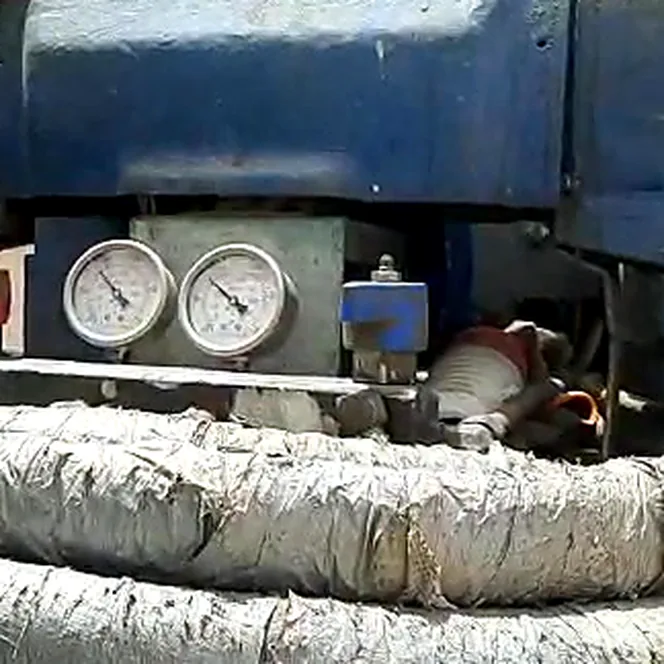
Component A is homogenised and pigmented, then both components are recirculated and brought up to temperature. The recommended figures are 60 degrees C for component A, 70 degrees C for component B, and 65 degrees C in the hose. Spray pressure sits between 135 and 170 bar. Impermax Polyurea H is sprayed at 2 kg per square metre as a rule, usually in a single coat. A second coat, if it is needed, can go on immediately afterwards.
Wind over 25 km/h wastes heat at the gun and throws overspray, so the team watches the weather as closely as the gauges. The membrane is dry to the touch in a few minutes. At 25 degrees C, hardness is typically about 74 Shore A after ten minutes and 88 Shore A after 24 hours. After two days, around 90 percent of the final properties are reached.
Where the film will stay in the sun, an aliphatic finish such as Impertrans Pigmented or Colodur Pigmented is the usual way to hold the colour, because the polyurea itself is aromatic. Under soil, paving or water, that finish is not the point of the system. The waterproofing is.
05 · Results
What results does the system deliver?
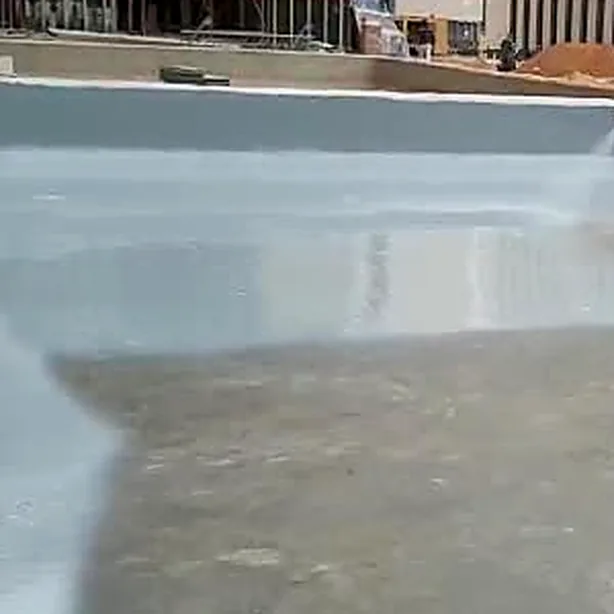
Twenty thousand square metres of landscape, planters and water features is a serious lining for a national project. The Ministries District now has a seamless polyurea skin at every upstand, outlet and basin floor. That is polyurea waterproofing in the New Administrative Capital doing the job it was chosen for: one film, applied at pace, built to stay wet for decades.
ETA 11/062 rates the system W2 for ten years without a topcoat, and W3 for 25 years with an Impertrans Pigmented finish. Those are typical certified service lives for the membrane, not a measurement taken on this site. What the site needed is what the system is built to do: a joint-free film that takes roots, standing water and thermal movement.
Krypton Chemical was trusted on one of the most visible pieces of infrastructure in the country. ETS applied it, on the ground, around the buildings that now house the government.
06 · Products
Which products were used?
Impermax Polyurea H
Hot-spray pure polyurea. Typical consumption 2 kg/m². Elongation 400 percent. Tensile strength 15 MPa. Root resistance certified to EN 13948 as part of ETA 11/062.
07 · FAQ
Frequently asked questions
How fast does Impermax Polyurea H set?
A small mixed sample gels in eight to nine seconds at 25 degrees C, and in four to six seconds at 60 degrees C. The lining is typically dry to the touch in a few minutes, resistant to rain after about 15 minutes, and able to take light foot traffic in one hour. Around 90 percent of the final properties are reached after two days.
Can the membrane take roots in a planter?
The European Technical Assessment for Impermax Polyurea H, ETA 11/062, includes a certificate of resistance to root penetration based on EN 13948. That is the test a planted landscape asks for. The film is continuous, so there is no lap for a root to follow.
Will it hold water in a basin or water feature?
Impermax Polyurea H resists continuous contact with stagnant, neutral water. Outlets, pipes and upstands are sprayed into the same film, so the basin does not rely on a separate seal at those points.
Does sunlight change the colour?
The resin is aromatic, so the colour can shift in the sun. The mechanical strength remains. Where the film stays exposed, an aliphatic finish such as Impertrans Pigmented or Colodur Pigmented is the usual way to hold the appearance. Under soil, paving or water, that finish is not the point of the system.
What thickness is sprayed?
The datasheet gives 2 kg per square metre as a rule, usually in one coat. A second coat, if it is needed, can go on immediately afterwards.
How does the film move with the concrete?
Typical elongation at break is 400 percent, with a tensile strength of 15 MPa. Static crack bridging is Class A5 at -10 degrees C. Those figures are why the lining can follow a desert temperature swing instead of tearing at a corner.
08 · Location
Where is this project?
Ministries District, New Administrative Capital, Egypt
View larger map · © OpenStreetMap contributors
09 · Photos
On site