How to Insulate Metal Roofs with Spray Polyurethane Foam
The practical way to insulate metal roofs with spray polyurethane foam is to prepare the corrugated sheets, spray a continuous foam layer, and protect that foam from the sun with an acrylic finish. In 2021, Khalda Petroleum insulated villa and building roofs in the Abu Gharadig concession with polyurethane foam and an acrylic coat, 15,000 square metres in all, as recorded on the Khalda Petroleum waterproofing project.
01 ·
What is this work?
A corrugated metal roof in the Western Desert has two jobs, and it often fails both. It has to keep heat out of the rooms below, and it has to keep sand-blown rain and condensation from finding a lap or a screw. Bare metal does neither well once the coating has gone and the sun has had a few summers at it.
In 2021, Khalda Petroleum insulated villa and building roofs in the Abu Gharadig concession with spray polyurethane foam and an acrylic finish. The area is 15,000 square metres. The same programme, set out on the Khalda Petroleum project page, also sealed tiled roofs with spray polyurea and lined an evaporation pond with prefabricated polyurea sheets. The application was carried out by ETS, the engineering contractor for the Khalda works, using Krypton Chemical systems from Spain.
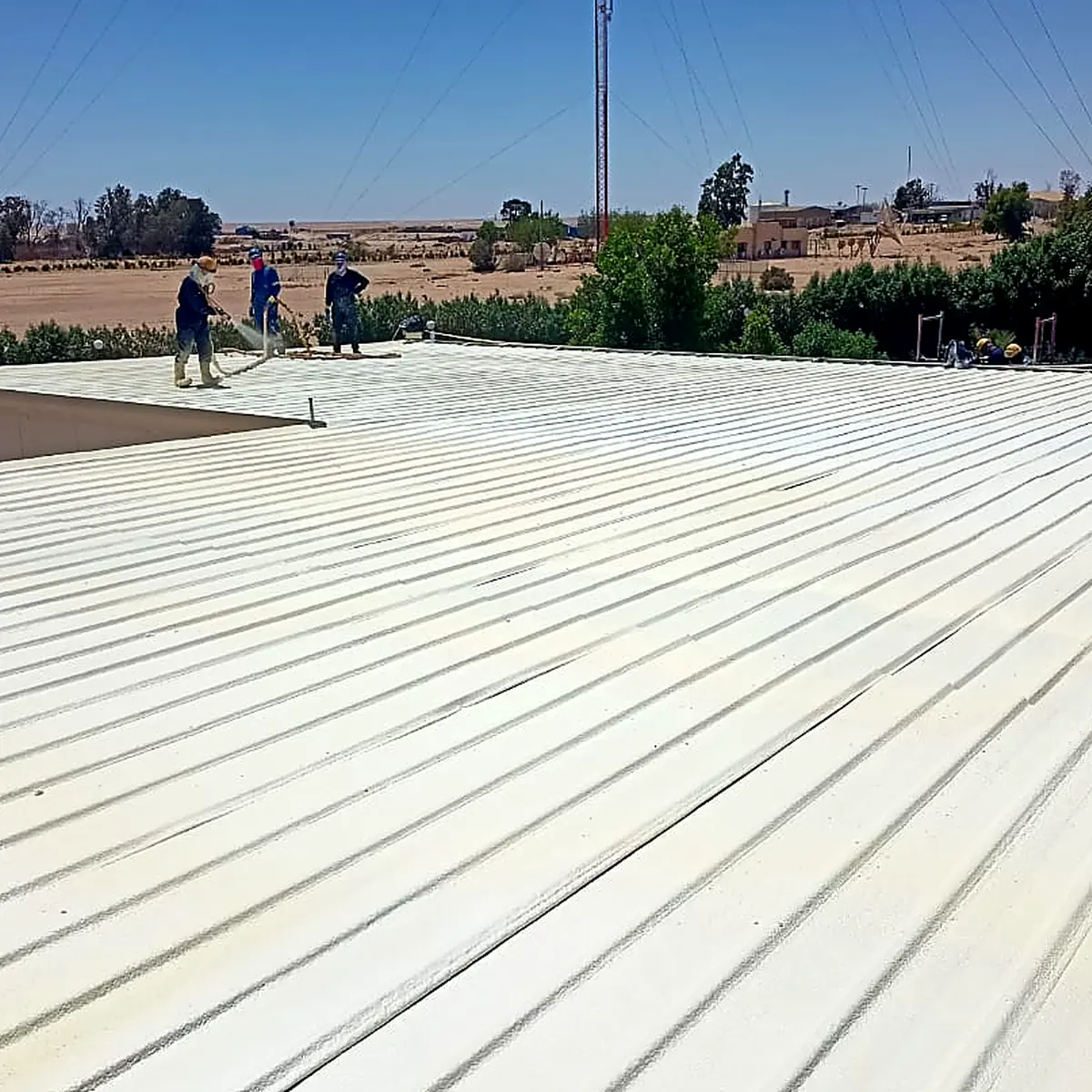
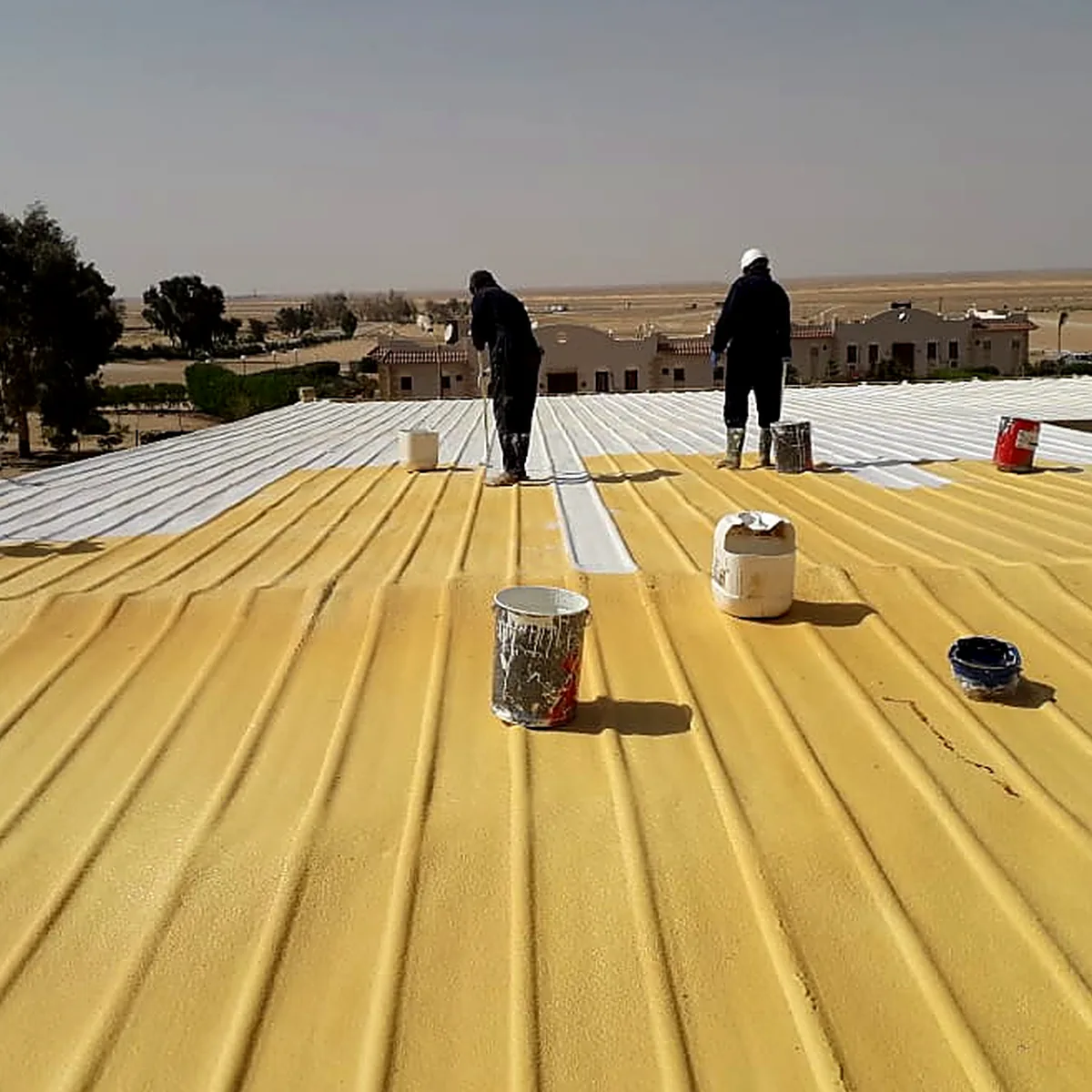
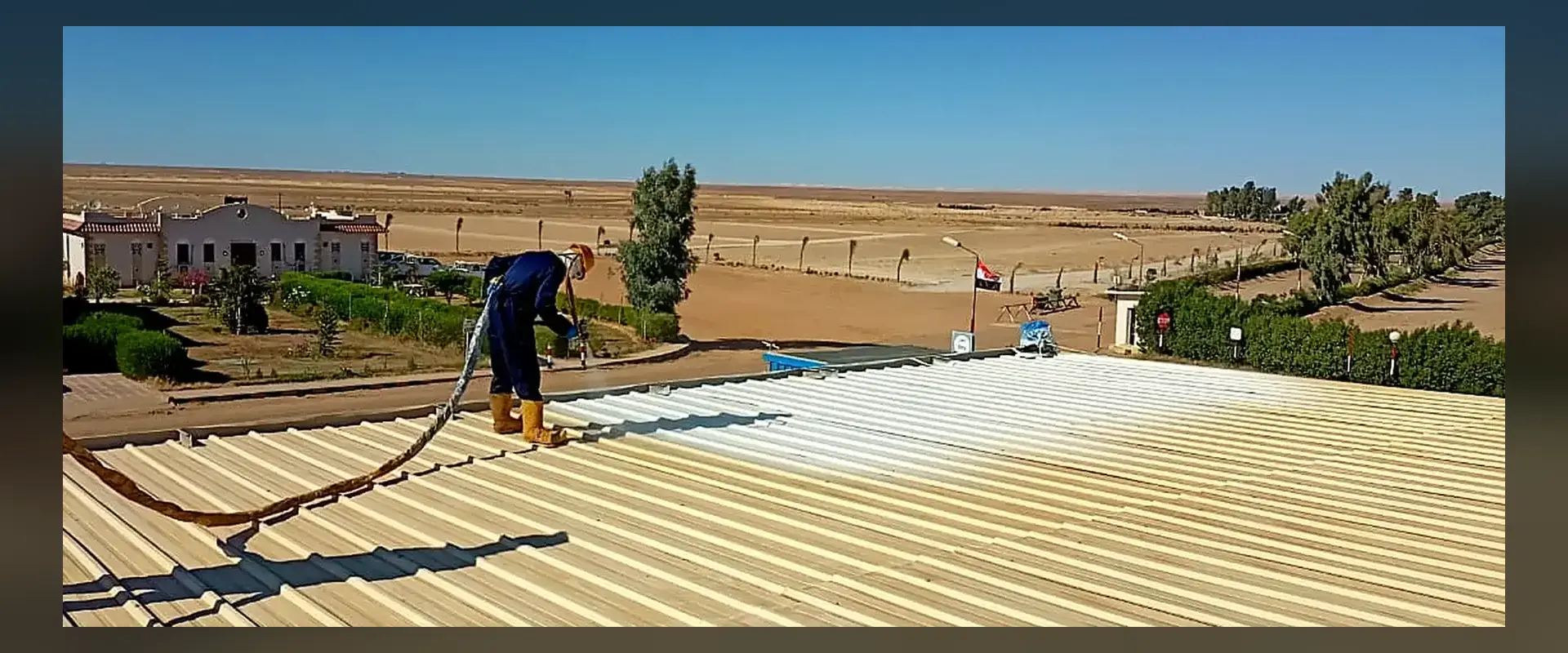
The photographs in this guide are the metal-roof part of that work: corrugated sheets prepared, sprayed with foam, and then finished with an acrylic coat. The 15,000 square metres covers the villa and building roofs in that programme; the method shown here is how a metal roof in that climate is insulated and protected.
| Place | Khalda concession, Abu Gharadig, Western Desert, Egypt |
|---|---|
| Client | Khalda Petroleum |
| Year | 2021 |
| Villa and building roofs | 15,000 m², polyurethane foam with an acrylic finish |
| System | Rayston spray polyurethane foam, protected with an acrylic topcoat |
| Applicator | ETS |
02 ·
What does a metal roof need in the desert?
Corrugated sheets move. They heat up fast, cool fast, and every lap and fixing is a potential leak. A thin paint film on rusted metal will not last. A foam that is sprayed and then left bare will degrade in ultraviolet light, even if the insulation was right on the day it was applied.
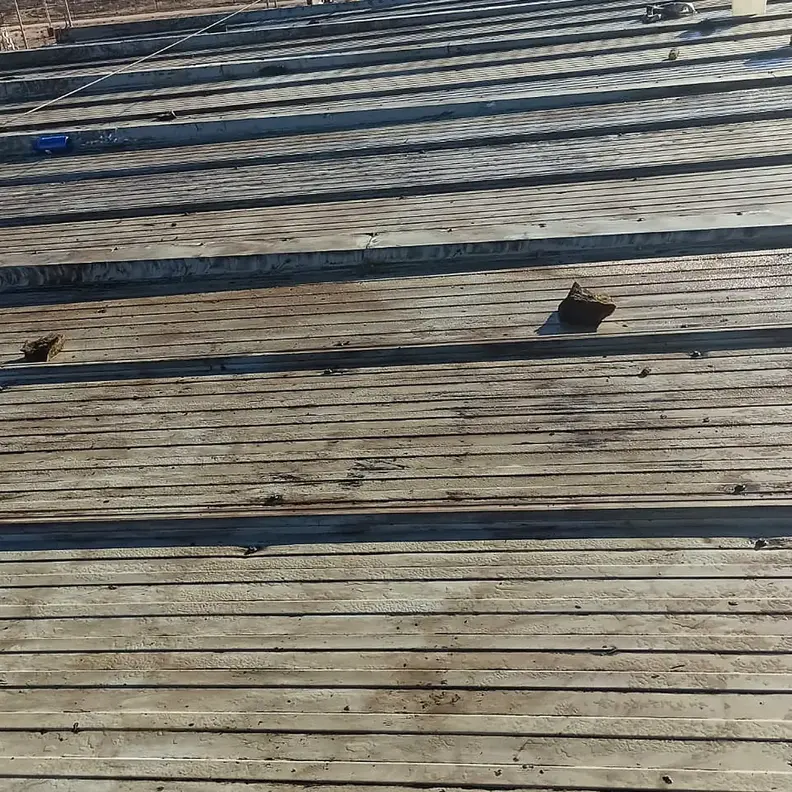
The roof also has to take the spray. Dirt, loose rust and old bitumen at the laps have to come off, or the foam will not hold when the metal expands. And once the foam is on, it needs a skin that can live in the sun, shed water and be maintained. That is the job of the acrylic finish on this programme.
03 ·
Which system insulates a metal roof?
Krypton’s Rayston spray polyurethane foam is a two-component spray insulation. Closed-cell grades in that range are the usual choice for roofs, because they cut heat flow and do not behave like a sponge. The exact grade on a given roof depends on the thickness required and the loads the roof will take. The Khalda works name polyurethane foam with an acrylic finish, without naming a single density, so this guide does not invent one.
The build-up is simple and it has to be complete. Foam is sprayed onto the prepared metal until the profile is filled and the thickness is even. An acrylic topcoat then covers the foam. That coat is the UV protection and the first weather skin. Without it, the foam should not be left exposed.
This is not a substitute for the polyurea membranes used on Khalda’s tiled roofs and evaporation pond. Foam insulates and, with its finish, protects a metal roof. Polyurea is the waterproofing membrane on the other exposures. Mixing the two stories would be a mistake; the concession used each system where it belonged.
04 ·
How do you insulate metal roofs with spray polyurethane foam?
Start with the sheets. They must be fixed, dry and clean. Loose rust, oils, dust and failed coatings come off. Weak laps and missing fixings are repaired first. A roof that is not sound will not hold foam, no matter how well the gun is set.
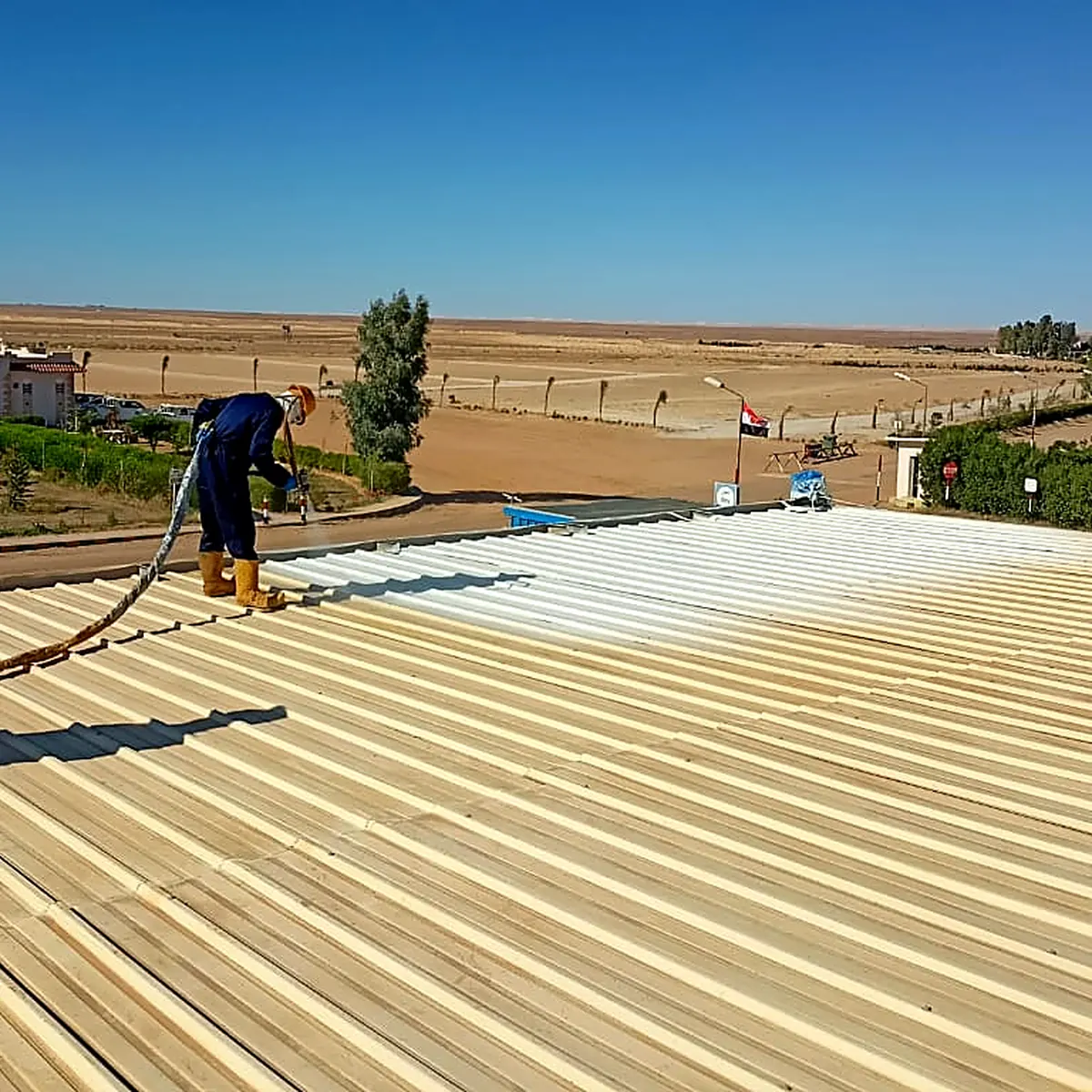
The foam is applied with two-component spray equipment, in passes that build a uniform layer over the corrugations and up the edges. The operator works with the wind and the metal temperature, because a hot, dusty roof in a desert wind is a difficult substrate if you rush it. Thickness is checked as the work proceeds, so the insulation is even rather than heavy in one bay and thin in the next.
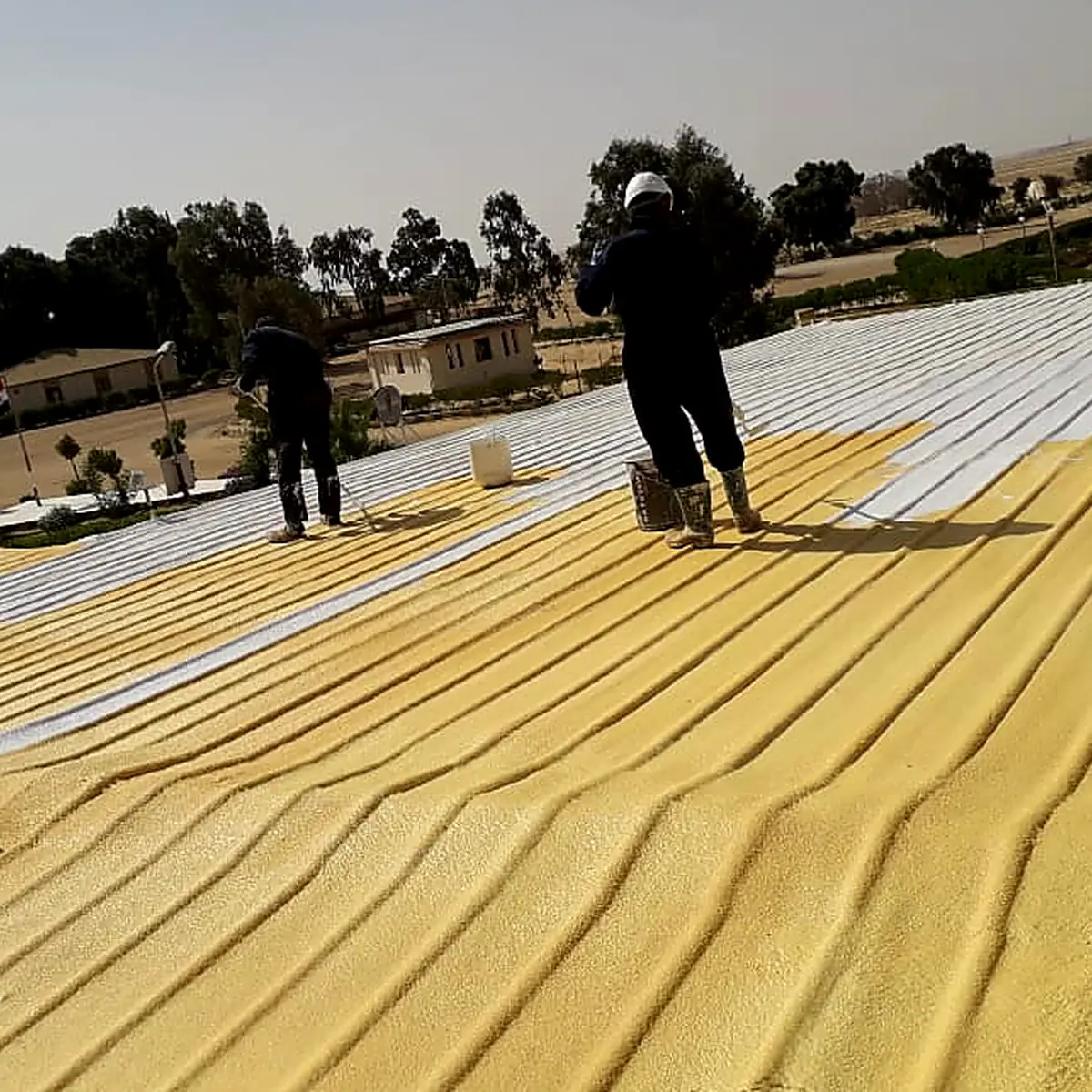
As soon as the foam is ready to receive it, the acrylic finish goes on. The coat must cover the foam completely, including edges and upstands, because any bare foam left in the sun will suffer. The finished roof is a continuous insulated skin: metal, foam, and a pale acrylic coat that reflects a share of the heat and protects the insulation.
05 ·
What does the finished metal roof deliver?
The rooms below sit under insulation instead of bare, hot metal. The corrugations are filled. The acrylic skin gives the foam the UV protection it needs in Abu Gharadig. That is the result this build-up is for.
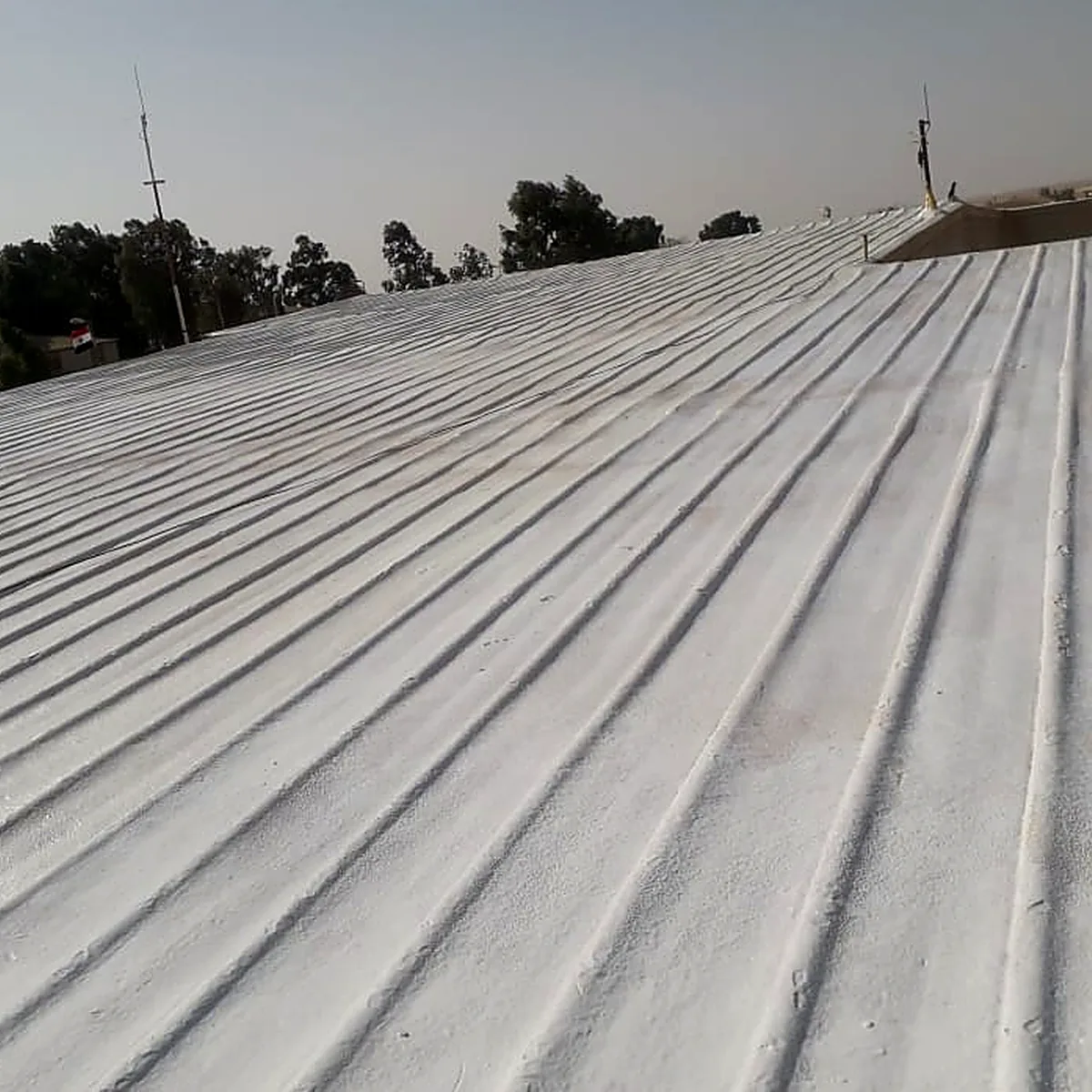
The foam-and-acrylic roofs sit beside the polyurea work on the same concession, as set out on the Khalda Petroleum project article. Each exposure kept the system that exposure needed.
06 ·
Which products are used?
Rayston spray polyurethane foam, with an acrylic finish
Two-component spray polyurethane foam for roof insulation, protected with an acrylic topcoat against UV. The Khalda programme used this build-up on villa and building roofs. Choose the foam grade from the Rayston range against the roof’s thickness and loads; do not assume a grade that is not named for this job.
07 · FAQ
Frequently asked questions
Why put foam on a metal roof?
A bare metal roof runs hot in the Western Desert and can leak at laps and fixings. Spray polyurethane foam fills the profile, cuts heat flow and, once it is skinned with a protective finish, helps the roof shed water.
Does the foam need a topcoat?
Yes. Spray foam should not be left bare in the sun. At Khalda the foam received an acrylic finish. That coat protects the foam from UV and gives the roof a reflective skin.
Which foam grade was used?
The Khalda record names polyurethane foam with an acrylic finish, not a single density grade. Krypton’s Rayston spray polyurethane foam range covers several closed-cell roofing grades. The right grade depends on the roof, the thickness and the loads. See the grade guide, and do not treat a typical grade figure as a measurement from this job.
How is a corrugated roof prepared?
The sheets must be sound, clean, dry and free of loose rust, oils and standing dust. Weak laps and failed fixings are dealt with before spraying. That bond is what stops the foam peeling when the metal moves in the heat.
Is this the same as polyurea waterproofing?
No. Spray polyurethane foam is an insulation layer. Polyurea is a waterproofing membrane. At Khalda both were used, but on different roofs: foam plus acrylic on villa and metal roofs, spray polyurea on tiled plant roofs, and polyurea sheets in the evaporation pond.
Who applied the foam at Khalda?
The application was carried out by ETS, the Engineering Co. for Trade and Supplies.
08 ·
Where is the field case?
The field case is the Khalda Petroleum concession at Abu Gharadig, in Egypt’s Western Desert. The map marks the Abu Gharadig area pin used on the project article.
Abu Gharadig, Western Desert, Egypt
Photos
Photos from the Khalda metal roofs