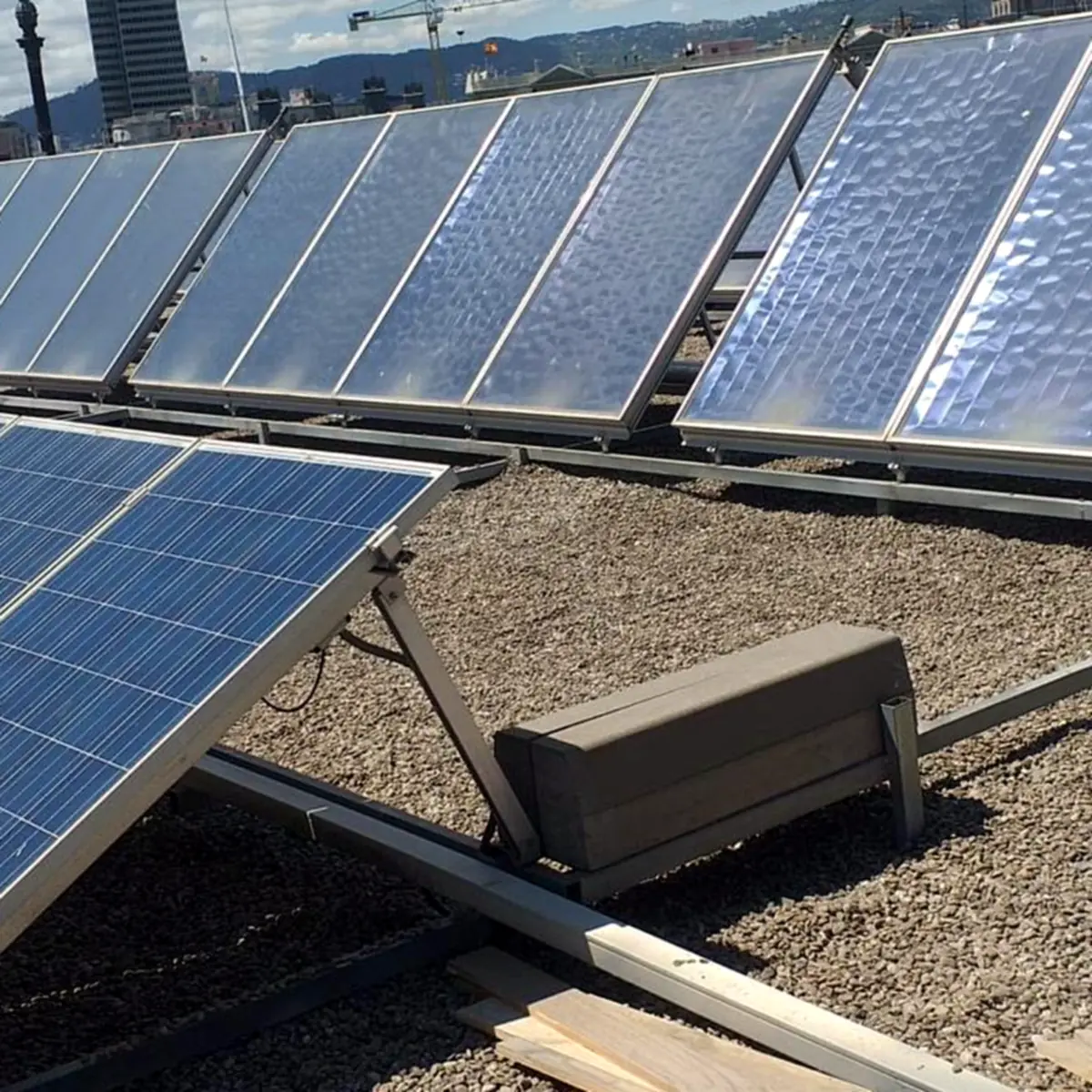
Car Park Roof Waterproofing Barcelona: Maremagnum, Port Vell
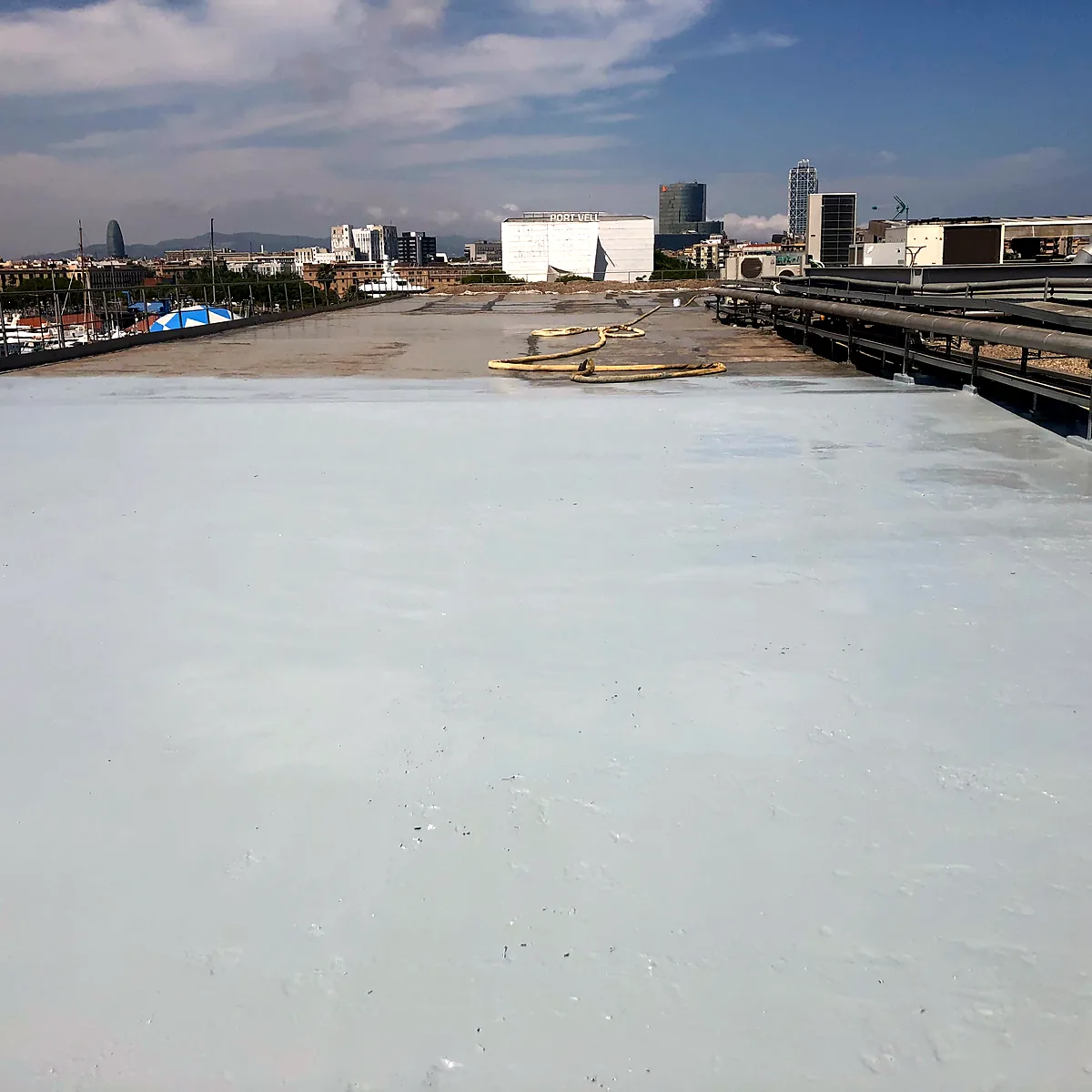
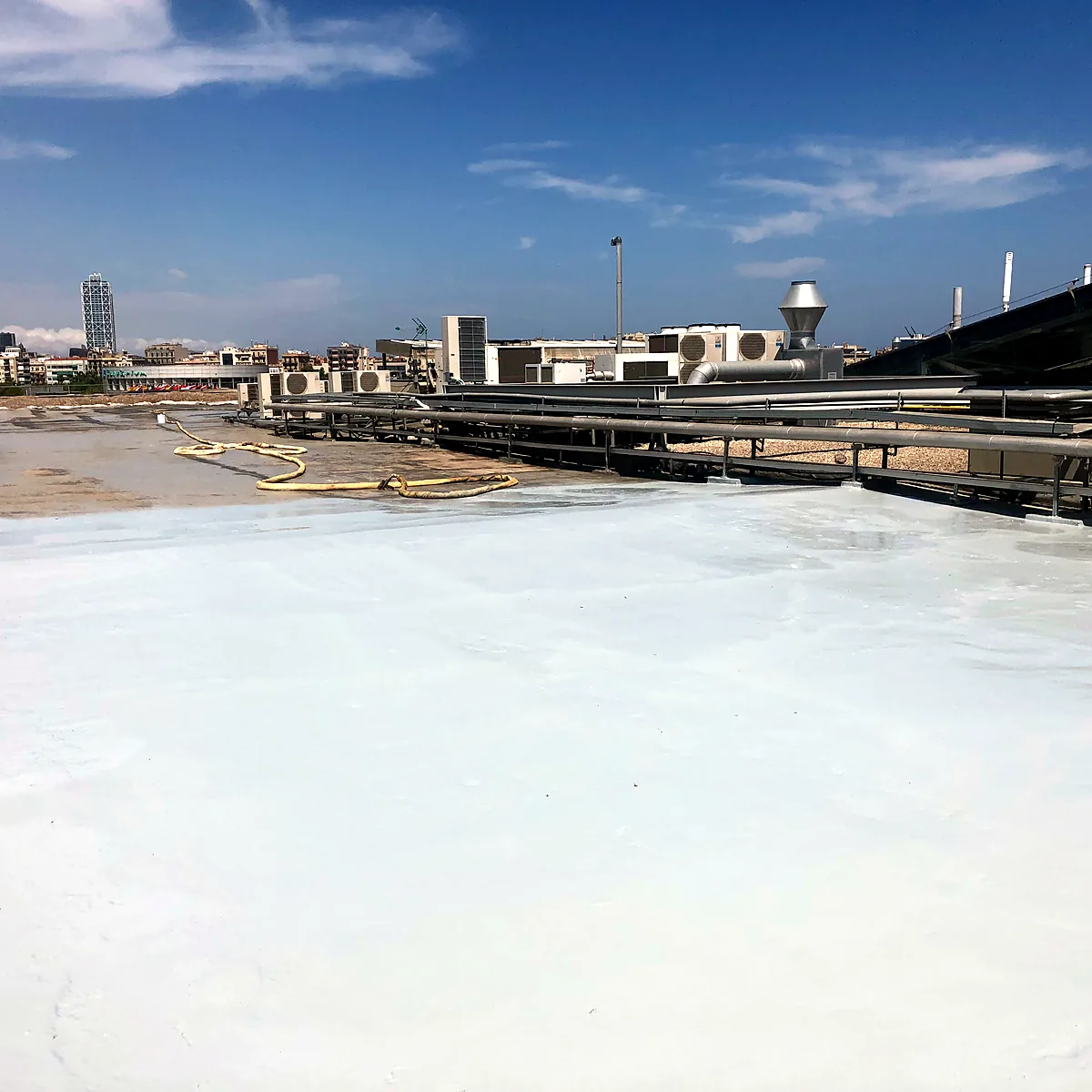
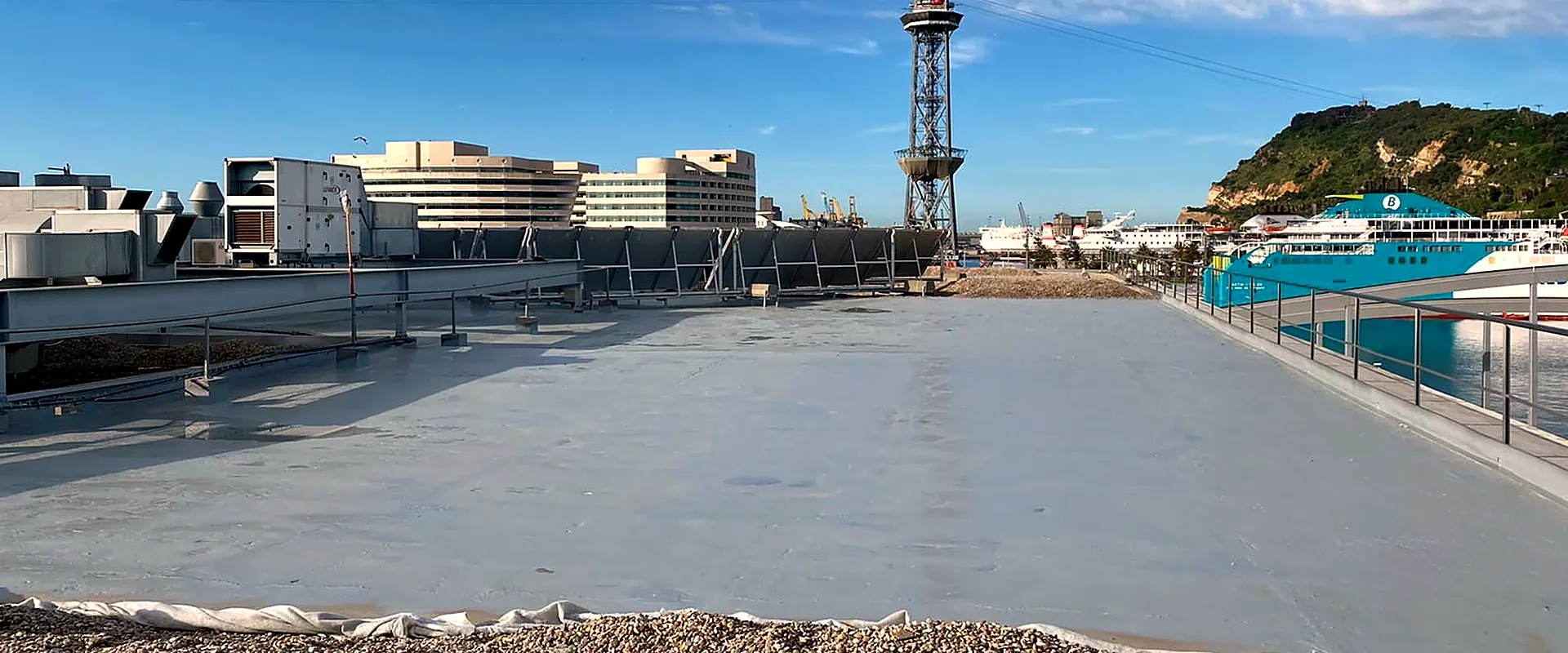
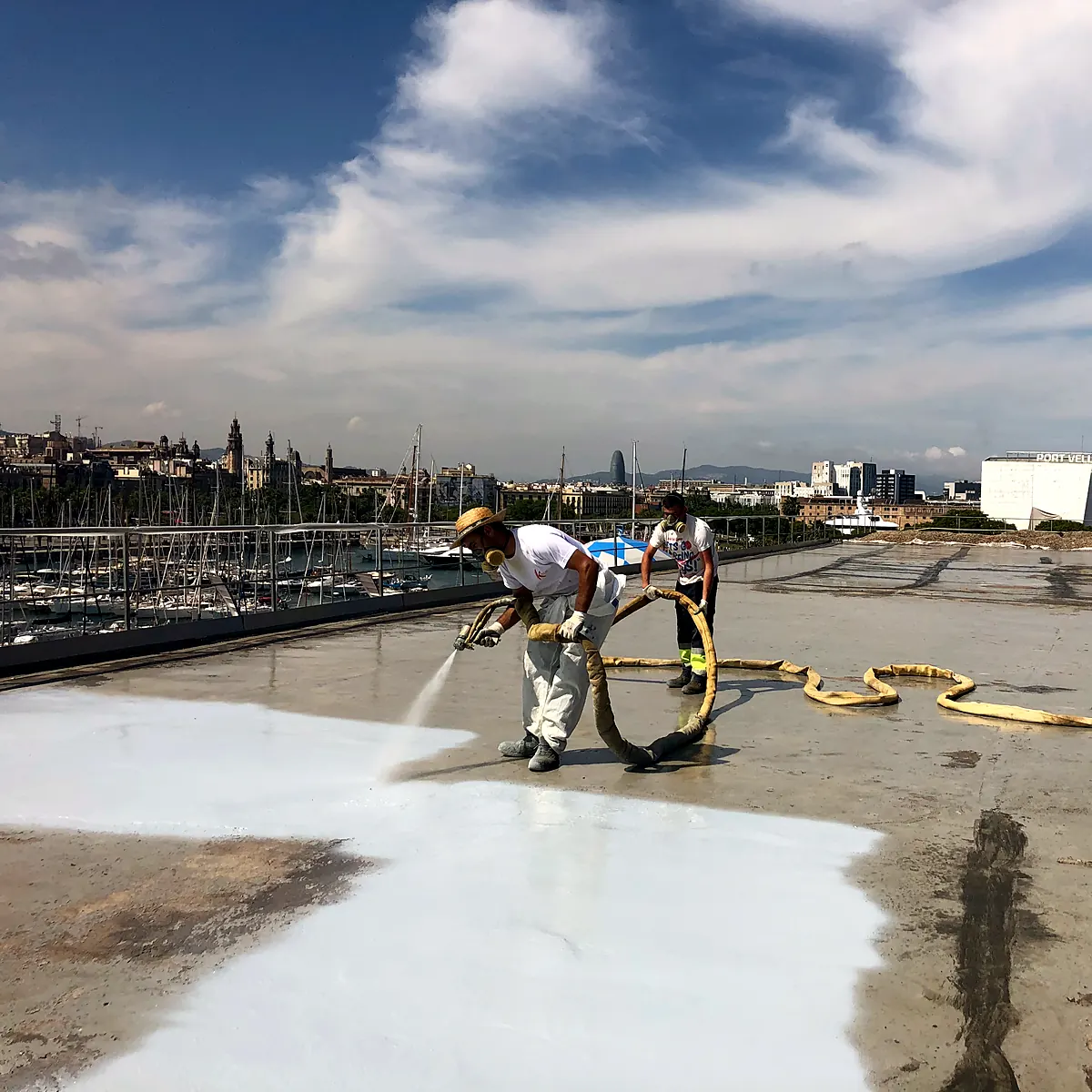
This car park roof waterproofing Barcelona project sealed the car park roofs of Maremagnum buildings 1 and 2, in the Port of Barcelona. In 2019 the concrete was primed with Rayston Epoxy 100 and waterproofed with hot-sprayed Impermax Polyurea H Flex.
01 · Project overview
What are the facts of this car park roof waterproofing in Barcelona?
| Project | Maremagnum shopping centre, buildings 1 and 2 |
|---|---|
| Location | Port Vell, Port of Barcelona, Catalonia, Spain |
| Year | 2019 |
| Use | Car park roofs (cubiertas parking) |
| System | R Proof H Basic |
| Primer | Rayston Epoxy 100 |
| Waterproofing layer | Impermax Polyurea H Flex |
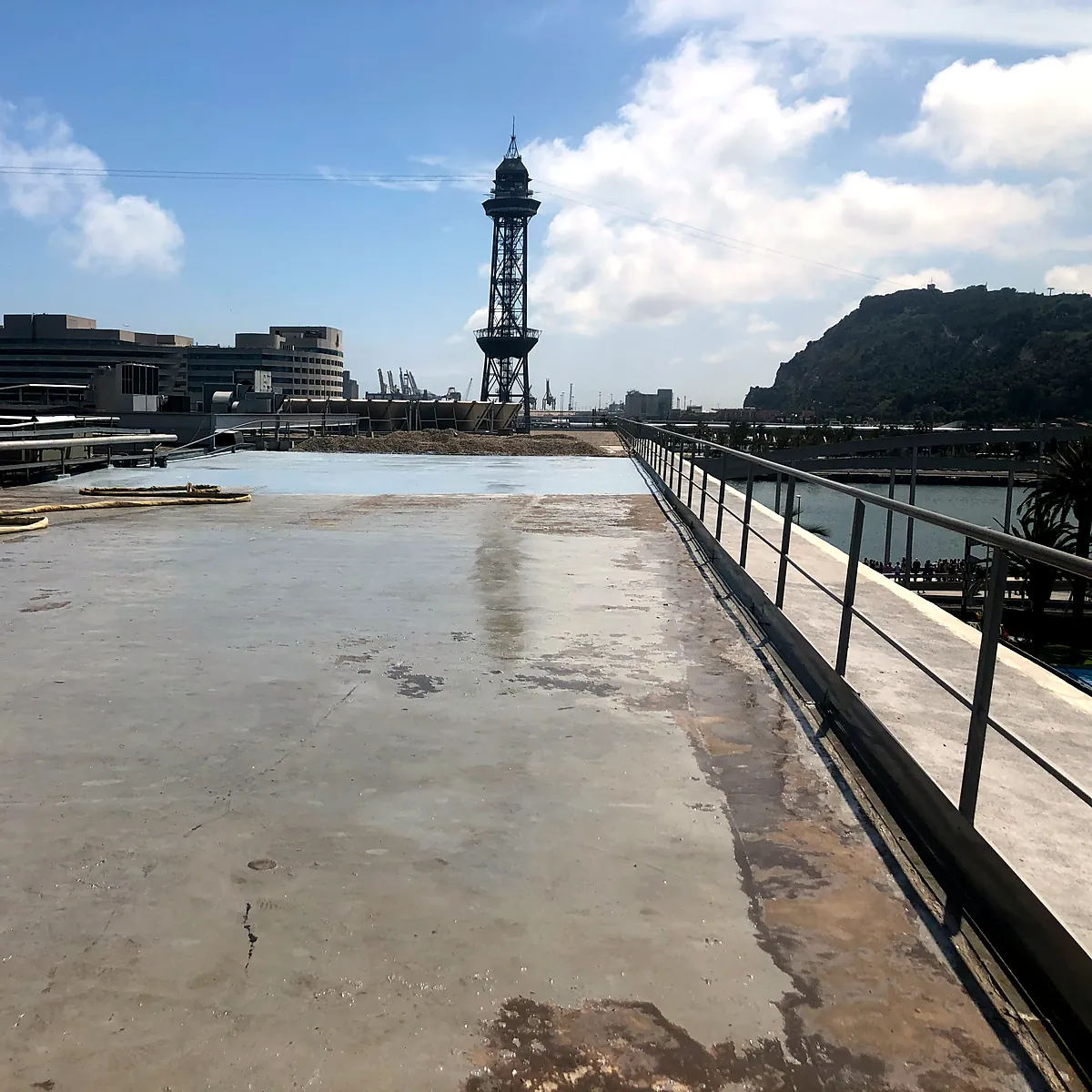
Maremagnum is the shopping and leisure centre of Port Vell, Barcelona’s old harbour, reached on foot by the Rambla de Mar bridge from the bottom of La Rambla. Port Vell was reborn as a waterfront for the city around the 1992 Olympic Games, and today millions of residents and visitors pass through it every year.
Krypton Chemical was trusted with the car park roofs of one of the most visited places in Barcelona. A busy waterfront centre cannot close for roof works, so the system had to be fast, clean and right first time.
02 · Challenge
What did the Maremagnum car park roofs need?
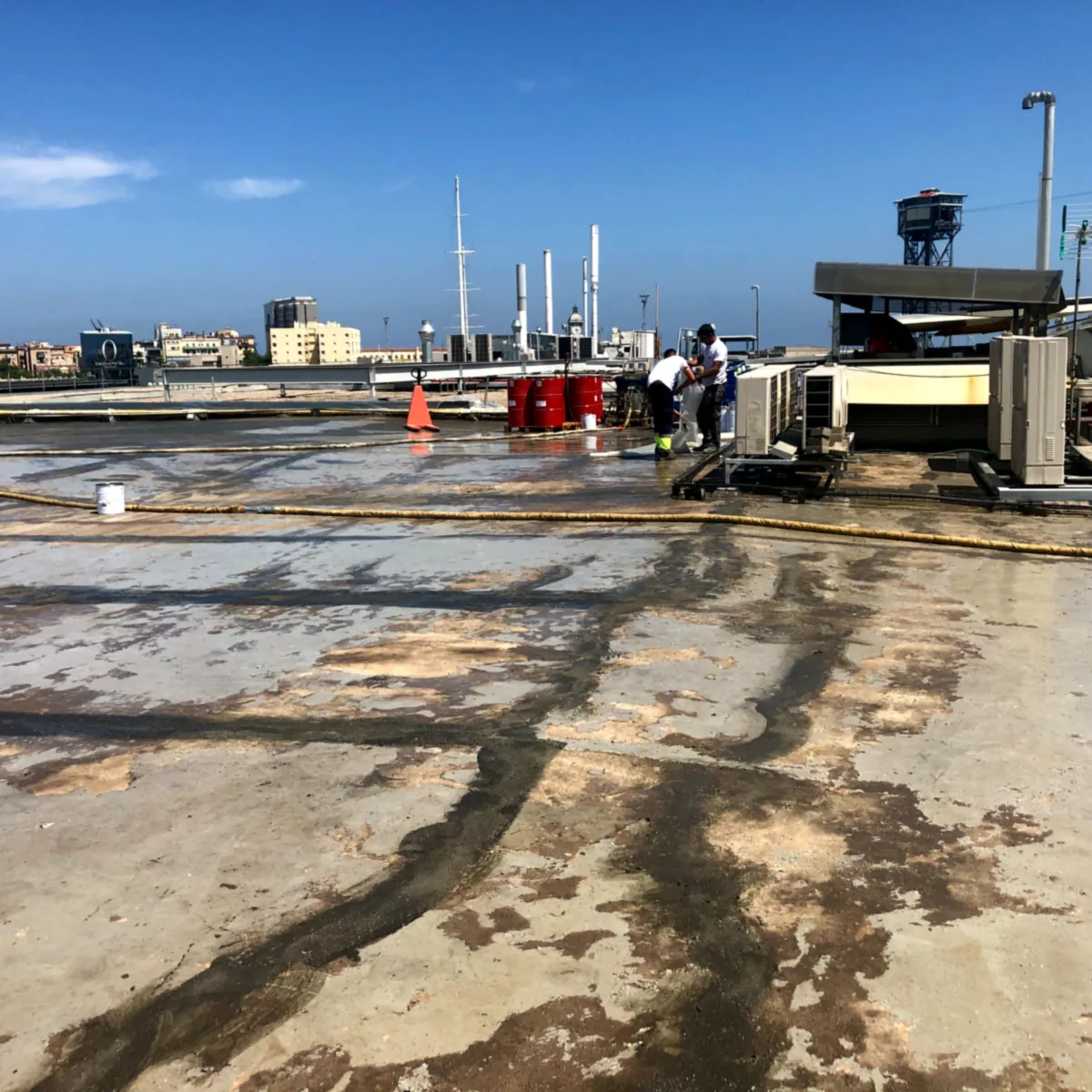
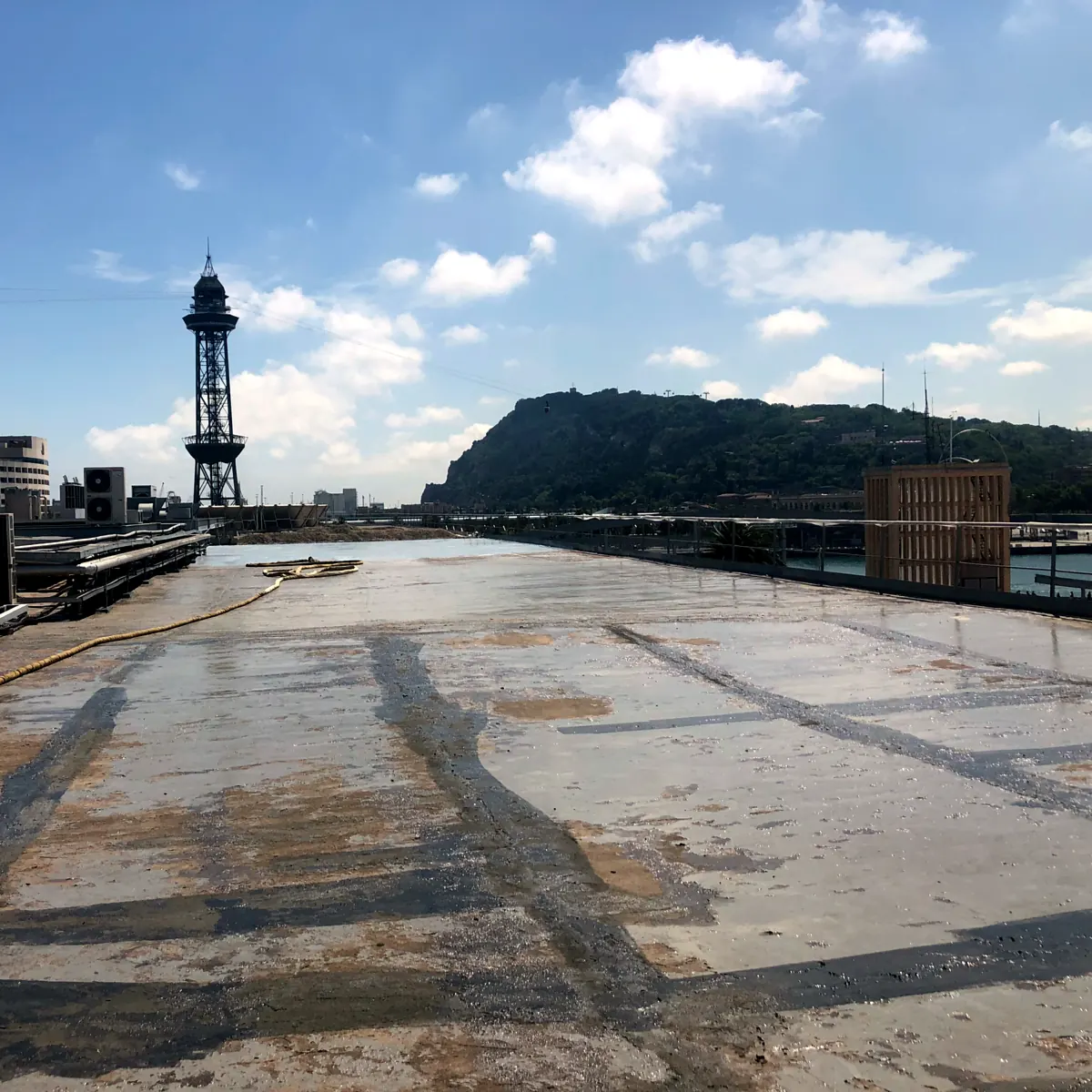
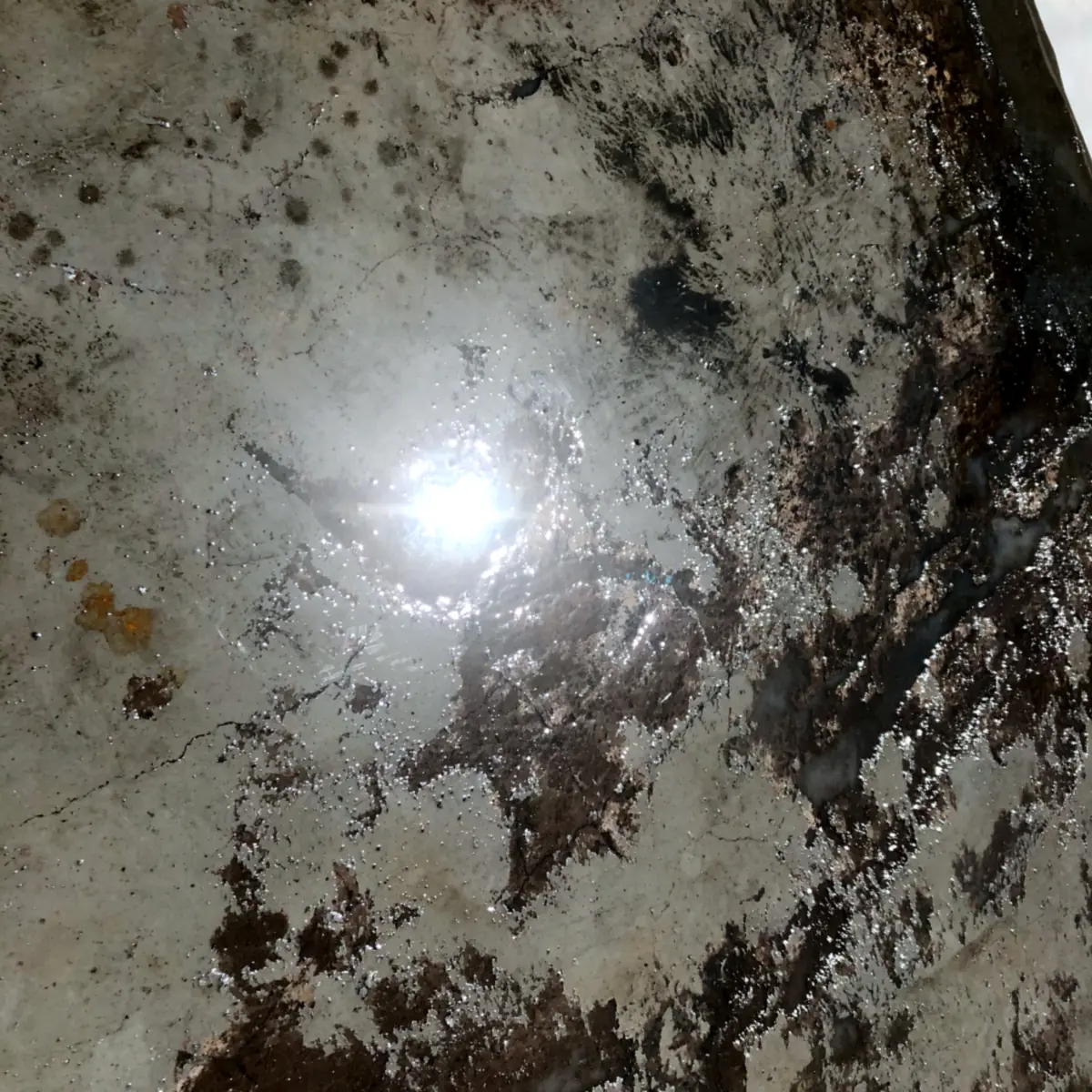
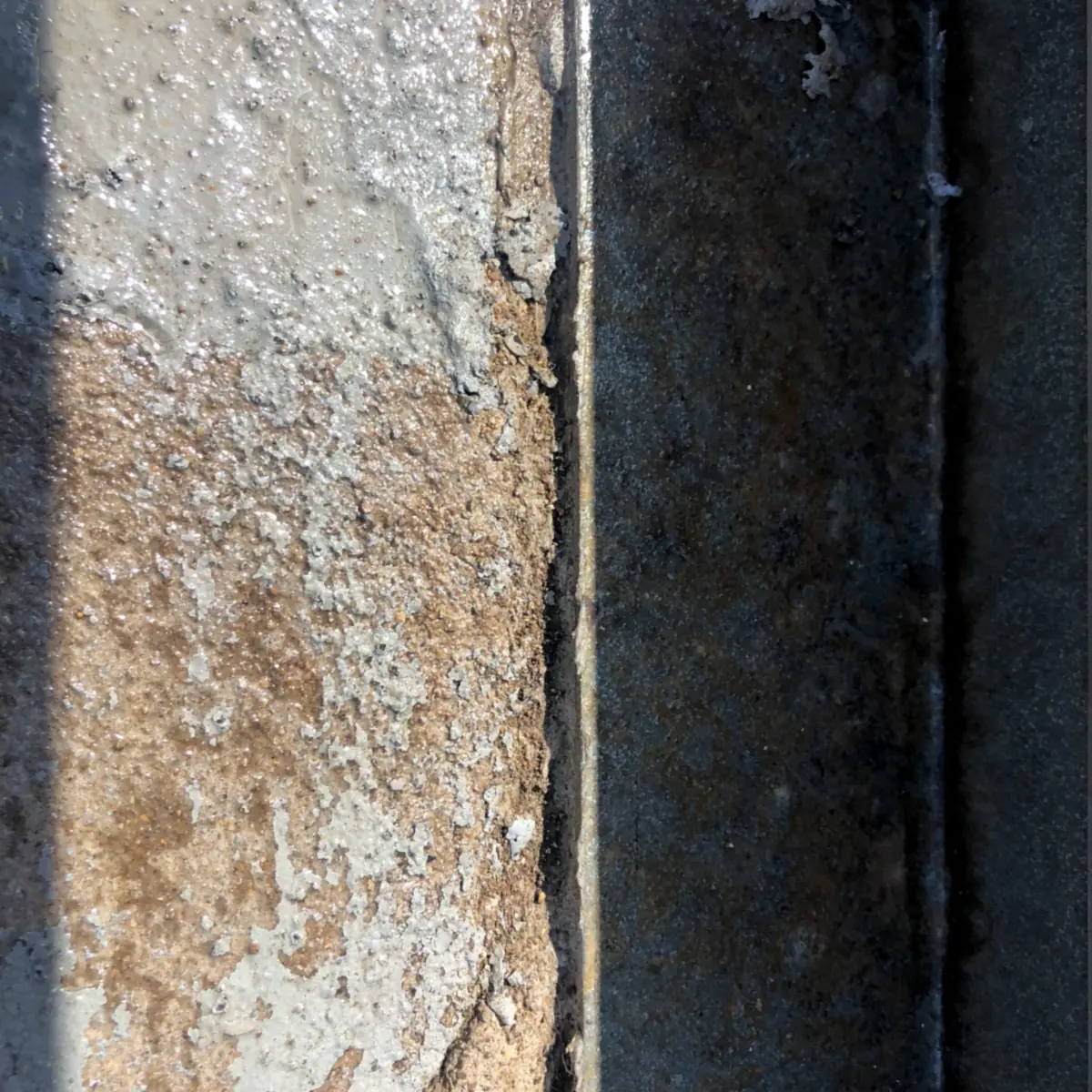
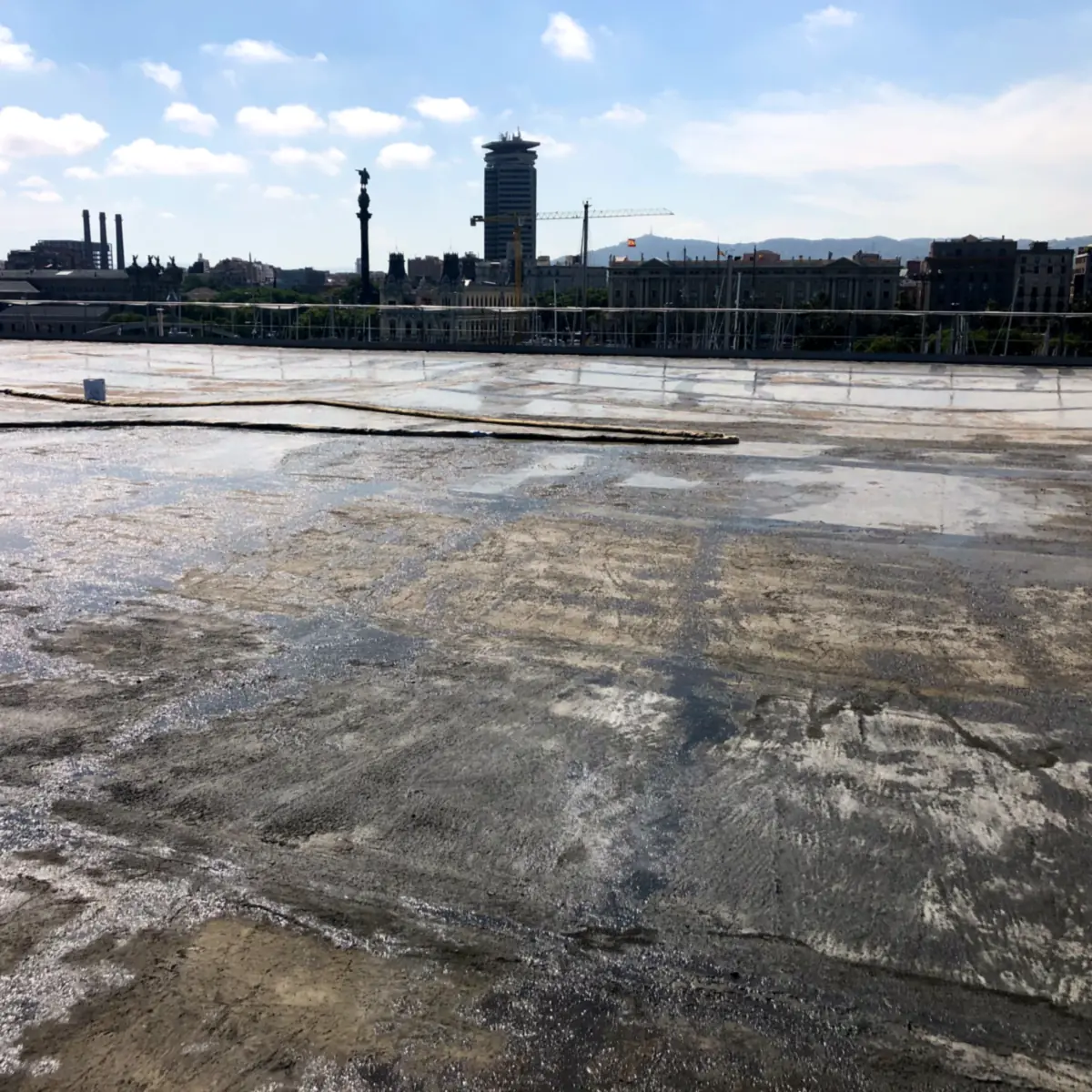
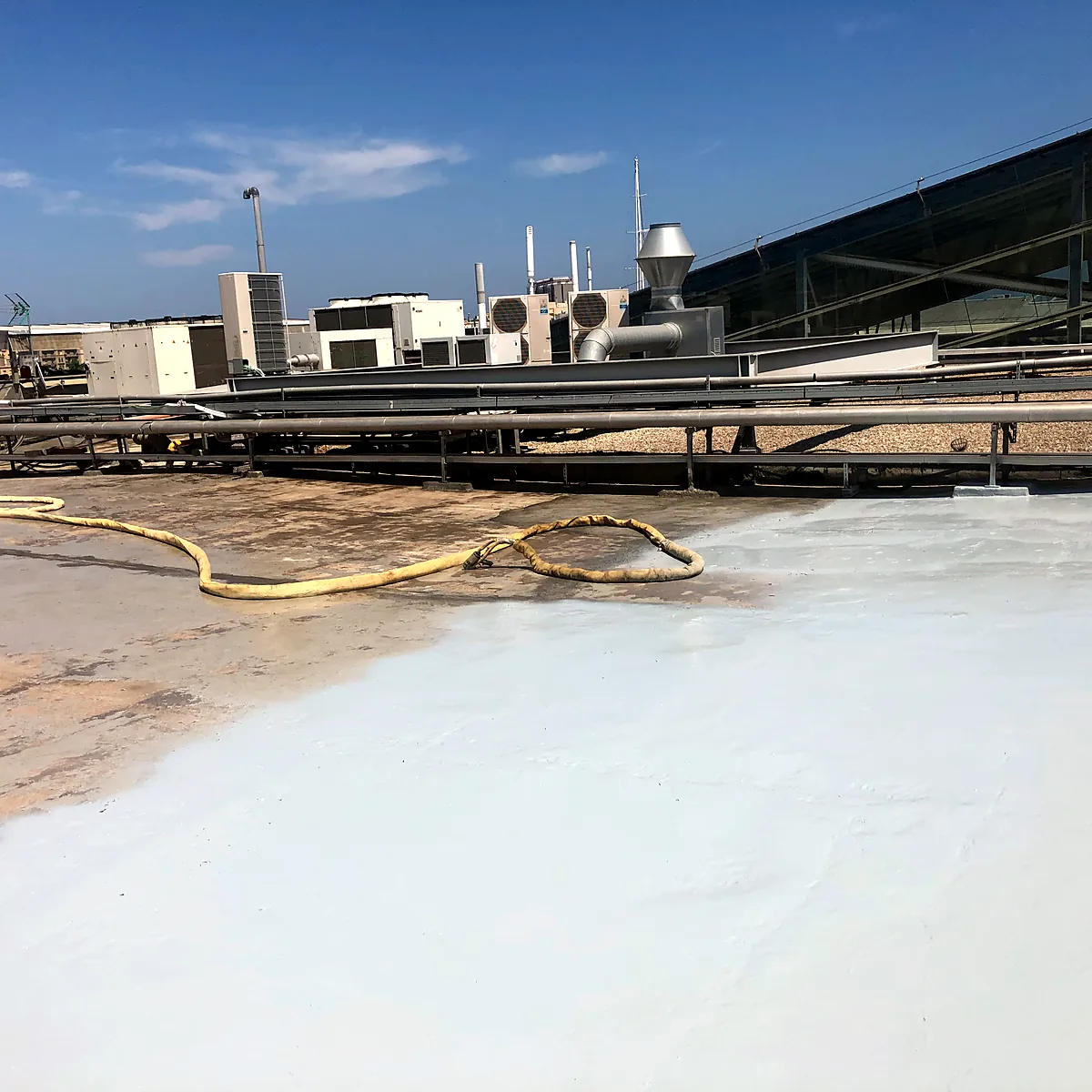
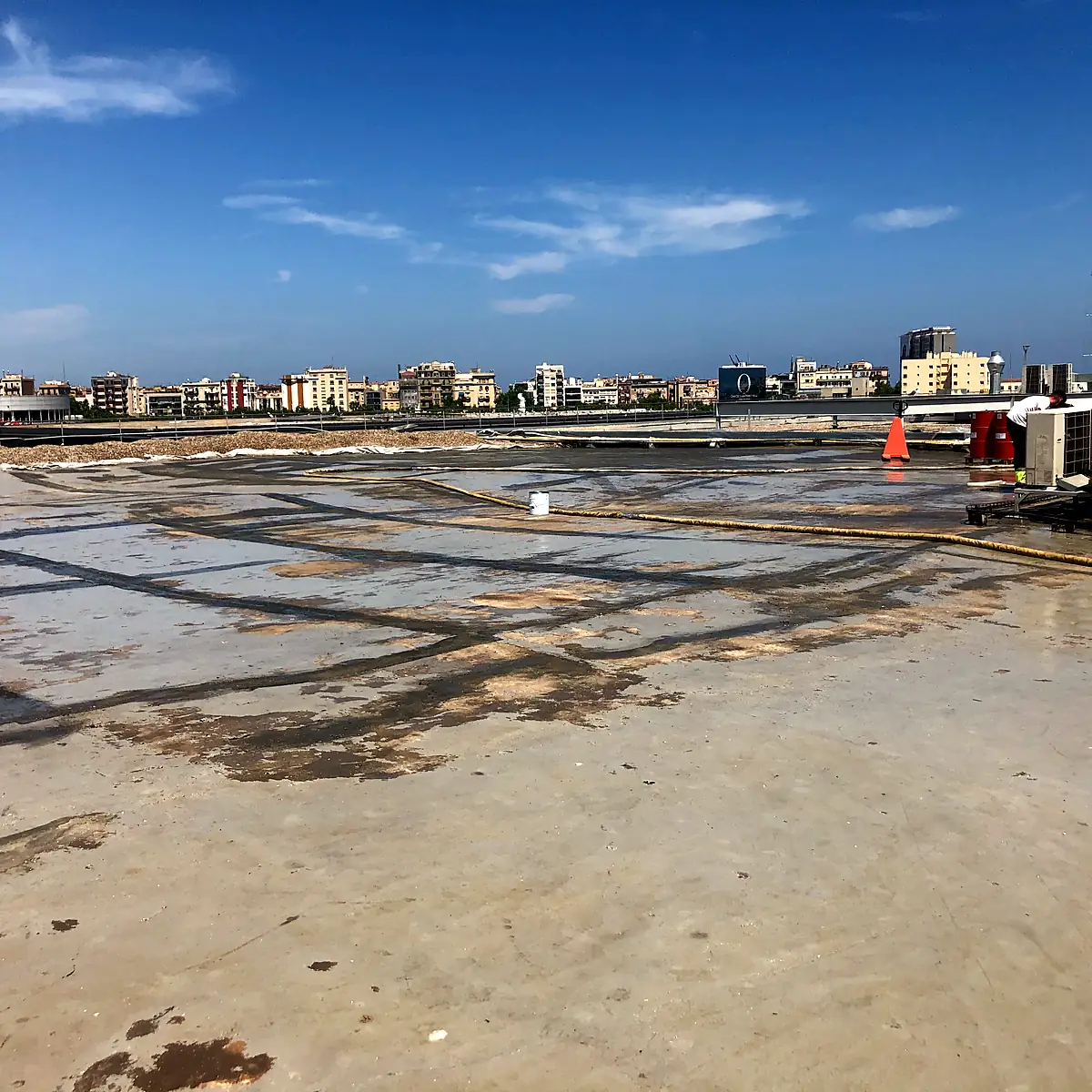
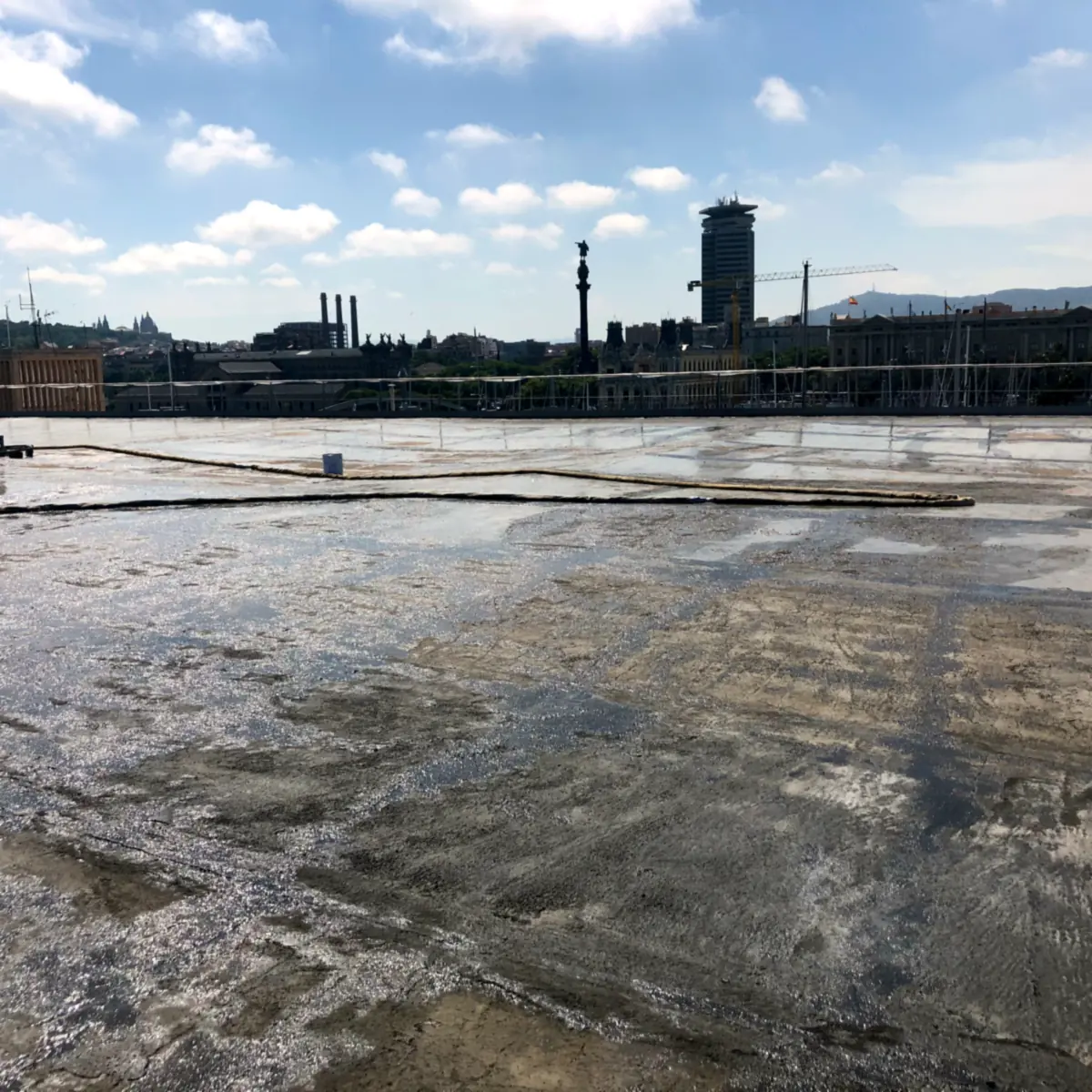
Maremagnum stands right on the water. Before the works, the roof slab was worn and stained, with dark lines along every joint where water had been getting in for years. On a car park roof, those joints lead straight to the vehicles and spaces below.
Also, a roof by the sea takes sun, rain and salty air every day, and the slabs move with every change in temperature. So the membrane had to stay elastic, bridge the joints and cracks, and keep salt away from the concrete. Finally, a fast-curing system helps keep a busy centre open during the works.
03 · Solution
Why Impermax Polyurea H Flex for these roofs?
The system has two steps. First, Rayston Epoxy 100 seals and primes the concrete. It is a low-viscosity epoxy primer for dry concrete that bonds to it at 5.0 MPa, so the membrane sits on a sealed, stable base.
Then Impermax Polyurea H Flex forms the waterproofing layer. It is a two-component polyurea made by Krypton Chemical that cures in minutes into an elastic, crack-bridging membrane. Because it is seamless, there are no laps or joints for salt water to reach. It is watertight under a 60 kPa water column (EN 1928), and it stretches 400% before breaking, so it rides over the old slab joints.
04 · Application
How was the car park roof waterproofing applied in Barcelona?
On an old slab by the sea, the bond to the concrete decides everything. The sequence is as follows.
- Clean and prepare the old slab. The roof is washed down and prepared so the concrete is clean, sound and dry, with a pull-off strength of at least 1.5 N/mm². Open joints and cracks are repaired first.
- Prime with Rayston Epoxy 100. As a rule, 200–500 g/m² goes on. The support must be dry, with moisture below 4%, and between 15 °C and 40 °C. The primer seals the pores so no air rises into the membrane.
- Check the weather. For the membrane, air should be between 10 °C and 40 °C, with humidity below 85%. Wind over 25 km/h disturbs the spray, which matters on an exposed harbour roof.
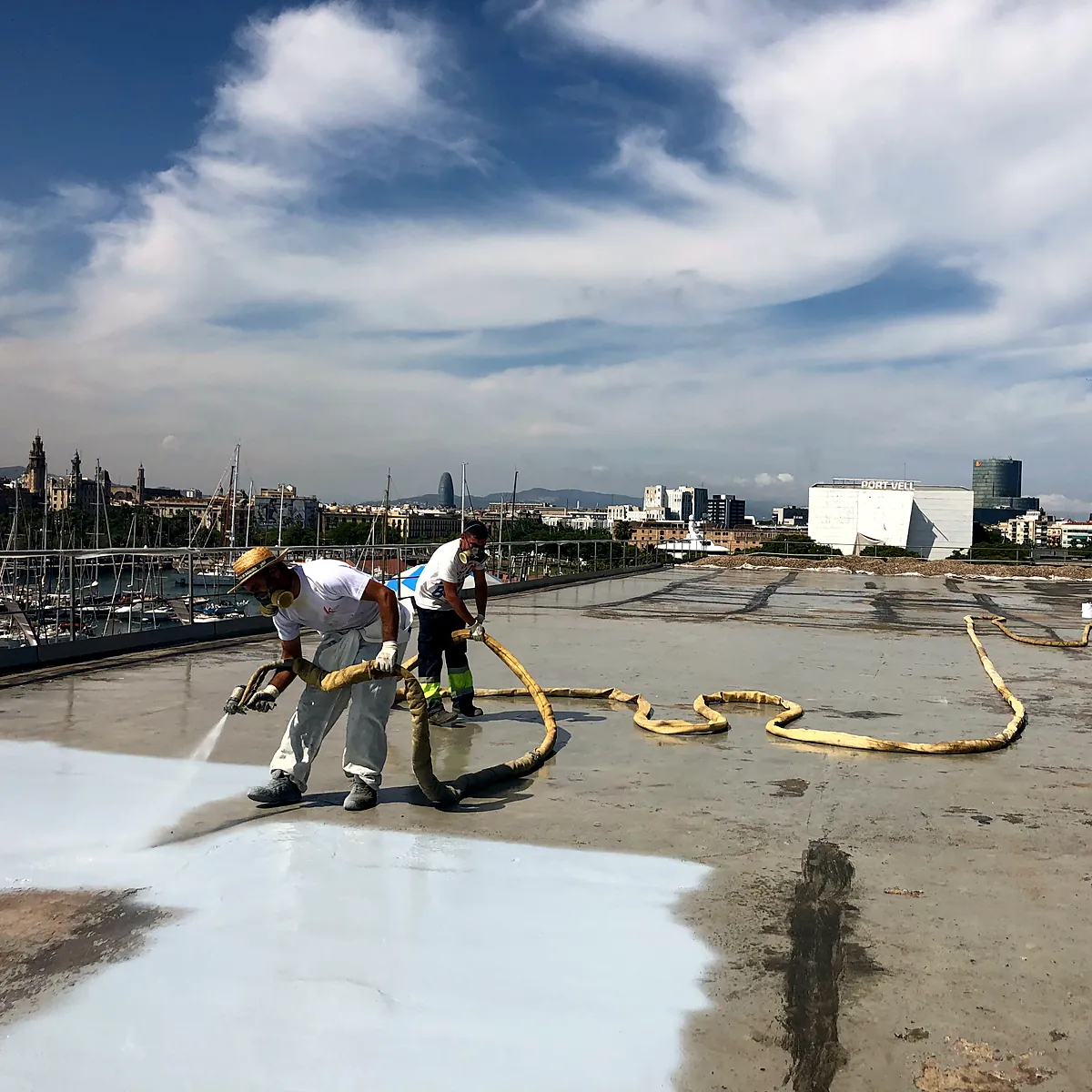
- Hot-spray Impermax Polyurea H Flex. Both components run at about 70 °C, the hose at 65 °C, and pressure at 135–170 bar. As a rule, about 2 kg/m² goes on in one coat, section by section.
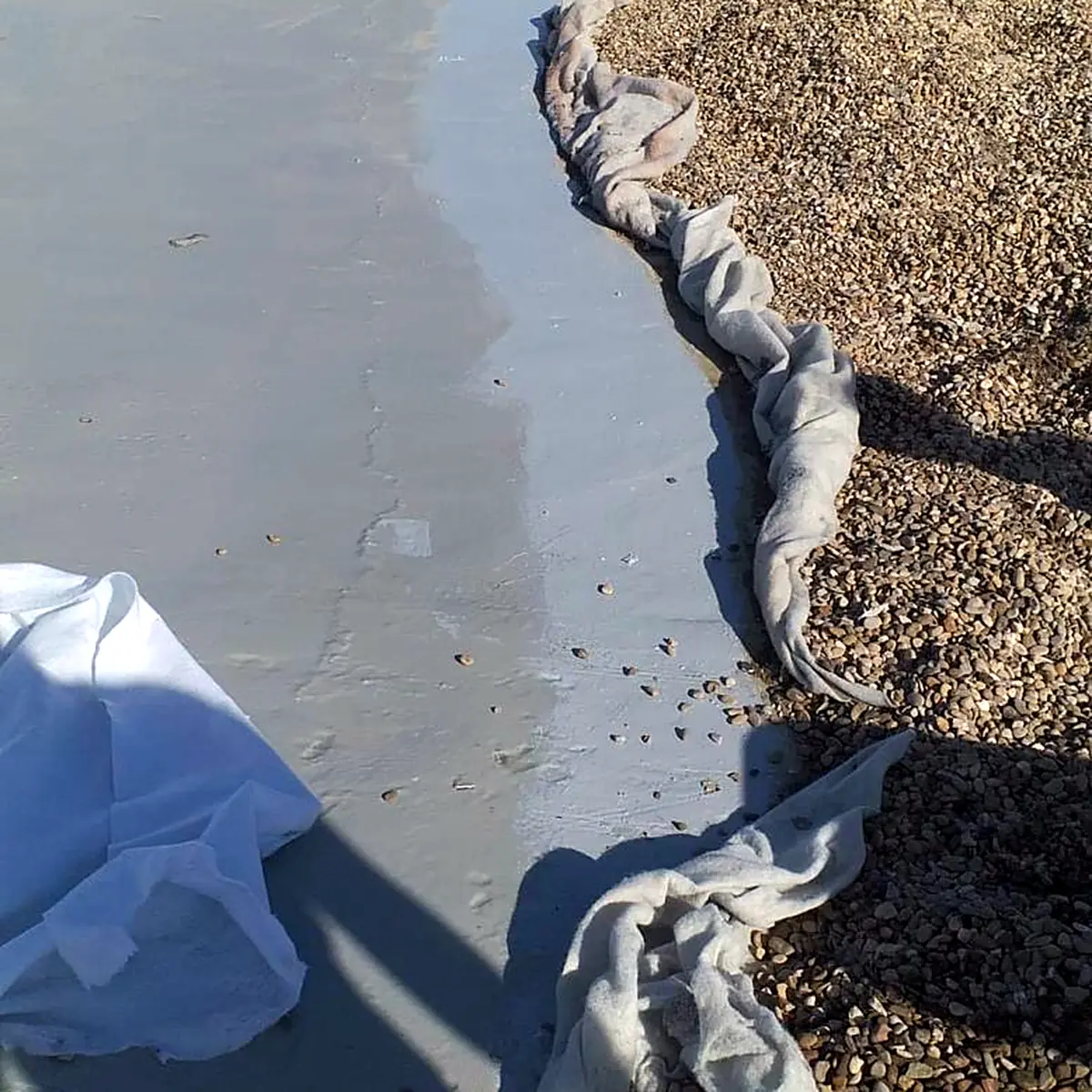
- Carry the membrane under the gravel. On the ballasted areas, the membrane runs continuously under the gravel, so there is no weak edge between finishes.
After that, the membrane cures within minutes. At 25 °C and 50% humidity, it resists rain drops after 15 minutes, takes light foot traffic after 1 hour and reaches 90% of its final properties after 2 days. That short cycle suits a busy centre that stays open below.
05 · Results
What does the car park roof waterproofing in Barcelona deliver?
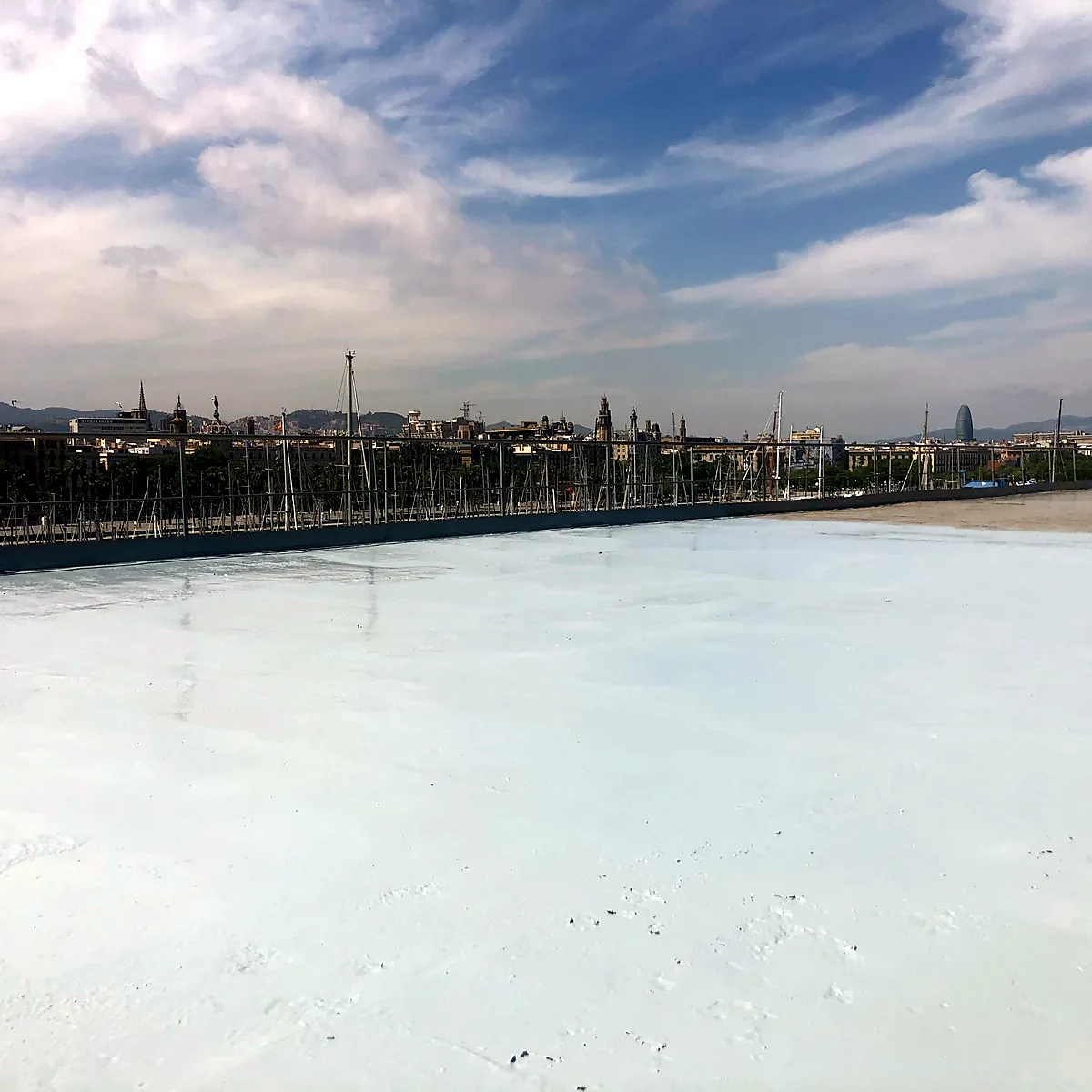
As a result, the Maremagnum car park roofs carry a seamless, elastic polyurea membrane, including the areas under the gravel ballast. As typical data, it reaches crack bridging class A5 at 23 °C and −10 °C, and an impact strength of 24.5 N·m. So it follows the movement of the old slabs and resists the knocks of a working roof.
Overall, this car park roof waterproofing Barcelona job shows a fast way to seal a busy roof by the sea. See also car park roof waterproofing in Mallorca and our Knowledge article on the Newbery airport car park.
06 · Products
Which Krypton products were used?
Impermax Polyurea H Flex
Role here: Waterproofing membrane on the car park roofs. Sprayed, hot-applied polyurea waterproofing membrane (TDS).
- Elongation at break: 400%; tensile strength: 15 MPa (TDS)
- Hardness: 90 Shore A / 40 Shore D (TDS)
- Watertight at 60 kPa, EN 1928 (TDS)
Rayston Epoxy 100
Role here: Primer that seals the concrete under the membrane. Two-component, high-solids epoxy primer for dry concrete (TDS).
- For substrates with humidity below 4% (TDS)
- Adhesion to concrete: 5.0 MPa (TDS)
- CE marking to EN 13813 (TDS)
Certifications
- Impermax Polyurea H Flex: ETA 21/0740 (bridge deck waterproofing, CE marking), ATG Belgium nº 3247, Broof(t2) external fire behaviour, hail resistance EN 13583, reaction to fire class B2 (DIN 4102-1) — per current TDS
07 · FAQ
Frequently asked questions
Why prime the concrete before spraying polyurea?
Rayston Epoxy 100 seals the pores and bonds to concrete at 5.0 MPa. That stops air and moisture rising into the membrane and gives it a stable base.
How soon can the roof be used after spraying?
At 25 °C and 50% humidity, the membrane resists rain after 15 minutes and takes light foot traffic after 1 hour. It reaches 90% of its final properties after 2 days.
How does the work affect the building below?
The work is done from the roof, and each section cures within minutes. So disruption to the centre below is kept short.
How much membrane goes on per m²?
As a rule, about 2 kg/m² of Impermax Polyurea H Flex in one coat, over 200–500 g/m² of epoxy primer.
Does the membrane bridge the old slab joints?
Yes. It stretches 400% before breaking and reaches crack bridging class A5 at 23 °C and −10 °C.
Does it need a topcoat?
Not to stay watertight. Aromatic polyureas change colour in sunlight, so an Impertrans or Colodur topcoat adds UV protection where colour matters.
08 · Photos
Project photo gallery