
Home / Knowledge / Ponding is a design condition
Ponding is a design condition
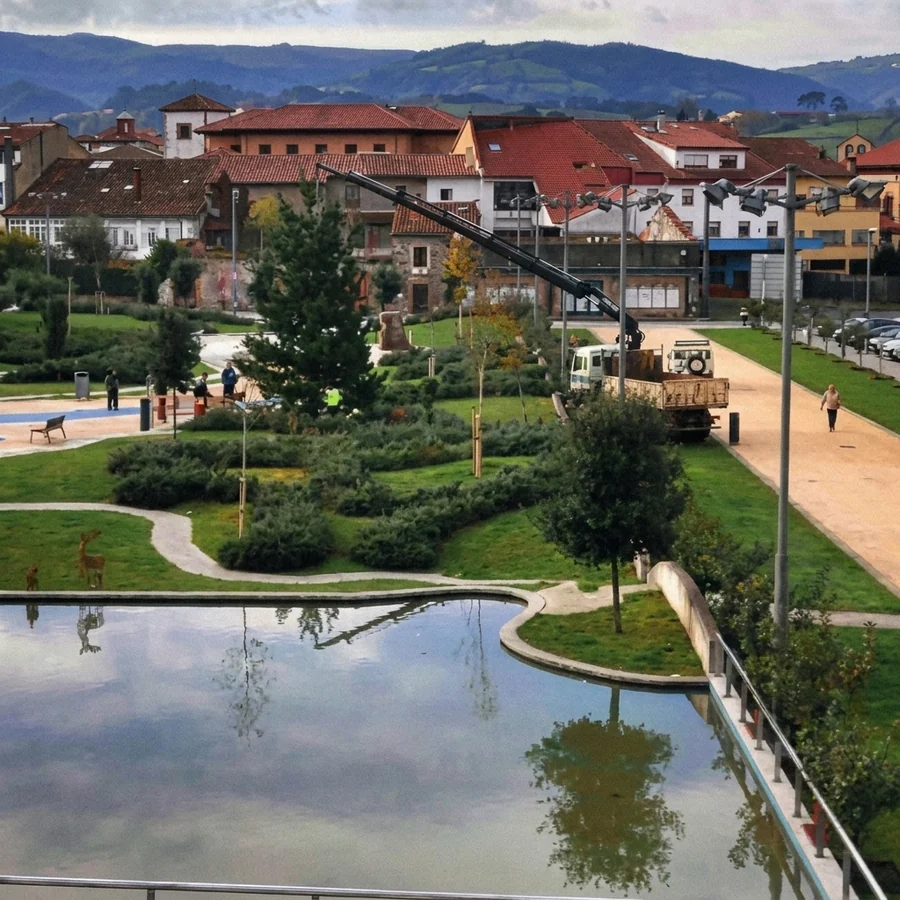
Ponding is a design condition. A UV topcoat does not rescue a dead-flat roof. Therefore the specification must name the exposure before the membrane.
When ponding is a design condition, not a defect
Catalogue 2026 writes Impermax Aqua and Impermax Aqua 2K for wet rooms and water-retaining structures. Polyurea Rayston (pure polyurea) carries WRAS where drinking water is the exposure. Blue-roof language in the catalogue sits with Impermax Cold Polyurea (ETE 17/0509).
However, do not move a WRAS or ponding claim onto a membrane the catalogue does not mark that way. Impermax (one-component moisture-cured polyurethane, 1K PU) is not automatically an immersion lining. Also, a pond photograph is not a roof card.
If the roof will pond, say so in the specification. Then pick the application page that matches the exposure. After that, read consumption from the current TDS, then the calculator.
Where this site sends the reader
See indoor wet rooms, ponds and artificial lakes, and Polyurea Rayston. Documents: /documents/.
Outbound reference: CEN-CENELEC — EN 1504 family.
A dead-flat roof without that clause is still a ponding risk. Write the exposure before the product name.
Therefore the current TDS remains the source for mix ratio, overcoat and consumption. Then the calculator sizes the area. However, a number invented here would be a specification error. In addition, the application page is the schedule. After that, open documents. Also keep the finish on the same clause as the body. A sample, a colour or a photograph does not replace that sentence.
These notes do not replace the current TDS, SDS or a written specification. For pack sizes, mix ratio and kg/m², read the current sheet, then the calculator.