
Home → Applications → Ponds and artificial lakes
Ponds and artificial lakes
Ponds and artificial lakes require a continuous water-retaining lining matched to permanent immersion, bank and bed geometry, water chemistry and maintenance access. This engineering guide frames the application intent without replacing the current system specification or product technical data sheet.
Use and application
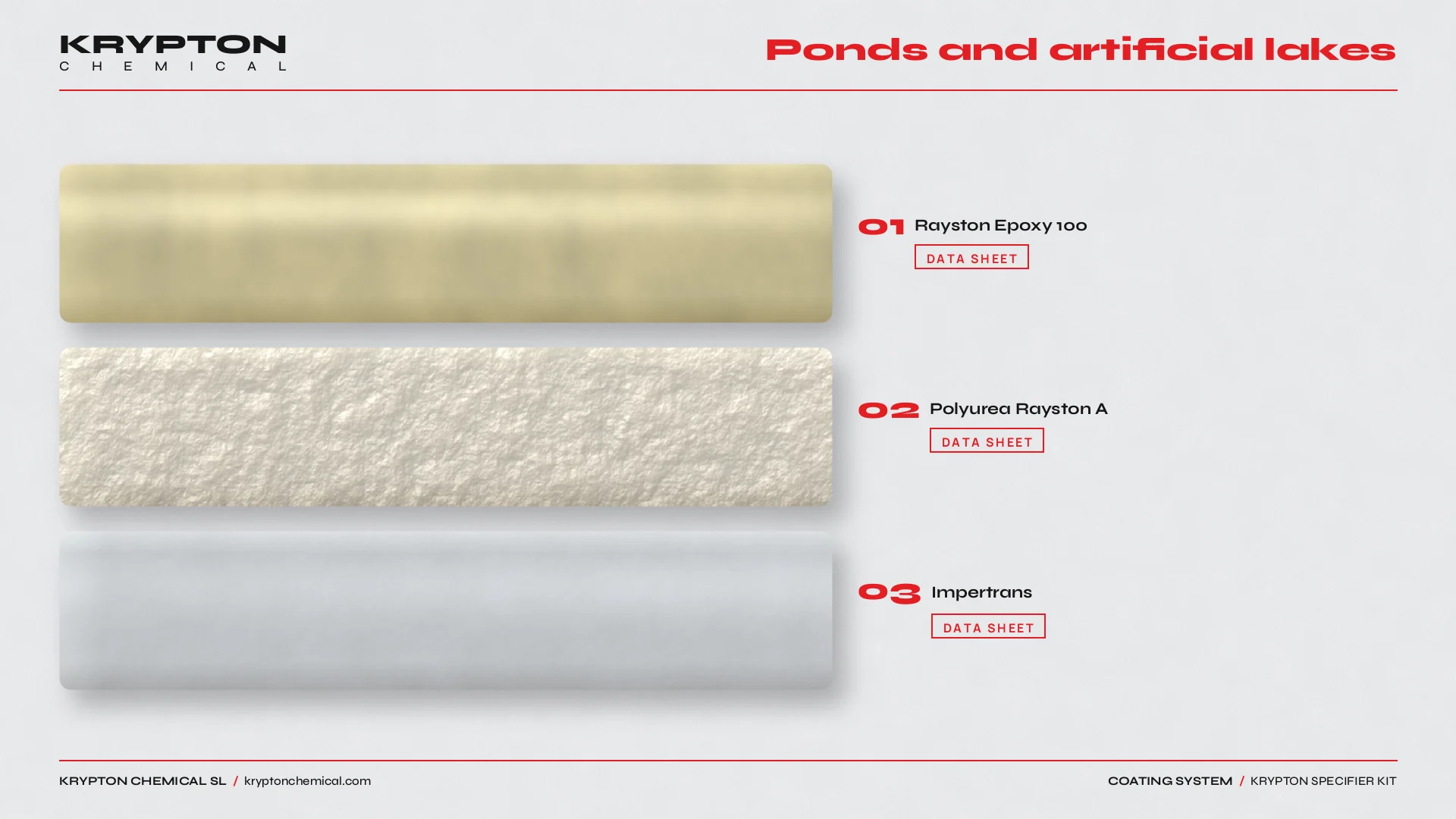
The application intent is waterproofing of ponds and artificial lakes. Start by qualifying the substrate, exposure, service level and maintenance constraints. Rayston Epoxy 100, Polyurea Rayston A and Impertrans are typical reference products for this application. Compare the current Products and Systems documentation, and use the associated application context at Decorative fountains to keep the scope distinct.
01
Immersion, banks and water-retaining detailing
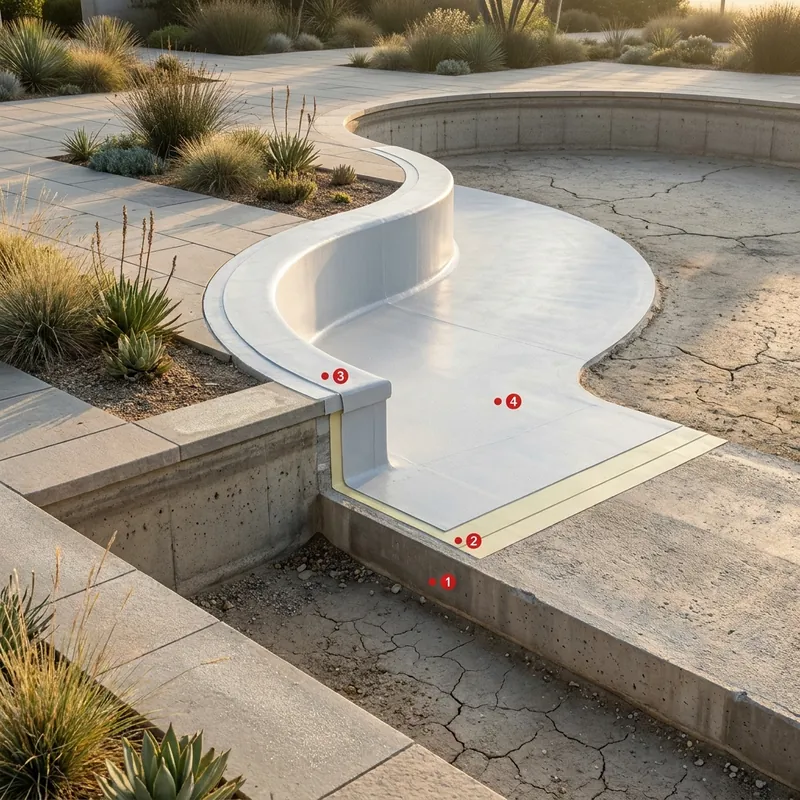
Ponds and lakes hold water permanently or seasonally across beds, banks and edges that see wet–dry cycling, UV and root or wildlife disturbance. Concrete, masonry or prepared earth substrates bring porosity, cracking and settlement risk. Inlet and outlet structures, overflows, pipe penetrations, bank–bed transitions and perimeter terminations need a continuous, documented detail before the lining route is fixed.
02
Layers and references
Define the sequence from prepared substrate through primer or bond coat, functional membrane or body coat, reinforcement where specified, and protective or finish layer where required. Use the current technical data sheet for preparation, mixing, consumption, thickness, overcoat windows and cure; the Calculator supports quantities, while Systems and the product references establish the applicable route.
03
Common mistakes
- Treating the open bed as the whole lining and omitting banks, overflows, inlets, outlets or perimeter terminations.
- Ignoring immersion chemistry, UV and wet–dry cycling at the waterline when selecting lining and protection.
- Closing the build-up before checking adhesion, thickness, pinholes and cure under water-retaining conditions.
04
Operating sequence
1. Record water chemistry, immersion regime, pond dimensions, substrate condition and service scenario. 2. Map banks, inlets, outlets, overflows, penetrations and repair zones. 3. Select a compatible route in Systems and verify every layer against the current technical data sheet. 4. Calculate quantities with the Calculator. 5. Approve a representative area, document preparation and application controls, inspect continuity and release the water body only when the project requirements are met.