Ramla Waterproofing
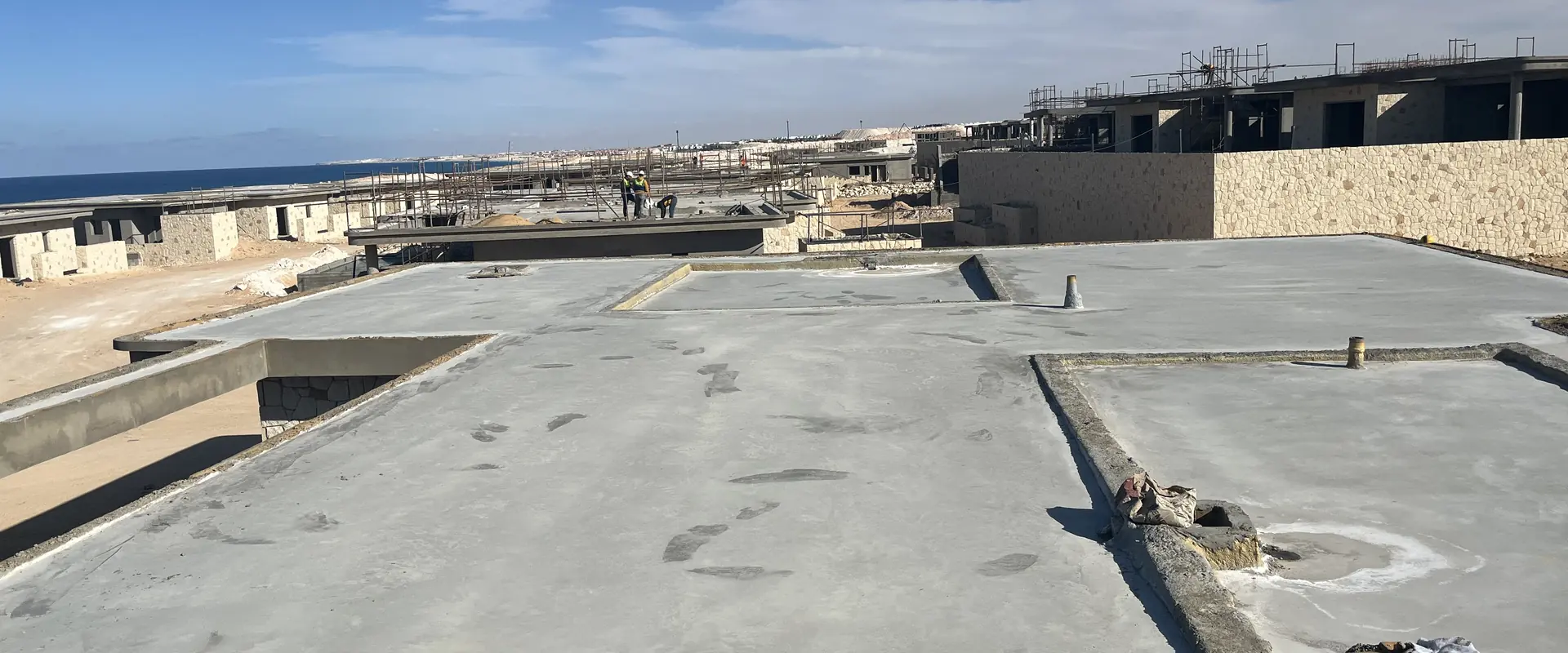
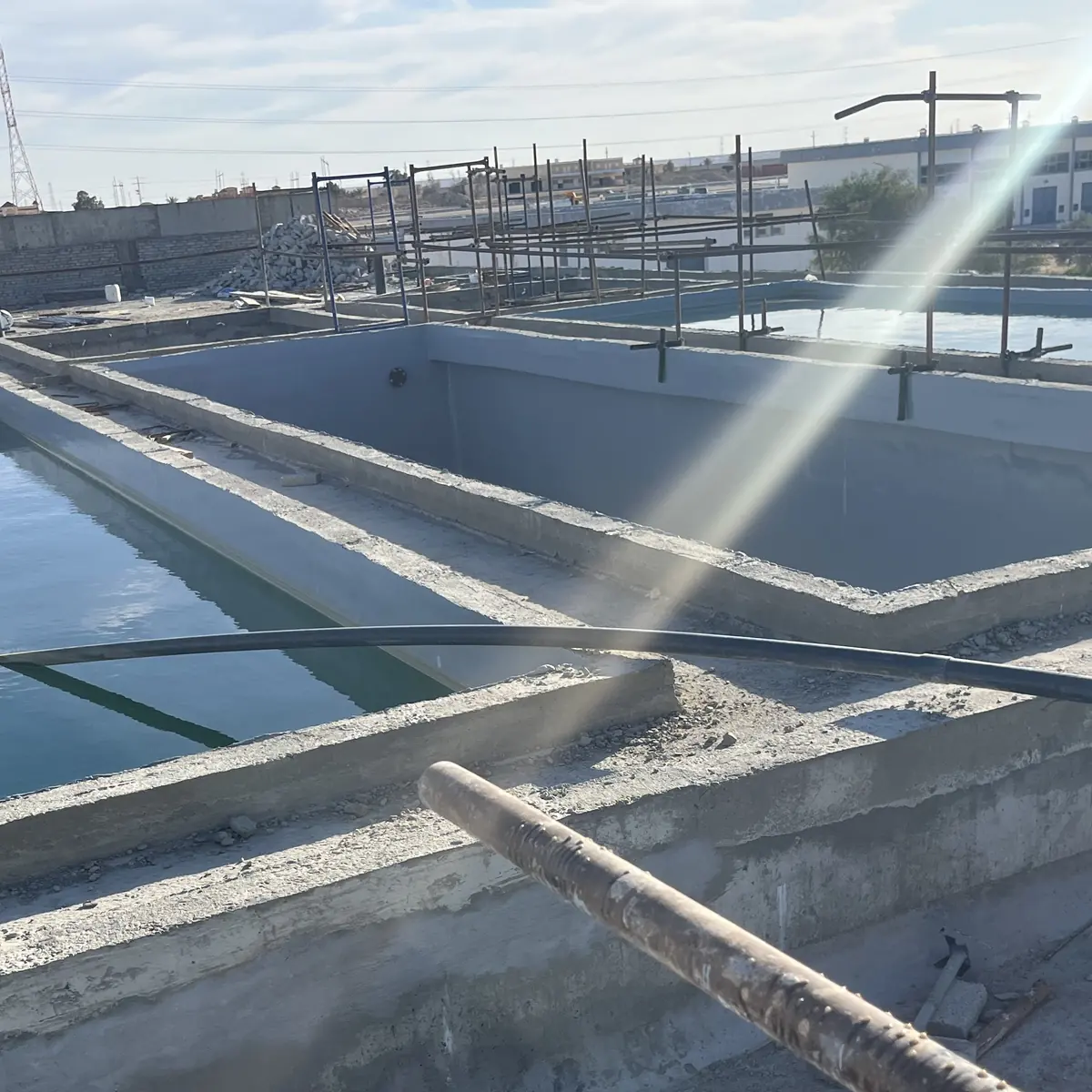
Ramla is a coastal compound still in the frame. The sea is on the horizon. The tanks and planter basins were lined with hot-spray pure polyurea, and the roofs were coated with Impermax, a liquid polyurethane.
Overview
Ramla sits on the coast. You can see the water from the roofs, and the wind that comes off it will be on those roofs for the life of the buildings. The compound was still in concrete and stone when the waterproofing went in: flat roof decks with upstands, rows of water tanks, and planter basins cut into the slab.
Two resins, because the duties are not the same. Krypton Chemical supplies both. Polyurea Rayston, hot-sprayed, lines the tanks and the planter basins that stay wet. Impermax, a one-component liquid polyurethane, coats the roofs in two passes a crew can roll between the other trades.
| Place | Ramla, a coastal compound in Egypt |
|---|---|
| Tanks and planter basins | Polyurea Rayston, hot-spray pure polyurea |
| Roofs | Impermax, liquid polyurethane, two coats |
Challenge
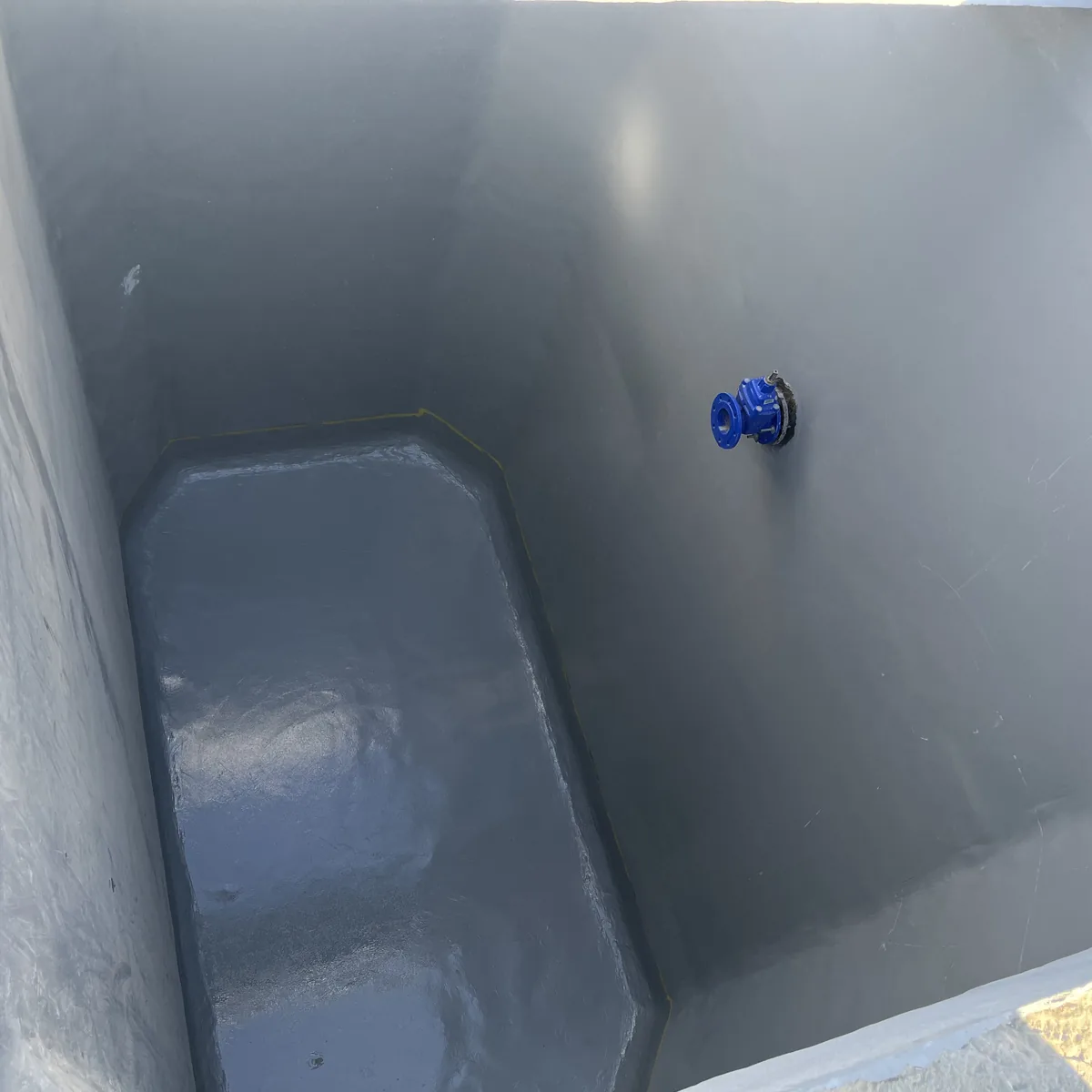
A tank on a coast is a box that must not leak into the slab under the villas. The corners are sharp, the outlets are flanged, and once the tank is lidded or built over, nobody is coming back to touch up a holiday. The lining has to be right when the first water test is filled.
Planter basins are the same idea with soil on top. They hold irrigation water against concrete, and roots will look for a crack. A thin paint in a planter is a stain on a ceiling two floors below.
The roofs have a different day. They are wide, flat, and open to salt air and a sun that pushes the concrete past the temperature of the shade. Upstands around openings, and the edge toward the sea, take the water that the slope sends them. A liquid membrane has to follow that movement without a machine the size of a spray rig parked on a half-built villa.
Solution
Polyurea Rayston gels in about 4 seconds at 25 degrees C. In a tank that means the corner and the flange can be sprayed and they stay where they were put. The typical film is 1.5 to 2 mm, from 1.5 to 2.0 kg per square metre. Elongation is about 324 percent, tensile strength about 16.2 MPa, tear strength 69 N/mm. Liquid water permeability is 0.002 kg per square metre per square-root hour. A tank lining lives or dies on that last number, and on the flange being in the same film as the wall.
Impermax is the roof membrane. It is a liquid polyurethane, rolled, brushed, or sprayed cold with airless equipment, in two coats of about 1 kg per square metre each. The coats are different colours so a miss shows. Elongation is 450 to 600 percent and tensile strength 2.5 to 4.3 MPa. On a coastal roof that elongation is the point: the deck moves every day, and the film has to move with it. It reaches about 90 percent of its properties in three days. Final hardness takes 10 to 15 days, and water should wait for that.
Application
Tank concrete is prepared until it is a real substrate. Pull-off at least 1.4 N/mm2, moisture under 4 percent, temperature 10 to 40 degrees C. Open the pore, repair the cracks, and get the dust out of the corners. A flange is metal: clean it and prime it. Then spray. Component A at 65 degrees C, component B at 75 degrees C, hose at 65 degrees C, pressure at least 140 bar. Build 1.5 to 2 mm, and do not leave the cove or the outlet for a second visit that never happens.
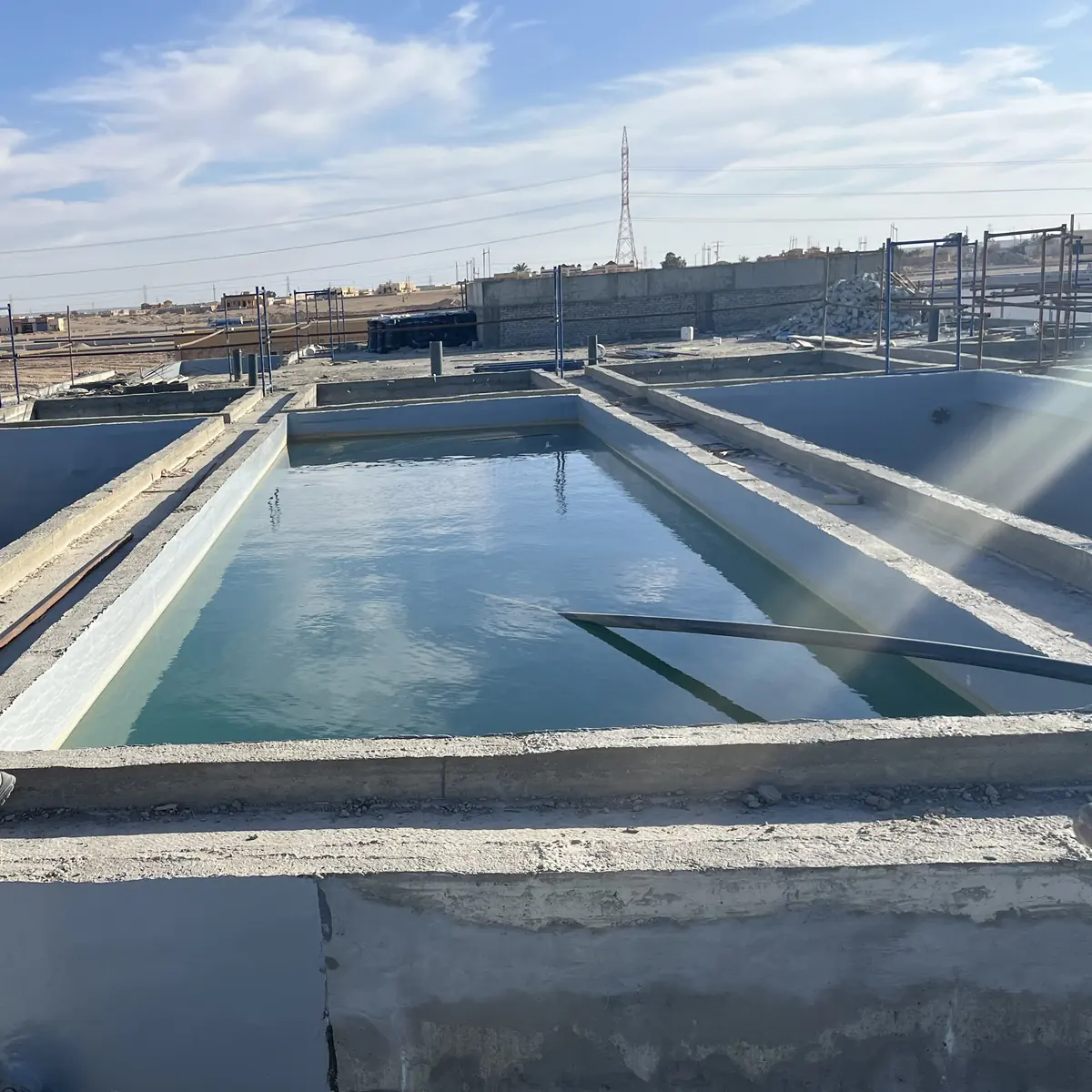
The water test is the acceptance. Tanks at Ramla were filled and held. A lining that looks even and loses level is not finished. The outlet is the first place to look, then the floor-to-wall line.
Planter basins take the same polyurea logic: a wet soil box is a small tank with a planting medium on top. The film has to be continuous up the sides. A holiday under soil is found by the ceiling, not by the gardener.
Roofs with Impermax start from a clean, dry deck between 5 and 40 degrees C. Above 45 degrees C, which a coastal slab can reach in the early afternoon, the work stops or changes to the measures Krypton sets out. Stir the pail slowly so settled solids come back and bubbles can leave. Do not thin it with a solvent that is not Rayston PU Solvent. Two coats, about 1 kg per square metre each, in two colours. A spiked roller breaks bubbles while the coat is wet. Upstands and outlets are coated in the same passes, not painted later with whatever is left in the tin.
People can usually walk the Impermax in one or two days. Water, including a hose test, waits 10 to 15 days. That patience is part of the system. Polyurea does not ask for the same wait. Mixing the two calendars is how a roof gets flooded before it is hard, or a tank sits empty for a fortnight it did not need.
Results
The compound tanks are lined in dark grey pure polyurea, with the outlet flange buried in the same film, and they have been filled for a water test. The planter basins take that same hot-spray lining, because they stay wet. The roofs on the sea side are the Impermax duty: two coats of liquid polyurethane over decks that face salt air and a hard sun.
Nothing here depends on a lap. The tank is one sprayed film. The roof is two full coats that overlap only as coats, not as sheets. Krypton Chemical makes both resins. The crew on site puts each one where its cure and its thickness make sense.
Products
Polyurea Rayston
Hot-spray pure polyurea for tanks and planter basins. Typical 1.5 to 2 mm. Gel about 4 seconds at 25 degrees C. Elongation about 324 percent.
Impermax
Liquid polyurethane for the roofs. Two coats at about 1 kg per square metre each. Elongation 450 to 600 percent. Water contact after 10 to 15 days.
FAQ
Why polyurea in the tanks and Impermax on the roofs?
A tank is permanent immersion, outlets, and a floor-to-wall corner that never dries. That is a hot-spray polyurea lining. A coastal roof is sun, salt air, and a crew working with rollers between trades. That is Impermax, a liquid polyurethane in two coats.
How long before a tank can take water?
Polyurea Rayston is touch-dry in minutes and is built for immersion once the film is complete and the outlets are detailed. Impermax is different: keep water off it for 10 to 15 days, when final hardness arrives. Walking is usually possible in one or two days.
How thick is each system?
Polyurea Rayston is typically 1.5 to 2.0 kg per square metre, about 1.5 to 2 mm. Impermax goes on as two coats of about 1 kg per square metre each. Those are datasheet rates, not a measured consumption from Ramla.
What does the coast do to a flat roof?
The deck swings in temperature, and the air is damp and salty. Impermax wants the substrate between 5 and 40 degrees C. Above 45 degrees C the work needs extra measures. Elongation of 450 to 600 percent is what lets the film follow that daily swing.
What should the tank concrete be like before spray?
Compact, with pull-off of at least 1.4 N/mm2, moisture under 4 percent, and a temperature of 10 to 40 degrees C. Open the pore, lose the dust, and prime where the datasheet calls for it. A flange left dusty is a leak.
Photos