Berenice Airport roof waterproofing
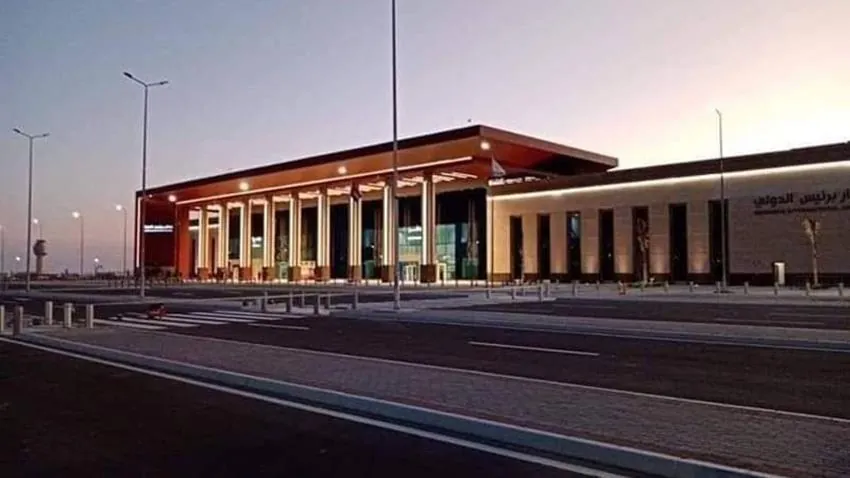
In 2020 the roofs of Berenice International Airport, on Egypt’s Red Sea coast, were waterproofed with hot-spray pure polyurea. Core, of Hassan Allam Sons, carried the contract.
01 · Project overview
What is this roof?
Berenice International Airport serves the southern Red Sea coast. The terminal is a working building: passengers, heat, and a short distance from the sea. Its roofs are the lid over halls that do not close because a ceiling has started to mark.
In 2020 those roofs were waterproofed with pure polyurea. Core, part of Hassan Allam Sons, held the contract. Krypton’s Polyurea Rayston is the hot-spray membrane, one film over the field and the details.
| Project | Berenice International Airport |
|---|---|
| Place | Red Sea coast, Egypt |
| Year | 2020 |
| Scope | Roofs |
| Contractor | Core, Hassan Allam Sons |
| System | Hot-spray pure polyurea |
02 · The challenge
What does this coast ask of a roof?
The sun on the Red Sea is hard, and the air carries salt. A roof membrane here is both a waterproofing and a surface that has to stay elastic while the deck moves from a hot afternoon to a cooler night. A rigid coat cracks at the parapet.
An airport roof is also a field of outlets, plant and edges over rooms that stay occupied. The work has to be finished cleanly. There is no quiet month in which to peel a failed coating off a terminal ceiling.
03 · The solution
Hot-spray pure polyurea
Polyurea Rayston was used because it builds the waterproofing in one pass and gels in seconds. On a live terminal that pace is the point. The film is as thick on an upstand as on the flat, so the edge is not left to a bead of mastic.
The resin is aromatic. Salt air and sun will shift the colour of a bare film even while the strength holds. Where the roof stays exposed, an aliphatic topcoat takes the light. The polyurea keeps the water out.
04 · Application
How the roof is built
The deck is prepared first. Pull-off should be at least 1.4 N/mm2. Cracks are cut out and filled. Moisture in the concrete stays under 4 percent, and the concrete temperature belongs between 10 and 40 degrees C. A damp slab, which a coastal roof can hide, gets two coats of epoxy primer, the second blinded with quartz. That bond is what stops a blister when the shell heats up.
The spray is hot. Resin about 65 degrees C, isocyanate about 75 degrees C, hose about 65 degrees C, and at least 140 bar at the gun. The usual build is 1.5 to 2.0 kg per square metre, about 1.5 to 2 mm. Gel time is about 4 seconds at 25 degrees C. Typical elongation is 324 percent and tensile strength is 16.2 MPa. Those figures describe the product, not a sample cut from this terminal.
Outlets and parapets are sprayed into the same film. A second pass at a corner should follow within about two hours. Light traffic waits hours. Full hardness takes days. The aliphatic coat, where the roof is open to the sky, goes on before the first hard summer.
05 · Results
What this roof stands behind
The terminal keeps receiving flights. The roof’s standard is a dry hall, an elastic film at the parapet, and a topcoat where the Red Sea sun sits on the membrane all day.
CE marking to EN 1504-2 and European Technical Assessment 16/0148 belong to Polyurea Rayston. They are not a measurement taken on this airport.
06 · Products
Product
Polyurea Rayston
Hot-spray pure polyurea for the roofs. Typical build 1.5 to 2 mm. Elongation 324 percent.
07 · FAQ
Frequently asked questions
Why polyurea on an airport roof?
The terminal stays open. A sprayed membrane closes the roof, the outlets and the parapet in one visit, so the ceiling over passengers is not waiting on a slow coating.
How thick is a normal coat?
Polyurea Rayston is sprayed at about 1.5 to 2.0 kg per square metre, which builds 1.5 to 2 mm. That is the datasheet, not a gauge reading from this roof.
How fast does it set?
About 4 seconds to gel at 25 degrees C. Full hardness takes days. Light traffic follows in hours, which is what a live building can give.
Does the Red Sea sun hurt it?
The resin is aromatic, so colour can shift while strength stays. An aliphatic topcoat is used where the film remains in the sun.
What condition does the concrete need?
Moisture under 4 percent, temperature from 10 to 40 degrees C, and a sound face. Cracks are filled first.
08 · Photos
The terminal