
Home / Knowledge / Hot-spray vs cold-applied
Hot-spray vs cold-applied
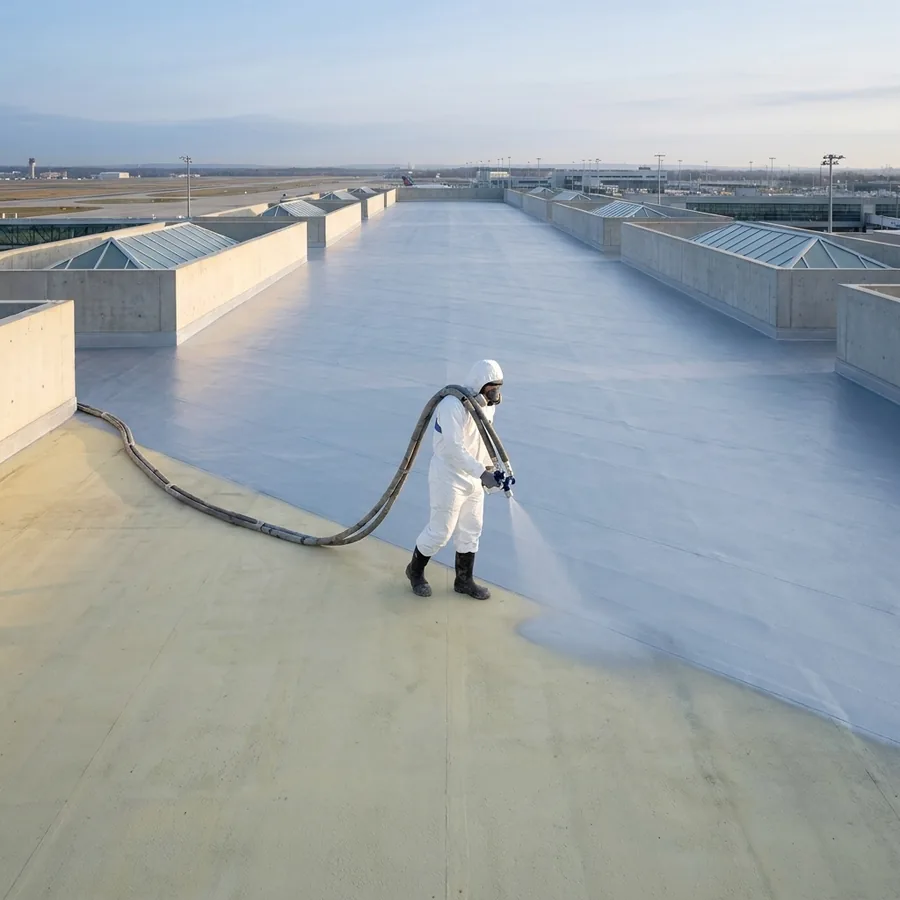
Hot-spray vs cold-applied is written on the product card. It is not a preference. Hot-spray gels in seconds. Cold-applied is rolled or sprayed as a slower liquid. Therefore geometry and access decide the family.
When hot-spray vs cold-applied is specified
Hot-spray: Polyurea Rayston (pure polyurea), Polyurea Rayston P, Fast and A, Impermax Polyurea H (hot-spray hybrid polyurea), Impermax Polyurea H Flex, Rayston Fire E, Rayston Spray D50. These need the spray machine the catalogue lists.
Cold-applied: Impermax (one-component moisture-cured polyurethane, 1K PU), Impermax ST, QC, Evolution and A. Also Impermax Cold Polyurea (ETE 17/0509), roller-applied. Impermax Cold Polyurea Supreme is the solvent-free 2K polyurea written when a projection machine is not available.
However, a large dead-flat roof can still be cold-applied. A vertical stand usually is not. Stadium spectator terraces schedule hot-spray plus Rayston Fire E. A balcony may schedule Impermax 1K. consumption. Read the current TDS, then the calculator.
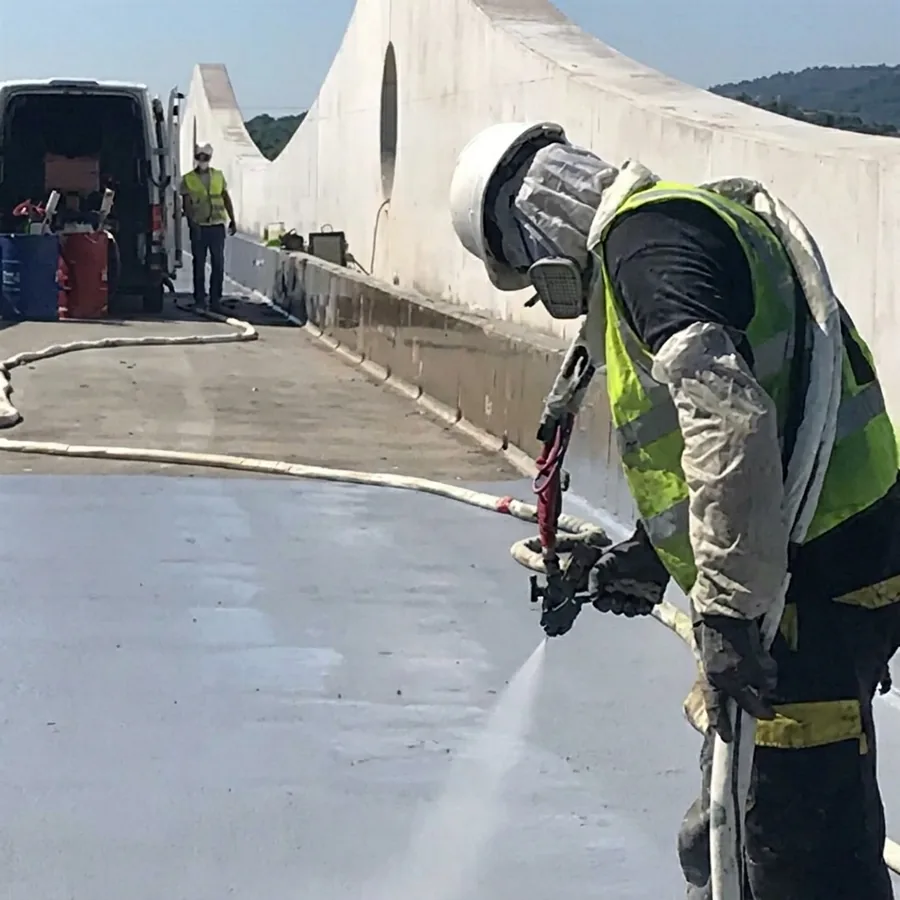
How to write the machine decision
See Polyurea Rayston, Impermax, Impermax Cold Polyurea and industrial roofs — expansive polyurea.
Outbound reference: EOTA.
A missing spray machine is a reason to name Impermax Cold Polyurea Supreme. It is not a reason to rename a hot-spray.
Therefore the current TDS remains the source for mix ratio, overcoat and consumption. Then the calculator sizes the area. However, a number invented here would be a specification error. In addition, the application page is the schedule. After that, open documents. Also keep the finish on the same clause as the body. A sample, a colour or a photograph does not replace that sentence.
These notes do not replace the current TDS, SDS or a written specification. For pack sizes, mix ratio and kg/m², read the current sheet, then the calculator.