House Roof Waterproofing in Santa Eulària
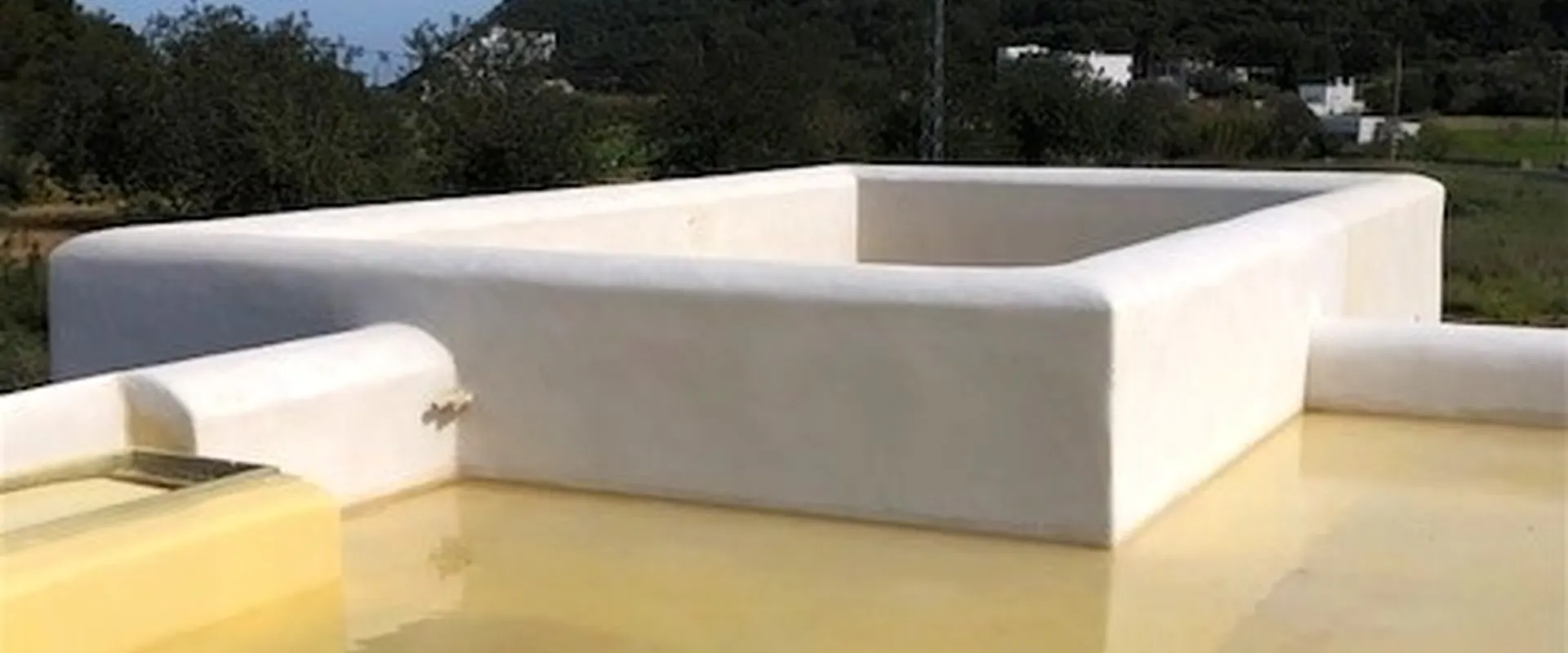
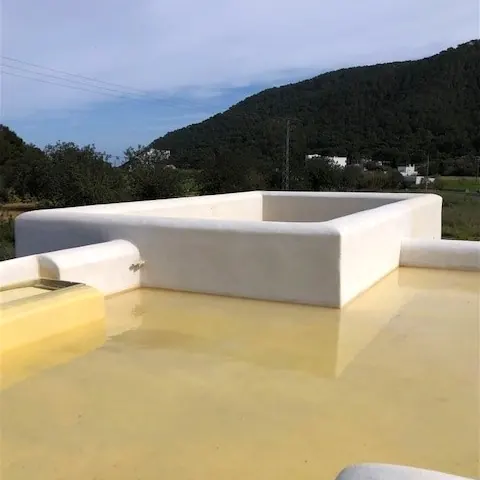
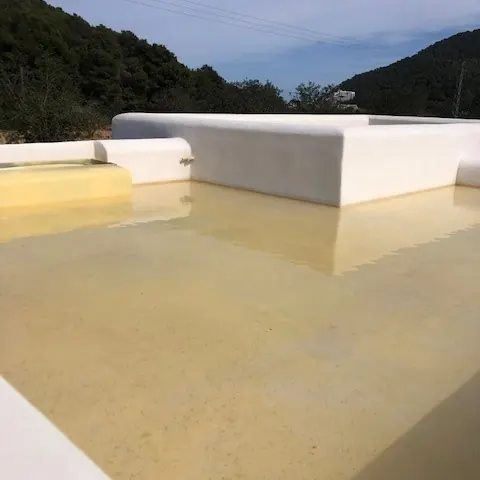
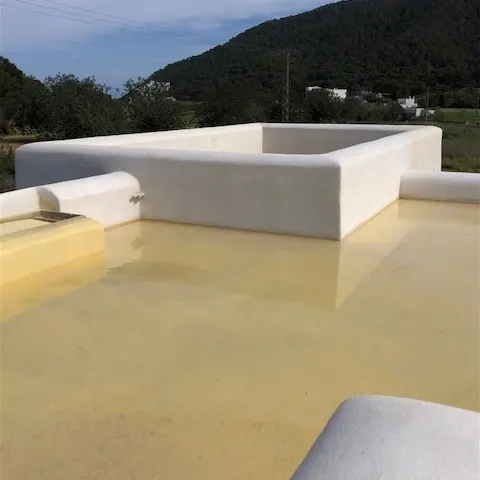
House Roof Waterproofing in Santa Eulària, 800 square metres. The products on the job are Polyurea Rayston, Colodur, Epoxy 100.
01 · Project overview
What is this project?
House Roof Waterproofing in Santa Eulària, 800 square metres. The products on the job are Polyurea Rayston, Colodur, Epoxy 100.
Polyurea Rayston is a pure polyurea for hot spray.
Polyurea Rayston TDS Epoxy 100 TDS What is the sequence? Epoxy 100 primer.
What was delivered? 800 m² of membrane on the house roofs.
Krypton Chemical supplies the resin system. The duty is ordinary and strict: keep water, wear and weather on the right side of the structure, and do it in the details as well as in the open field.
| Project | House Roof Waterproofing in Santa Eulària |
|---|---|
| Area | 800 m² |
| Products | Polyurea Rayston, Colodur, Epoxy 100 |
02 · The challenge
What did this structure ask of the system?
A roof is a field of outlets, laps and edges, and the weather works on all of them. Water does not leak through the middle of a sound bay. It gets in where the detail was thin or where the deck has started to move.
House Roof Waterproofing in Santa Eulària has to be closed as one system, details first, and then left to do its job without a second visit every summer. Across 800 square metres, a thin spot is not a small repair.
03 · The solution
Which system was trusted here?
The system trusted here is the one named for the job: Polyurea Rayston, Colodur, Epoxy 100. It is chosen because it matches the substrate and the exposure, not because every building wants the same can.
On a roof the membrane has to follow outlets and upstands at the same thickness as the field. An exposed aromatic film takes a topcoat if the colour will be seen.
04 · Application
How is the system built?
Where the system is Polyurea Rayston, the concrete or the prepared deck is not sprayed over dirt. Pull-off should be at least 1.4 N/mm2. Cracks are cut out and filled. Moisture in the concrete stays under 4 percent, with the concrete between 10 and 40 degrees C. If the slab is damp behind, two coats of epoxy primer go on, the second blinded with quartz. That bond is what stops a blister when the deck heats up.
The spray is hot. Resin about 65 degrees C, isocyanate about 75 degrees C, hose about 65 degrees C, and at least 140 bar at the gun. The usual build is 1.5 to 2.0 kg per square metre, about 1.5 to 2 mm. Gel time is about 4 seconds at 25 degrees C. Typical elongation is 324 percent and tensile strength is 16.2 MPa. Those are the product’s figures, not a thickness measured on House Roof Waterproofing in Santa Eulària. An aromatic film shifts colour in the sun, so an exposed face takes an aliphatic topcoat. A buried lining does not need that coat to keep its strength.
On House Roof Waterproofing in Santa Eulària the roof fails at the edge long before it fails in the field. Parapets, outlets, plant plinths and laps are detailed first, with the same system, at the same thickness. A bay can be perfect and the ceiling still stains if the outlet was a collar of mastic.
The deck moves between the hot afternoon and the night. The membrane has to move with it. A rigid coat maps every crack in the substrate onto the ceiling. Thermal movement is the reason an elastic system is on a roof like this, not a preference for a particular can.
Where the film stays in the sun, colour and waterproofing are two layers. The membrane keeps the water out. An aliphatic coat keeps the appearance. Skipping the topcoat because the membrane is already waterproof is how a sound roof starts to look failed, and then gets recoated for the wrong reason.
05 · Results
What does a job like this stand behind?
House Roof Waterproofing in Santa Eulària has one standard. The coating is still doing its job after the building is back in use, at the details as well as in the middle. The area on this job is 800 square metres.
Figures for cure, thickness and strength, where they are given, come from the product data sheets. They are not a test cut out of this building.
What this asks of House Roof Waterproofing in Santa Eulària is workmanship at the difficult line. The open field is the easy part of a resin job. Outlets, edges, penetrations and changes of plane are where thickness goes missing, and where water or wear finds the gap. The same products and the same care belong there, and the cure is allowed to finish before the building goes back into use. That is the difference between a coating that was simply applied and a system that stays in service.
06 · Products
Products on this job
Polyurea Rayston
Named on this project. The data sheet carries the application window and the typical figures.
Colodur
Named on this project. The data sheet carries the application window and the typical figures.
Epoxy 100
Named on this project. The data sheet carries the application window and the typical figures.
07 · FAQ
Frequently asked questions
Where is this project?
House Roof Waterproofing in Santa Eulària. the place named on this project
Which products were used?
Polyurea Rayston, Colodur, Epoxy 100.
How thick is the polyurea?
The usual spray is 1.5 to 2.0 kg per square metre, about 1.5 to 2 mm. That is guidance from the data sheet, not a gauge reading on this roof.
Does sunlight damage it?
The pure polyurea is aromatic, so colour can shift while strength stays. An aliphatic topcoat is used where the film stays in the sun.
Who makes the system?
Krypton Chemical, in L’Hospitalet de l’Infant, Tarragona.
08 · Photos
On site