
Home → Applications → Tunnel waterproofing
Tunnel waterproofing
Tunnel waterproofing requires a continuous barrier matched to groundwater pressure, substrate movement, traffic or fire exposure as relevant, and access for inspection and repair. This engineering guide frames the application intent without replacing the current system specification or product technical data sheet.
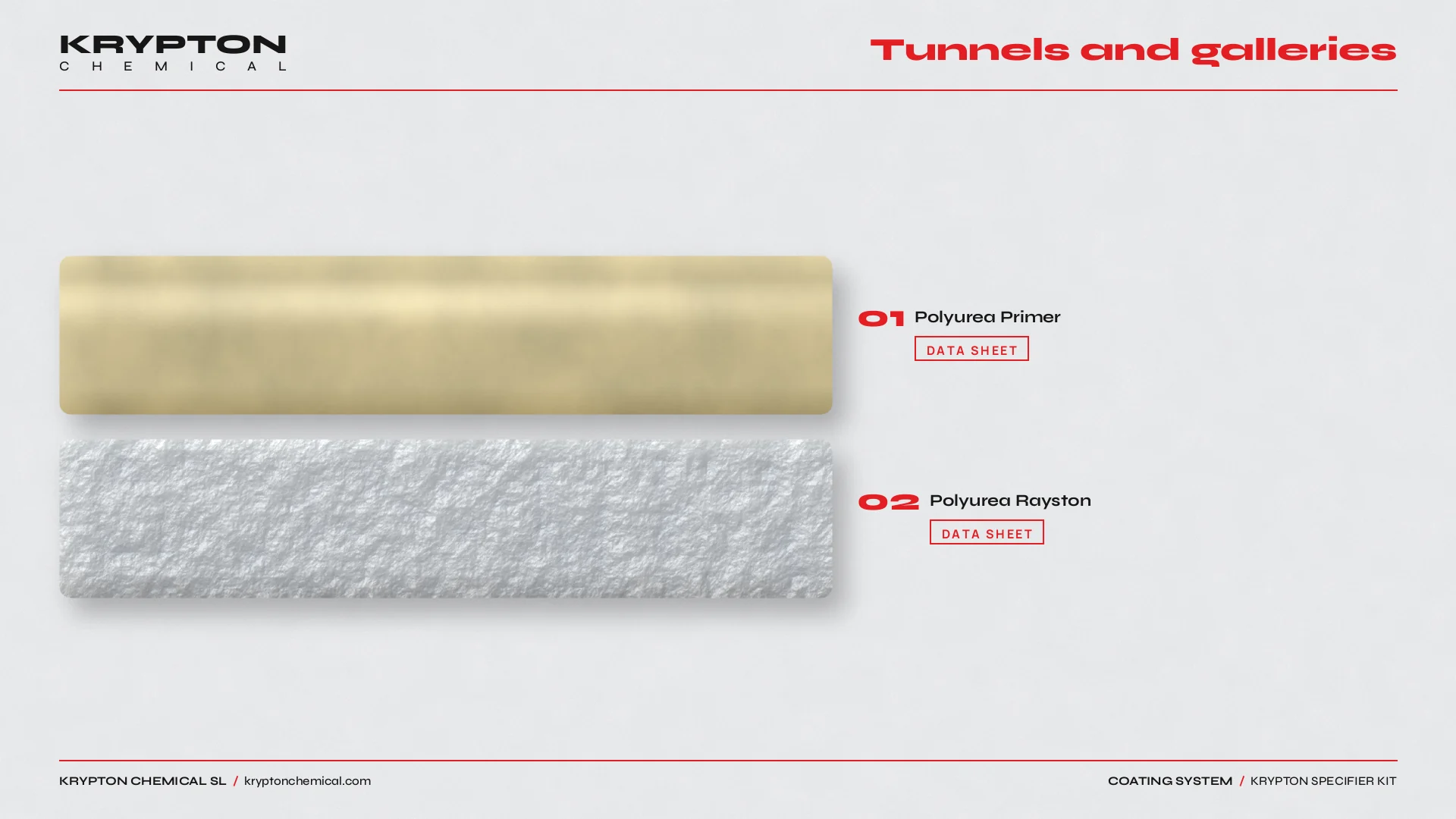
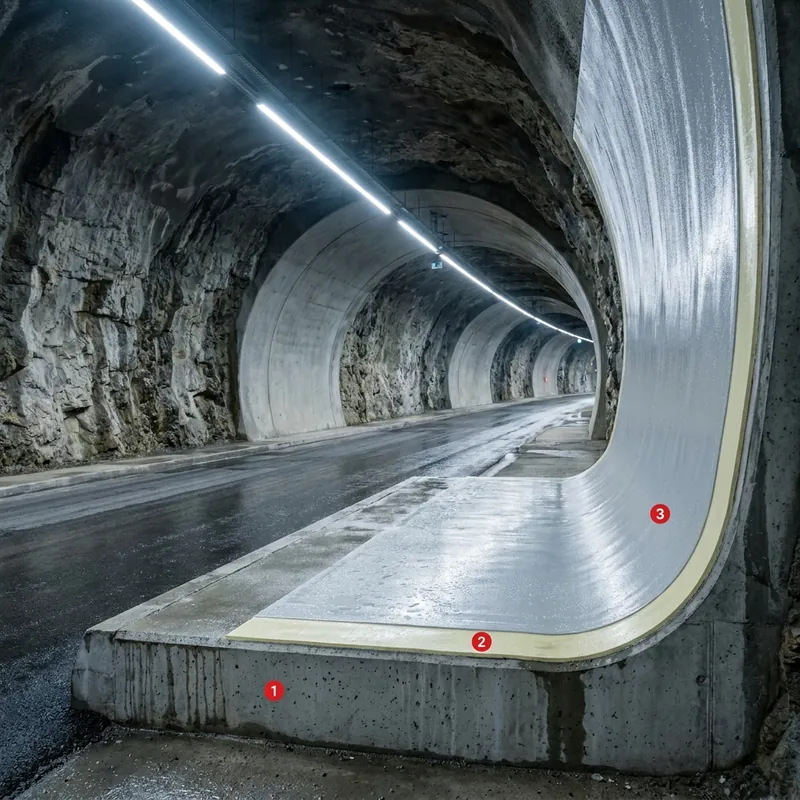
Use and application
The application intent is waterproofing of tunnels. Start by qualifying the substrate, exposure, service level and maintenance constraints. Polyurea Rayston and Impermax Polyurea H are typical reference products for this application. Compare the current Products and Systems documentation, and use the associated application context at Manholes to keep the scope distinct.
01
Groundwater, movement and lining continuity
Tunnel linings must remain continuous across irregular substrate, damp zones, construction joints and penetrations under groundwater pressure. Invert, walls and crown may see different exposure; traffic tunnels may add abrasion, de-icing salt or fire-protection interfaces. Joints, niches, cable and pipe entries, portals and repair patches need a continuous, documented detail before the lining route is fixed.
02
Layers and references
Define the sequence from prepared substrate through primer or bond coat, functional membrane or body coat, reinforcement where specified, and protective or finish layer where required. Use the current technical data sheet for preparation, mixing, consumption, thickness, overcoat windows and cure; the Calculator supports quantities, while Systems and the product references establish the applicable route.
03
Common mistakes
- Treating the open tunnel field as the whole lining and omitting joints, niches, penetrations, portals or invert–wall transitions.
- Ignoring groundwater pressure, damp substrate and confined-space application limits when selecting the system.
- Closing the lining before checking adhesion, thickness, continuity and cure against the project tunnel requirement.
04
Operating sequence
1. Record groundwater pressure, traffic or fire exposure as relevant, tunnel dimensions, substrate condition and service scenario. 2. Map joints, niches, penetrations, portals, invert–wall transitions and repair zones. 3. Select a compatible route in Systems and verify every layer against the current technical data sheet. 4. Calculate quantities with the Calculator. 5. Approve a representative area, document preparation and application controls, inspect continuity and release the lining only when the project requirements are met.