
Home → Applications → Metal roofs
Metal roofs
Metal roofs need a roof build-up that manages weather, movement, drainage and interfaces. This guide sets the application intent; final layers and limits come from the current Krypton system documentation.
Use and application
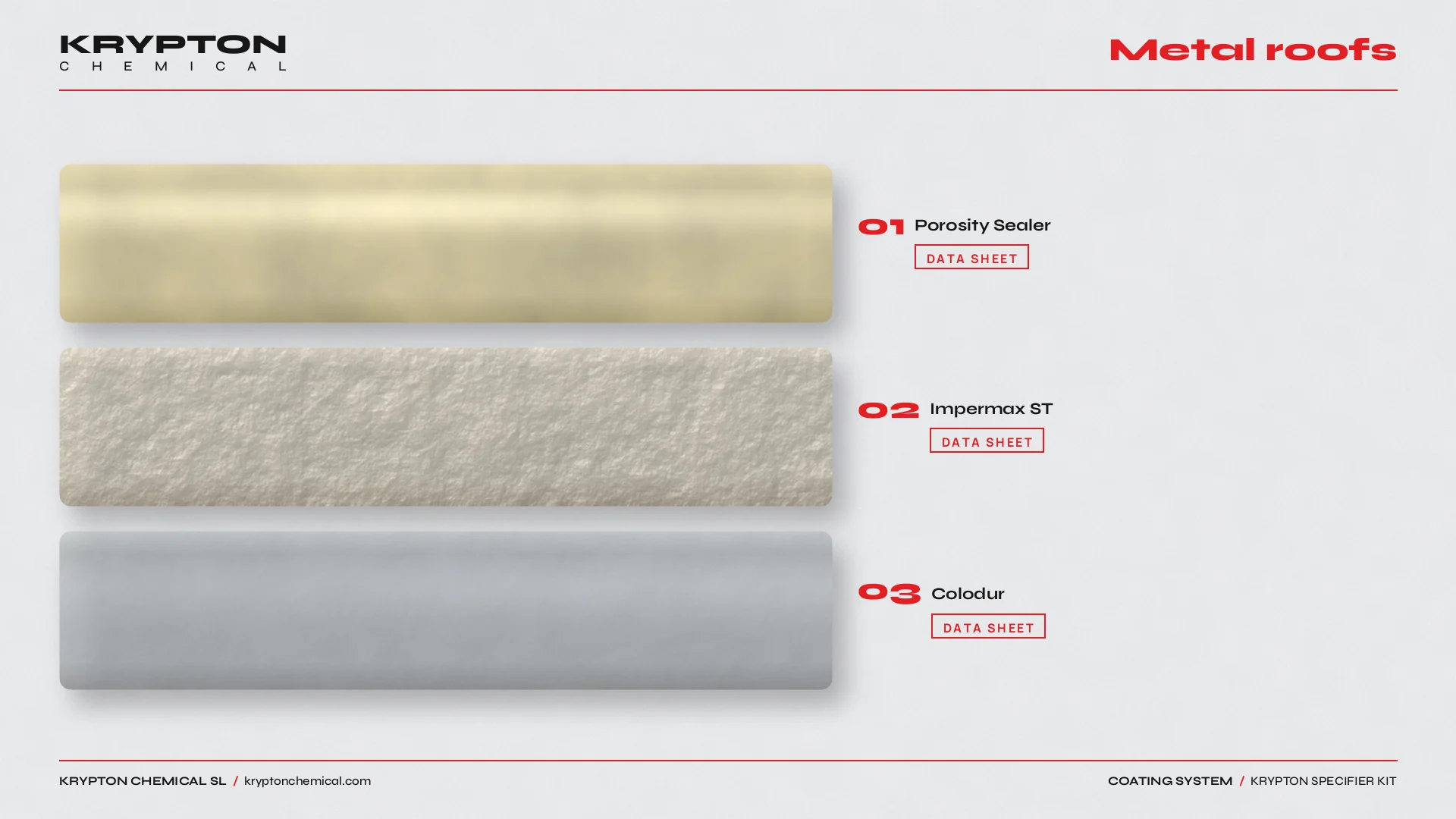
The application intent is waterproofing of metal roofs. Start by qualifying the substrate, exposure, service level and maintenance constraints. Porosity Sealer, Impermax ST and Colodur are typical reference products for this application. Compare the current Products and Systems documentation, and use the associated application context at Pitched roofs to keep the scope distinct.
01
Weather, movement and drainage
Roof systems work under rain, solar exposure, thermal movement and ponding risk. The substrate, falls, outlets, upstands, penetrations and interfaces with existing layers must be surveyed before the membrane route is fixed.
02
Layers and references
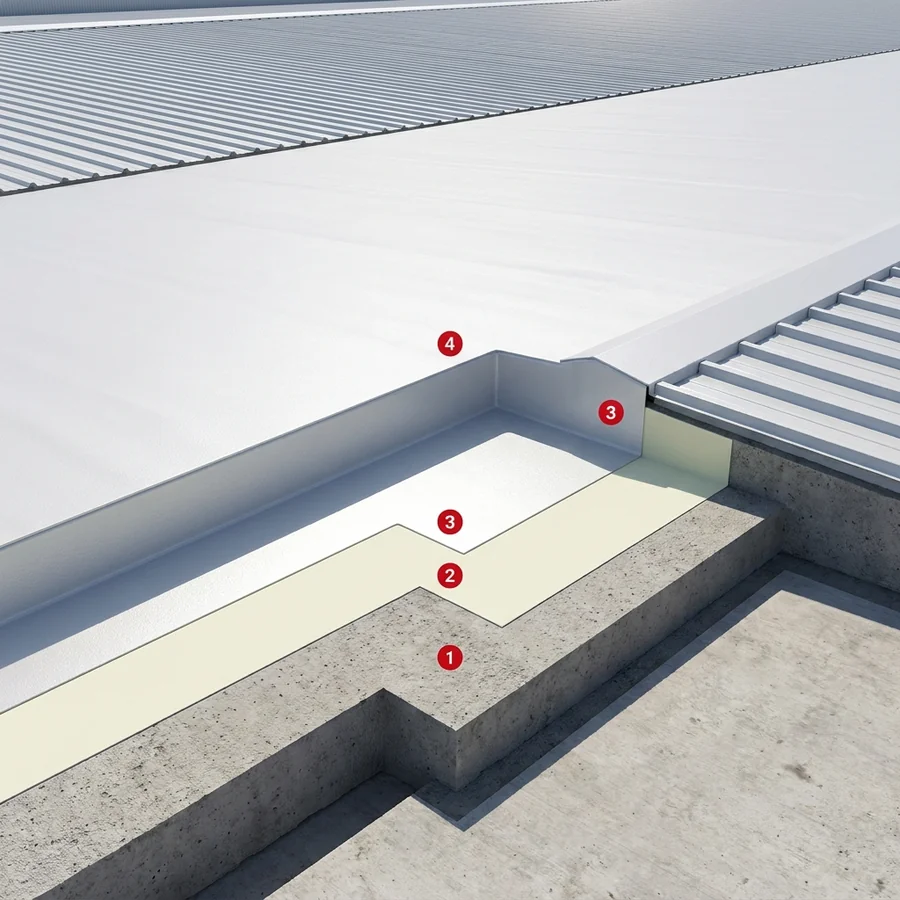
Define the sequence from prepared substrate through primer or bond coat, functional membrane or body coat, reinforcement where specified, and protective or finish layer where required. Use the current technical data sheet for preparation, mixing, consumption, thickness, overcoat windows and cure; the Calculator supports quantities, while Systems and the product references establish the applicable route.
03
Common mistakes
- Ignoring falls, outlets and ponding while focusing only on the membrane field.
- Bridging movement joints or penetrations without a designed detail and compatible reinforcement.
- Closing the build-up before checking moisture, adhesion, thickness, cure and weather limits.
04
Operating sequence
1. Record the exposure, dimensions, substrate condition and service scenario. 2. Map joints, edges, penetrations, drains, upstands and repair zones. 3. Select a compatible route in Systems and verify every layer against the current technical data sheet. 4. Calculate quantities with the Calculator. 5. Approve a representative area, document preparation and application controls, inspect the completed build-up, and release it only when the project requirements are met.