
Home → Applications → OEM industrial coatings
OEM industrial coatings
OEM industrial coatings require a protection system matched to the exposure, substrate and maintenance window. Preparation, compatibility and continuity at details are as important as the nominal product choice.
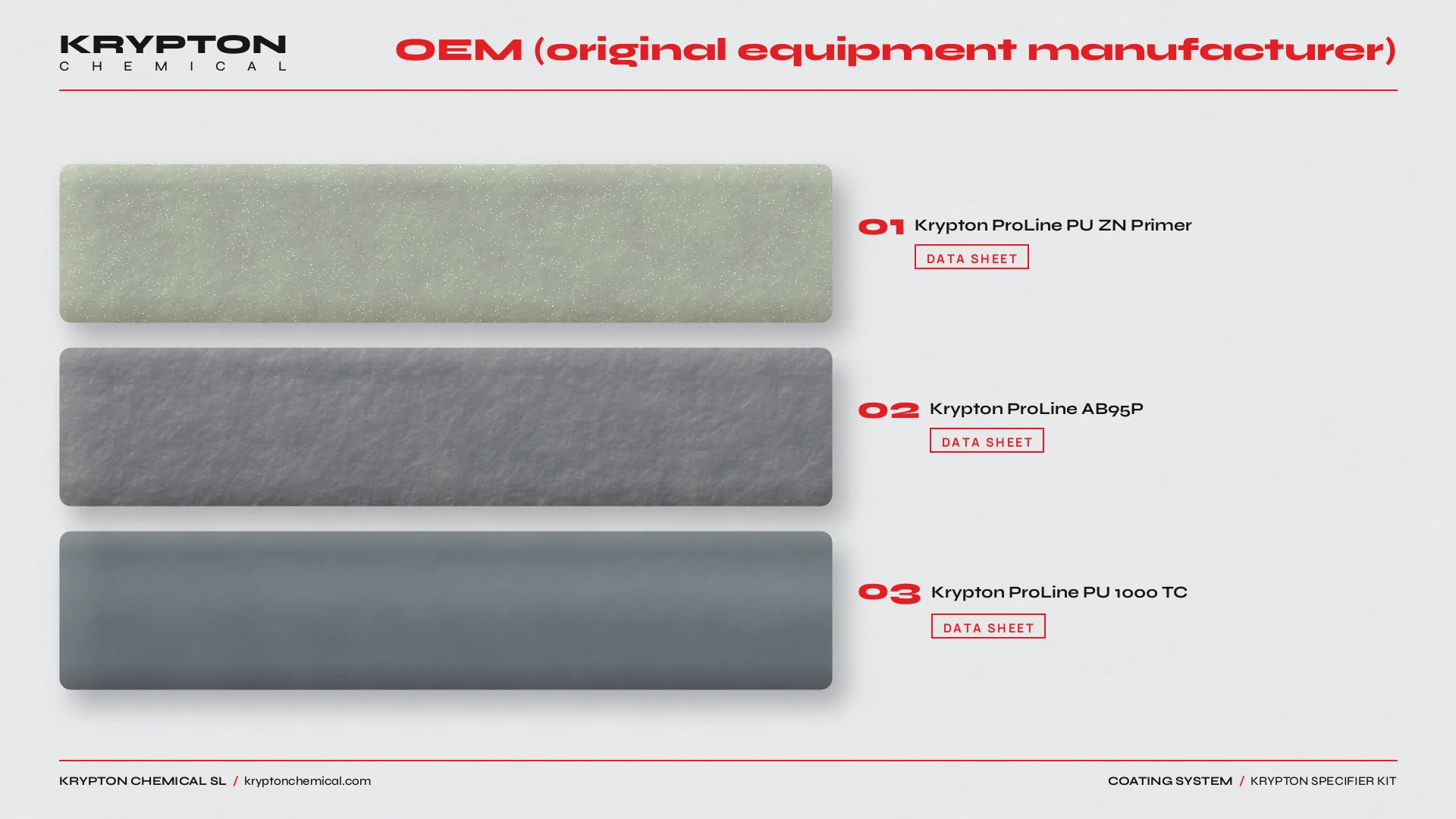 DATA SHEET · Krypton ProLine PU ZN Primer
DATA SHEET · Krypton ProLine AB95P
DATA SHEET · Krypton ProLine PU 1000 TC
DATA SHEET · Krypton ProLine PU ZN Primer
DATA SHEET · Krypton ProLine AB95P
DATA SHEET · Krypton ProLine PU 1000 TC
Use and application
The application intent is oem industrial coatings. Start by qualifying the substrate, exposure, service level and maintenance constraints. Krypton ProLine PU ZN Primer, Krypton ProLine AB95P and Krypton ProLine PU 1000 TC are typical reference products for this application. Compare the current Products and Systems documentation, and use the associated application context at Trailer transport to keep the scope distinct.
01
Geometry, repeatability and quality control
OEM coating is a repeatable manufacturing process as well as a material choice. Approve a representative sample, define preparation and cure windows, and control thickness, edges, inserts and handling before production release.
02
Layers and references
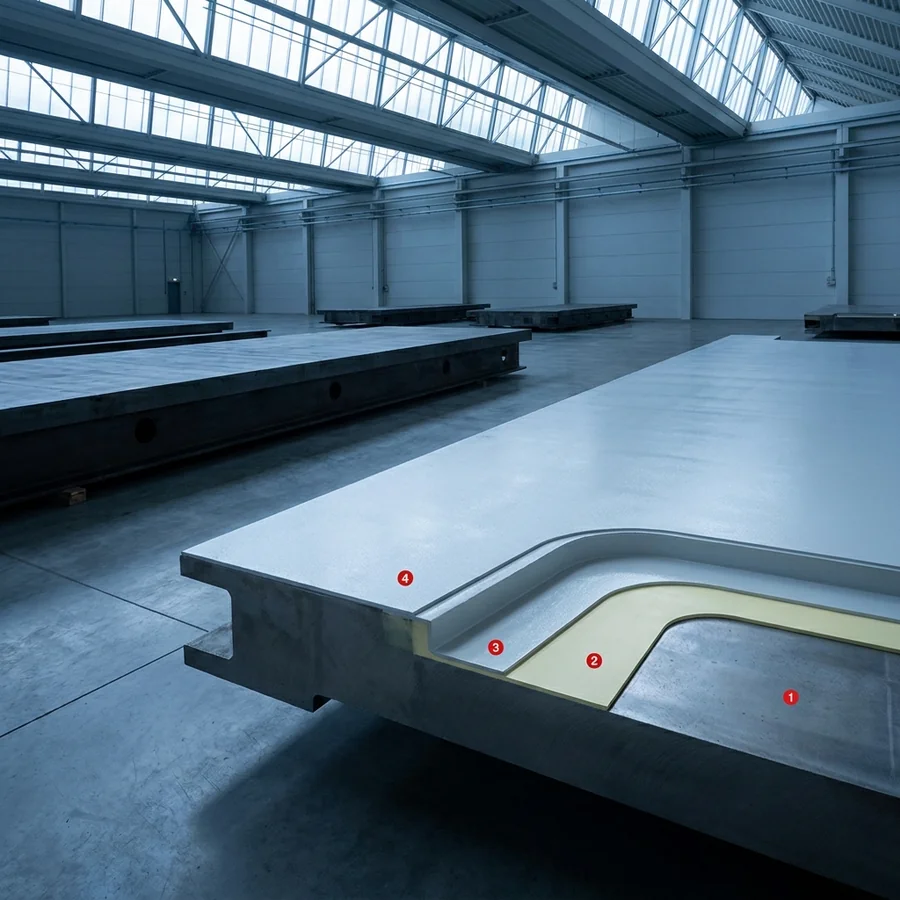
Define the sequence from prepared substrate through primer or bond coat, functional membrane or body coat, reinforcement where specified, and protective or finish layer where required. Use the current technical data sheet for preparation, mixing, consumption, thickness, overcoat windows and cure; the Calculator supports quantities, while Systems and the product references establish the applicable route.
03
Common mistakes
- Selecting by a single headline resistance while omitting temperature, abrasion, chemical contact or impact data.
- Leaving edges, welds, interfaces and local repairs below the required preparation or thickness.
- Changing mixing, application or overcoat timing without checking the current technical data sheet and revalidation requirements.
04
Operating sequence
1. Record the exposure, dimensions, substrate condition and service scenario. 2. Map joints, edges, penetrations, drains, upstands and repair zones. 3. Select a compatible route in Systems and verify every layer against the current technical data sheet. 4. Calculate quantities with the Calculator. 5. Approve a representative area, document preparation and application controls, inspect the completed build-up, and release it only when the project requirements are met.