
Home → Applications → Concrete carbonation protection
Concrete carbonation protection
Concrete carbonation protection requires a build-up that connects exposure, substrate condition, detailing and maintenance. This engineering guide defines the application intent while the current technical data sheet and project specification govern execution.
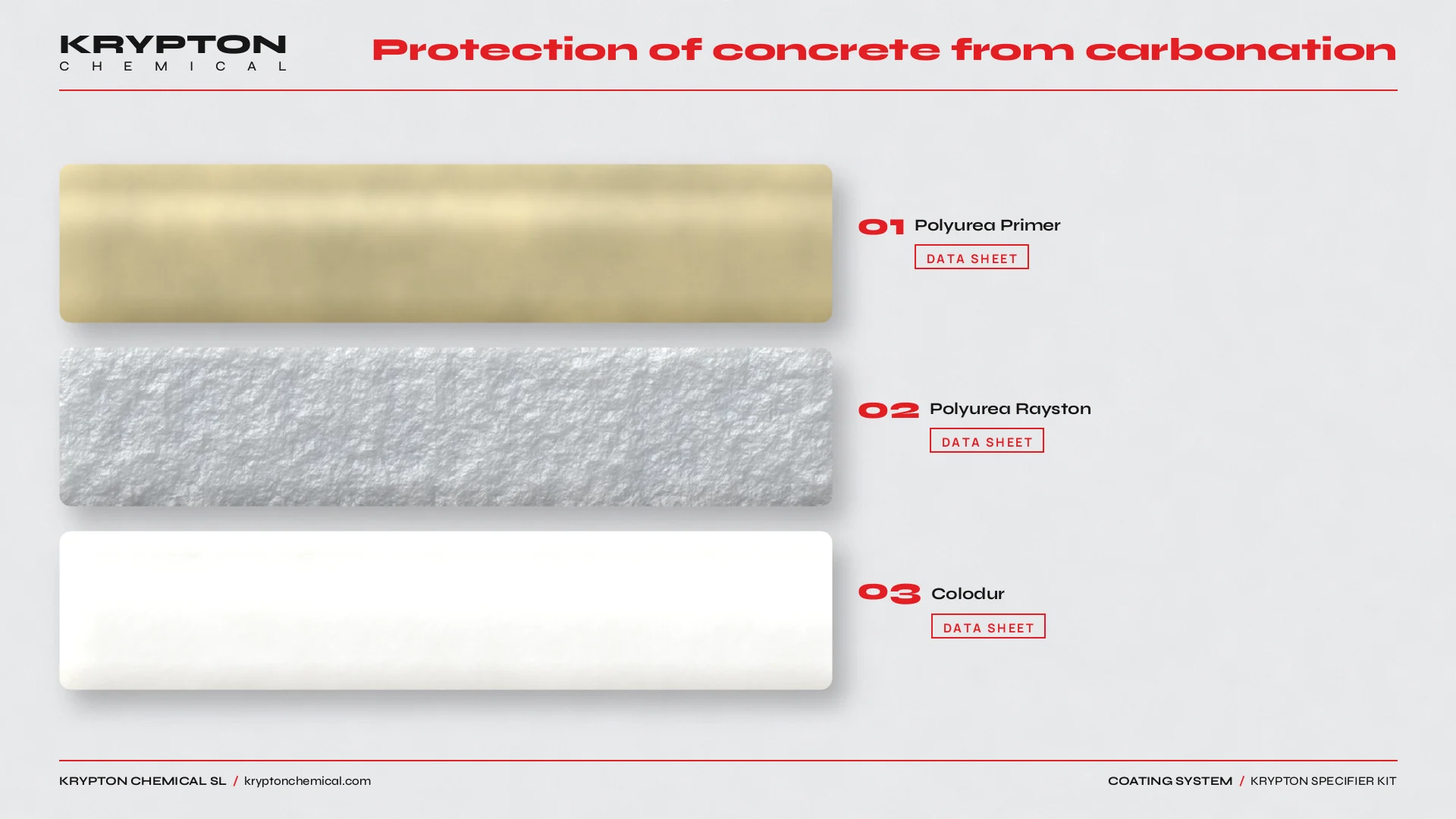
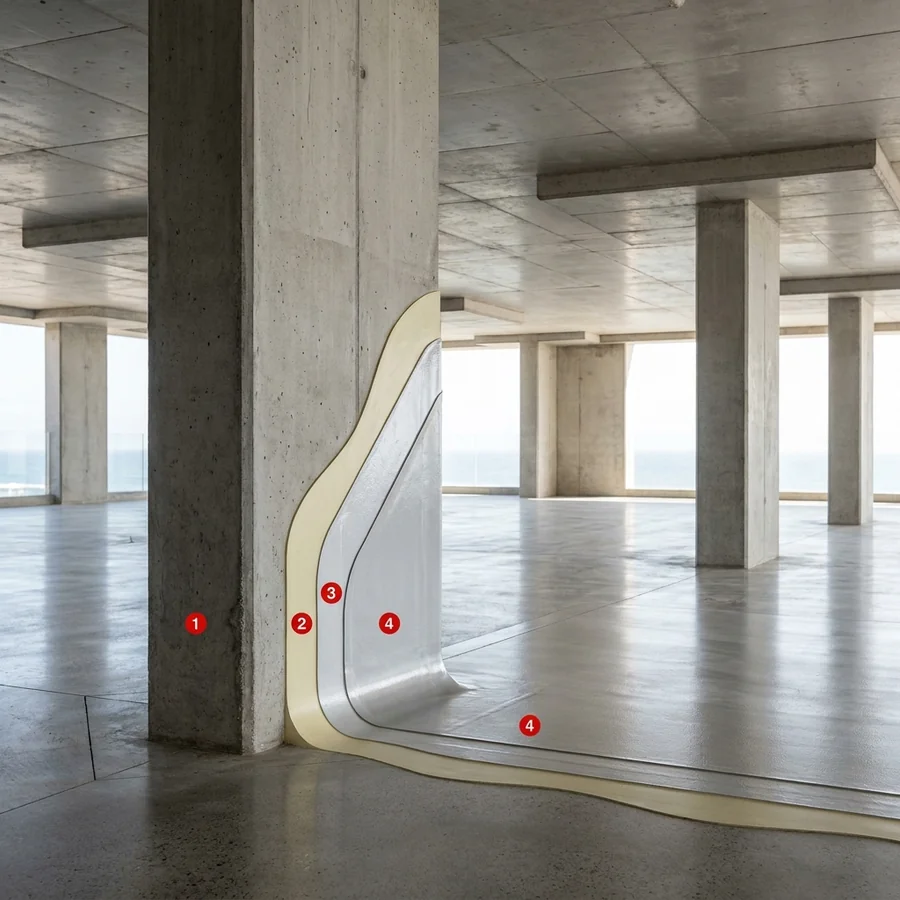
Use and application
The application intent is concrete protection against carbonation. Start by qualifying the substrate, exposure, service level and maintenance constraints. Polyurea Primer, Polyurea Rayston and Colodur are typical reference products for this application. Compare the current Products and Systems documentation, and use the associated application context at Metal structures engineering to keep the scope distinct.
01
Substrate, interfaces and service life
A durable application specification connects the exposure, substrate, details and maintenance plan. The visible surface is only one part of the system: junctions, movement, drainage, preparation and inspection determine whether protection remains continuous.
02
Layers and references
Define the sequence from prepared substrate through primer or bond coat, functional membrane or body coat, reinforcement where specified, and protective or finish layer where required. Use the current technical data sheet for preparation, mixing, consumption, thickness, overcoat windows and cure; the Calculator supports quantities, while Systems and the product references establish the applicable route.
03
Common mistakes
- Choosing a coating in isolation without checking substrate compatibility, exposure and adjacent layers.
- Starting with dust, moisture, cracks or movement details unresolved.
- Underestimating joints, thresholds, penetrations and future maintenance in the scope and inspection plan.
04
Operating sequence
1. Record the exposure, dimensions, substrate condition and service scenario. 2. Map joints, edges, penetrations, drains, upstands and repair zones. 3. Select a compatible route in Systems and verify every layer against the current technical data sheet. 4. Calculate quantities with the Calculator. 5. Approve a representative area, document preparation and application controls, inspect the completed build-up, and release it only when the project requirements are met.